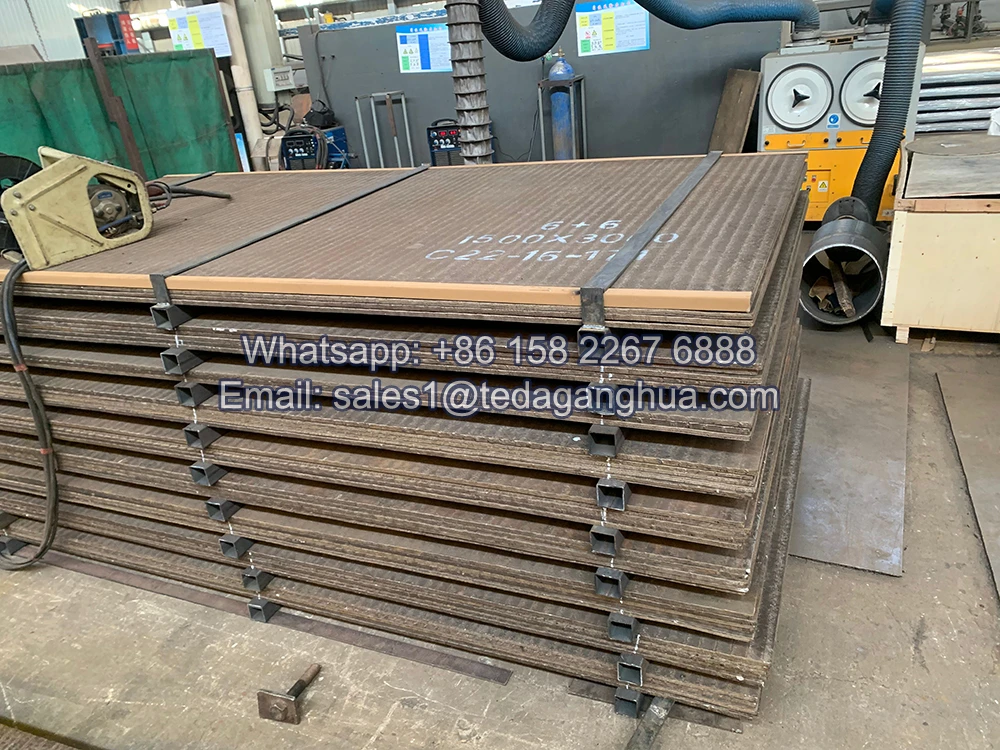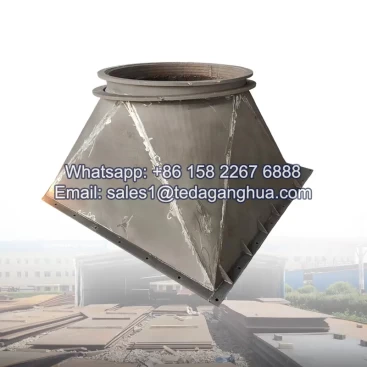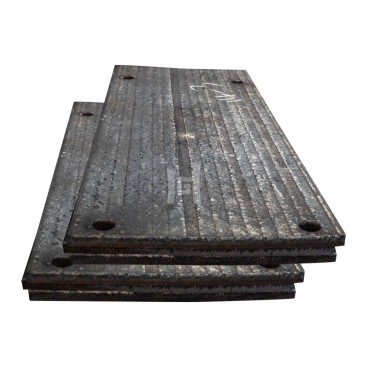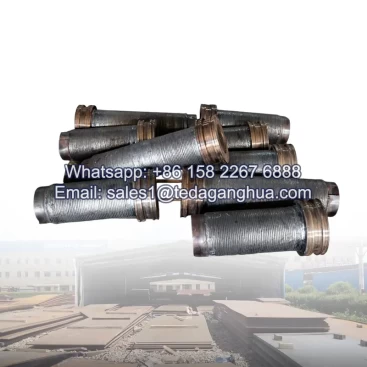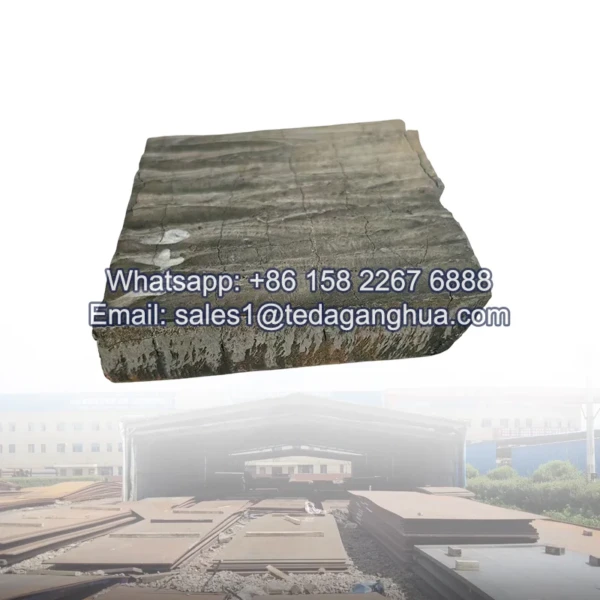
لوحة ارتداء يرتدون ملابس


Clad Wear Plate is a versatile composite material that uses different wear-resistant cladding systems such as chromium carbide, كربيد التنغستن, martensitic steel, ceramic composites, and nickel-based alloys. Each material offers different balances of wear resistance, مقاومة التأثير, and environmental suitability, allowing engineers to select the most appropriate solution for specific industrial conditions.
- وصف
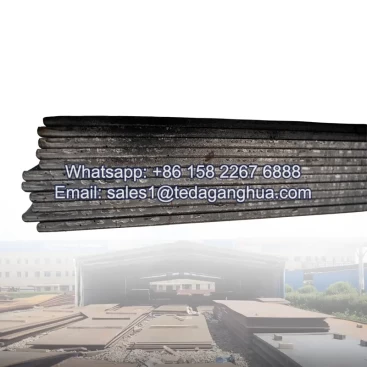
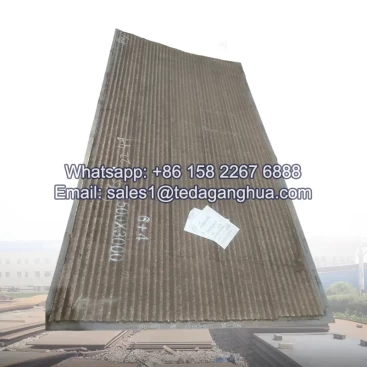
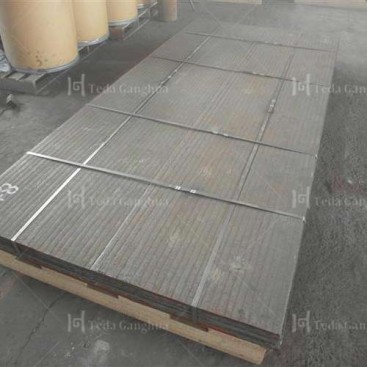
Clad Wear Plate is a composite wear-resistant steel product made by bonding a high-performance wear-resistant layer onto a carbon steel or low-alloy steel base plate. It is designed to combine structural strength with excellent surface wear resistance, making it widely used in mining, أسمنت, توليد الطاقة, مصانع الصلب, وأنظمة مناولة المواد السائبة.
The performance of clad wear plates depends mainly on the type of wear-resistant cladding material used on the surface layer.
هيكل لوحة ارتداء يرتدون ملابس
A typical clad wear plate consists of two layers:
- الطبقة الأساسية: Carbon steel or low-alloy steel for strength and toughness
- طبقة الكسوة: Wear-resistant alloy layer for abrasion and erosion resistance
الطبقتان مرتبطتان معدنيًا, ensuring strong adhesion and long service life under harsh conditions.
Common Wear Resistant Cladding Materials
Different cladding materials are selected based on working conditions such as abrasion, تأثير, درجة حرارة, and particle size.
1. تراكب كربيد الكروم (CCO)
This is the most widely used cladding material for wear plates.
- High chromium and carbon content
- Forms hard carbide phases (Cr₇C₃, Cr₂₃C₆)
- صلابة: عادة 55-65 HRC
- Excellent resistance to sliding abrasion and particle erosion
التطبيقات النموذجية: mining liners, مزالق الاسمنت, coal handling systems
2. Tungsten Carbide Composite Layer
A high-end wear-resistant cladding material.
- Contains tungsten carbide (مرحاض) جزيئات
- صلابة عالية للغاية
- Superior abrasion resistance compared to chromium carbide
- Higher cost and specialized use
التطبيقات النموذجية: extreme wear zones, high-value equipment protection
3. Martensitic Steel Overlay
A tough and wear-resistant cladding system based on alloy steel.
- البنية المجهرية المارتنسيتية
- صلابة وصلابة متوازنة
- مقاومة تأثير جيدة
- مقاومة التآكل المعتدلة
التطبيقات النموذجية: تأثير ثقيل + ارتداء البيئات
4. Ceramic-Embedded Cladding
A composite system with ceramic particles distributed in a metal matrix.
- Ceramic particles such as alumina or silicon carbide
- Extremely high resistance to particle erosion
- Lower impact resistance compared to metallic overlays
التطبيقات النموذجية: high-speed particle flow systems, pneumatic conveying
5. Nickel-Based Alloy Cladding
Used in special environments requiring corrosion and wear resistance.
- Excellent corrosion resistance
- Good performance at high temperatures
- Moderate wear resistance compared to carbide systems
التطبيقات النموذجية: chemical industry, high-temperature equipment
Performance Comparison of Cladding Materials
| Cladding Type | ارتداء المقاومة | مقاومة التأثير | مقاومة درجات الحرارة | الاستخدام النموذجي |
|---|---|---|---|---|
| كربيد الكروم | عالية جدًا | واسطة | واسطة | General industrial wear |
| كربيد التنغستن | عالية للغاية | متوسطة-منخفضة | واسطة | مناطق التآكل الشديدة |
| الصلب المارتنسيتي | متوسطة - عالية | عالي | واسطة | تأثير + wear conditions |
| Ceramic Composite | عالية جدًا | Low–Medium | عالي | Erosion environments |
| Nickel Alloy | واسطة | واسطة | عالي | Corrosive + high-temp use |
Key Performance Features of Clad Wear Plate
- Combines structural strength with surface wear resistance
- Customizable wear layer according to application
- Long service life in harsh industrial environments
- يقلل من تكاليف الصيانة والتوقف عن العمل
- Suitable for complex fabrication and installation
التطبيقات الصناعية النموذجية
Clad wear plates are widely used in:
- معدات التعدين والمحاجر
- أنظمة إنتاج الأسمنت
- Coal and ash handling systems
- Steel plant conveyors and chutes
- Power plant wear components
- أنظمة نقل المواد السائبة
- Heavy industrial machinery protection