Installationsmethoden für Verschleißplatten: Vergleich zwischen Bolzenverbindung und Lochschweißen
Installationstipps für verschleißfeste Auskleidungsplatten: Bolt Connection vs Plug Welding Process Comparison
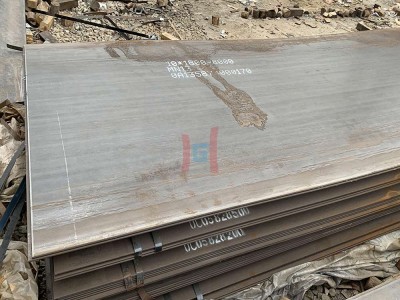
Wear-resistant liner plates are widely used in mining equipment, Zementwerke, Stahlwerke, und Schüttguthandhabungssysteme. Ihre Hauptaufgabe besteht darin, Bauteile vor starkem Abrieb zu schützen, Auswirkungen, und Gleitverschleiß.
Proper installation is just as important as material selection. Even high-quality wear plates can fail prematurely if the installation method is incorrect. Among all installation methods, bolt connection and plug welding (also called stud welding or countersunk welding) are the two most commonly used techniques.
1. Common Installation Methods for Wear-Resistant Liners
| Verfahren | Beschreibung |
|---|---|
| Bolzenverbindung | Mechanical fastening using bolts and backing structure |
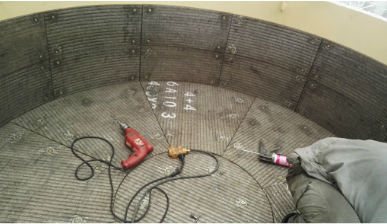
| Lochschweißen | Welding through pre-drilled holes or countersunk openings |
| Direct Welding | Edge or surface welding (limited use for wear plates) |
2. Bolzenverbindung: Advantages and Disadvantages
Vorteile
- Easy installation and removal
- Suitable for frequent maintenance environments
- Keine Wärmeeinflusszone, preserving material properties
- Good for thick or modular liner systems
Disadvantages
- Requires drilling holes in base structure
- Potential loosening under vibration
- Higher assembly time for large surfaces
- May cause stress concentration around bolt holes
3. Lochschweißen : Advantages and Disadvantages
Vorteile
- Strong and permanent fixation
- Better resistance to vibration and impact
- No external protruding fasteners
- Suitable for heavy-duty wear environments
Disadvantages
- Creates heat-affected zone on wear plate
- Difficult to remove or replace
- Requires skilled welding operation
- Risk of local hardness reduction in high-performance steel
4. Bolt vs Plug Welding Comparison
| Besonderheit | Bolzenverbindung | Lochschweißen |
|---|---|---|
| Installation speed | Schnell | Mäßig |
| Wartung | Easy replacement | Difficult removal |
| Stärke | Medium | Hoch |
| Heat effect | Keiner | Ja (local HAZ) |
| Vibration resistance | Medium | Hoch |
| Cost of maintenance | Lower long-term | Higher replacement cost |
5. How to Choose the Right Installation Method?
The selection depends on working conditions, wear intensity, und Wartungsanforderungen:
- Choose bolt connection: when frequent replacement is required or maintenance access is important
- Choose plug welding: when the system operates under high impact, Vibration, or heavy load conditions
- Hybrid solutions: often used in large equipment combining both methods
6. Installation Best Practices
- Ensure flat and clean base surface before installation
- Control torque for bolt systems to avoid loosening
- Preheat welding areas when using plug welding on thick plates
- Avoid overheating wear-resistant steel during welding
- Perform regular inspection for fastener integrity
7. Teda Ganghua Wear Plate Solutions
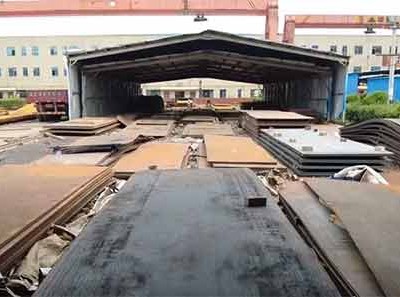
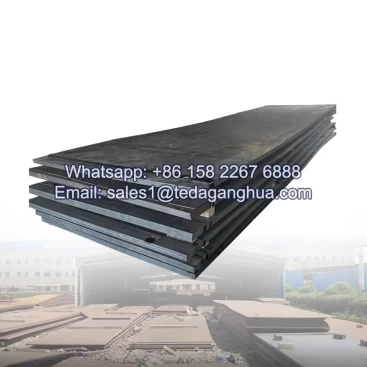
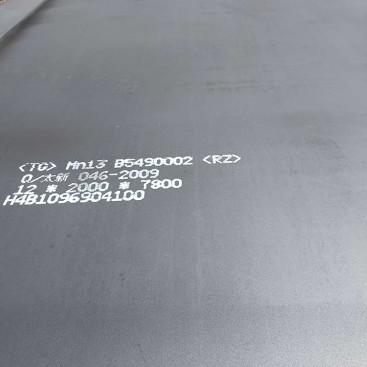
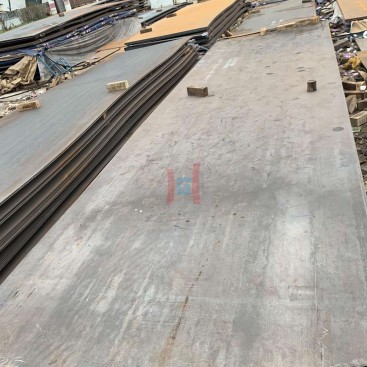
As a professional supplier of wear-resistant steel, Teda Ganghua provides NM series wear plates designed for mining, Zement, Baumaschinen, and industrial abrasion environments. Our products offer stable hardness, hohe Zähigkeit, and excellent service life.
We also support customized cutting, Bohren, and fabrication services to match different installation requirements such as bolt connection and plug welding systems.
Entdecken Sie hier unsere verschleißfesten Stahlprodukte:
NM Verschleißfeste Stahlplatte
Abschluss
Bolt connection and plug welding each have clear advantages in wear-resistant liner plate installation. Bolt systems offer flexibility and easy maintenance, while plug welding provides stronger fixation for heavy-duty environments. The optimal choice depends on equipment conditions and operational requirements.