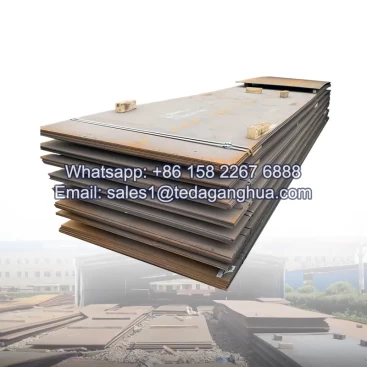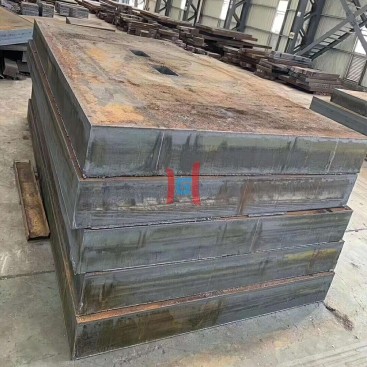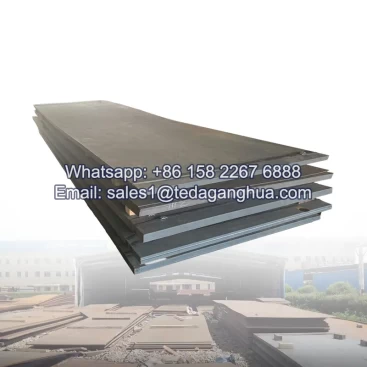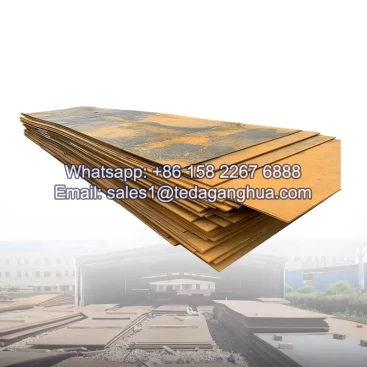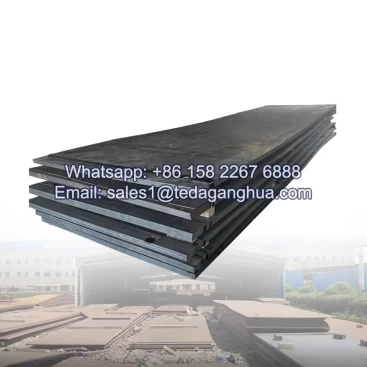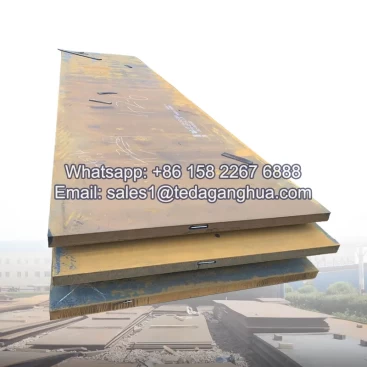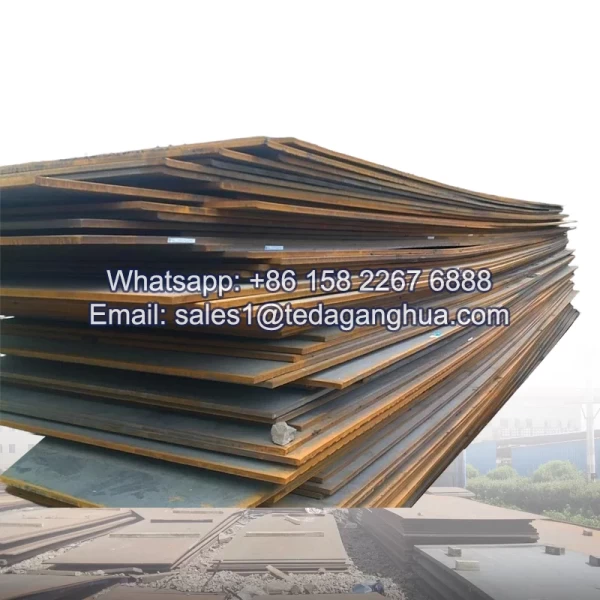
Placa de acero resistente al desgaste

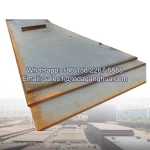
Wear resistance in wear resistant steel plate is achieved through a combination of alta dureza, optimized alloy composition, and controlled microstructure.
It is mainly reflected in:
- High Brinell hardness resisting surface cutting
- Martensitic structure providing strength and stability
- Alloy carbides improving abrasion resistance
- Balanced toughness preventing cracking under impact
- Descripción
Wear resistant steel plate is a type of high-hardness alloy steel designed to resist surface damage caused by abrasion, impacto, y desgaste por deslizamiento. Its “wear resistance” is not a single property, but the result of a combination of material composition, nivel de dureza, y control de microestructura.
Understanding how wear resistance is achieved helps explain why different grades (such as NM, Arkansas, or hardfaced plates) perform differently in real applications.
1. Hardness – The Core Indicator of Wear Resistance
The most direct reflection of wear resistance is Dureza Brinell (HBW).
| Nivel de dureza | Wear Resistance Performance |
|---|---|
| 300–400 HB | Resistencia al desgaste estándar |
| 400–500 HB | Alta resistencia al desgaste |
| 500+ media pensión | muy alto / resistencia extrema al desgaste |
Principle:
Higher hardness means the material surface is more difficult to deform or be cut by abrasive particles such as sand, mineral, or coal.
Sin embargo, hardness alone is not enough; toughness must also be considered.
2. Microstructure – The Internal Structure Behind Wear Resistance
Wear resistant steel is usually produced by temple y revenido, forming a controlled microstructure:
- Martensite structure (high hardness phase)
- Fine carbide distribution (wear-resistant particles)
- Uniform grain structure (stability under load)
How it works:
- Hard martensite resists surface cutting
- Carbides block abrasive particles
- Fine structure reduces crack propagation
This combination ensures long service life under continuous wear.
3. Alloying Elements – Improving Wear Performance
Wear resistance is also improved through alloy design:
| Elemento | Function in Wear Resistance |
|---|---|
| Carbón (do) | Aumenta la dureza |
| Cromo (cr) | Forms hard carbides, mejora la resistencia a la abrasión |
| Manganeso (Minnesota) | Mejora la dureza y la templabilidad. |
| Boro (B) | Enhances hardenability at low content |
Resultado:
A stronger and more stable steel matrix that resists wear and deformation.
4. Surface Wear Mechanism – How Damage Happens
Wear resistant steel is designed to resist three main types of wear:
1. Ropa abrasiva
Caused by hard particles (arena, mineral, grava) sliding on the surface
→ Wear steel resists cutting and scratching due to high hardness
2. Desgaste por impacto
Caused by falling or hitting materials
→ Toughness prevents cracking and edge failure
3. Sliding Wear
Caused by continuous friction movement
→ Hard surface layer slows material loss over time
5. Equilibrio entre dureza y dureza
Wear resistance is effective only when hardness and toughness are balanced.
| Propiedad | Role |
|---|---|
| Dureza | Resists surface abrasion |
| Tenacidad | Prevents cracking and fracture |
If hardness is too high without toughness, the plate may become brittle. If toughness is too high without hardness, wear resistance decreases.
6. Real-World Wear Performance Factors
In actual industrial use, wear resistance is influenced by:
- Material hardness grade (NM/AR level)
- Particle size and hardness of abrasive materials
- Impact frequency and load intensity
- Working temperature and environment
- Surface condition and installation method
7. How Wear Resistance Is Evaluated
Wear resistance is typically evaluated through:
- Prueba de dureza (HBW)
- Laboratory abrasion tests
- Field service life comparison
- Weight loss measurement under friction conditions
Resultado:
Higher-performance wear steel shows lower material loss over time.