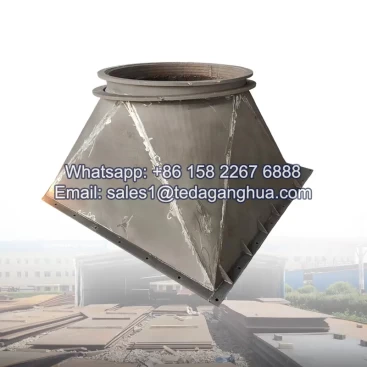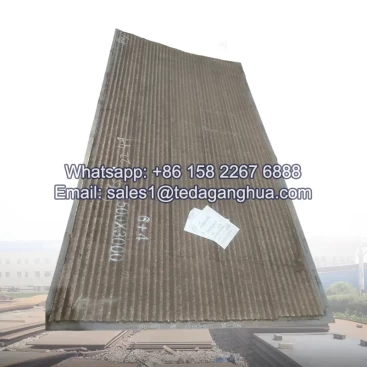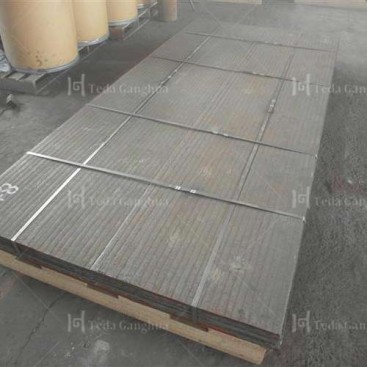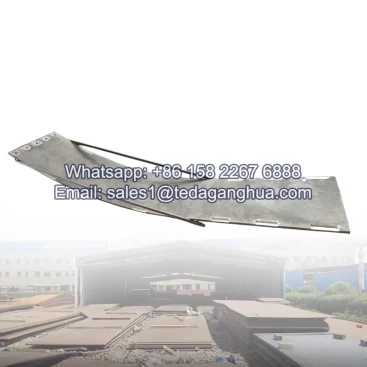
- Description
Hardfacing Steel Sheet Fabrication Guide: Cutting Welding Bending and Forming Overlay Plate Without Damaging the Wear Layer
Hardfacing steel sheets are designed to provide extreme abrasion resistance through a high-hardness alloy overlay bonded onto a tough steel substrate. Cependant, improper fabrication after production can damage the wear layer, reduce service life, and create premature failure during operation.
Successful processing requires understanding the difference between the hardfacing layer and the base steel. The wear surface should be protected during cutting, soudage, flexion, and machining operations to maintain the original wear performance.
1. Cutting Methods for Hardfacing Steel Sheet
Cutting is one of the most critical fabrication steps because excessive heat input can affect carbide structure, create cracks, and damage the overlay layer.
| Méthode de coupe | Pratique recommandée | Performance Evaluation |
|---|---|---|
| Découpe Plasma | Cut from the base steel side whenever possible | Fast cutting with controlled heat impact |
| Découpe Laser | Suitable for thinner overlay plates with precise requirements | Haute précision, narrow heat affected zone |
| Découpe au jet d'eau | Cold cutting without thermal damage | Excellent edge quality and no heat affected zone |
| Oxycoupage | Generally not recommended | Excessive heat input may damage overlay structure |
For chromium carbide overlay plates, cutting from the substrate side helps minimize direct thermal shock to the hardfacing layer and reduces the risk of carbide cracking.
2. Welding Hardfacing Steel Sheet
Welding should focus on joining the base steel rather than directly welding on the high-hardness wear layer.
The overlay layer contains a high percentage of chromium carbide reinforcement, which has limited weldability compared with the mild steel substrate.
| Welding Area | Recommended Method |
|---|---|
| Base Steel Side | Preferred welding area |
| Structural Support Welding | Use compatible buffer or stainless welding materials |
| Overlay Surface | Avoid direct welding unless specifically designed |
Common welding consumables include:
- 309L stainless steel electrodes
- 312 stainless steel electrodes
- Compatible buffer layers for special applications
Direct welding on the hardfacing layer can create:
- Cracking due to carbide structure
- Loss of hardness
- Reduced wear resistance
- Local spalling during service
3. Bending and Forming Requirements
Hardfacing plates have excellent abrasion resistance but limited forming ability because of their hard carbide-rich surface layer.
When bending is required, the correct bending direction is essential.
| Paramètre | Recommended Requirement |
|---|---|
| Bending Direction | Bend toward the base steel side |
| Rayon de courbure minimum | ≥ 20 times the plate thickness |
| Bending Method | Slow controlled forming process |
| Protection des surfaces | Avoid impact on overlay surface |
Bending toward the wear layer side increases tensile stress on the carbide-rich surface and may cause cracking or local detachment.
4. Drilling and Machining Hardfacing Plate
Traditional drilling tools are not suitable for chromium carbide overlay plates because of the extremely hard carbide particles.
| Machining Parameter | Pratique recommandée |
|---|---|
| Drill Tool | Tungsten carbide drill bits |
| Vitesse de coupe | Low speed operation |
| Refroidissement | Use sufficient coolant |
| Pressure Control | Maintain stable feed pressure |
Using unsuitable tools may cause excessive tool wear, overheating, and surface damage around the drilled area.
5. Recommended Fabrication Workflow
| Étape | Processus | Key Control Point |
|---|---|---|
| 1 | Coupe | Protect overlay layer from excessive heat |
| 2 | Edge Preparation | Remove damaged edges if necessary |
| 3 | Soudage | Weld mainly on substrate side |
| 4 | Pliage/Formage | Keep bending radius above recommended limit |
| 5 | Usinage | Use carbide tools and cooling |
| 6 | Final Inspection | Check cracks, bonding, and surface condition |
6. Common Fabrication Mistakes and Solutions
| Problème | Cause | Solution |
|---|---|---|
| Overlay cracking | Excessive bending stress or heat input | Use correct bending direction and controlled cutting |
| Overlay peeling | Damaged metallurgical bonding area | Avoid overheating during fabrication |
| Rapid tool wear during drilling | Incorrect drilling tools | Use tungsten carbide tools |
| Reduced wear life | Direct welding on overlay layer | Weld through base steel whenever possible |
7. Teda Ganghua Hardfacing Plate Fabrication Support
Teda Ganghua provides chromium carbide overlay plates engineered for demanding abrasion applications in mining, ciment, acier, production d'énergie, and bulk material industries.
Our solutions include:
- Stable wear-resistant overlay structure
- Reliable metallurgical bonding
- Customized thickness and dimensions
- Fabrication guidance for cutting, soudage, et former
- Technical support for different operating conditions
By selecting the correct fabrication method, customers can maintain the original hardness and wear resistance of hardfacing plates while achieving the required component shape.
Learn more:
Chromium Carbide Overlay Plate Solutions
Conclusion
Hardfacing steel sheet fabrication requires a balance between processing efficiency and protection of the wear-resistant layer. Plasma cutting from the substrate side, controlled welding procedures, correct bending direction, and carbide machining tools are essential for maintaining performance.
With proper fabrication practices, chromium carbide overlay plates can deliver long service life even in the most demanding abrasion environments.