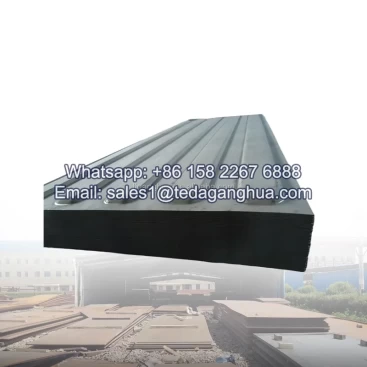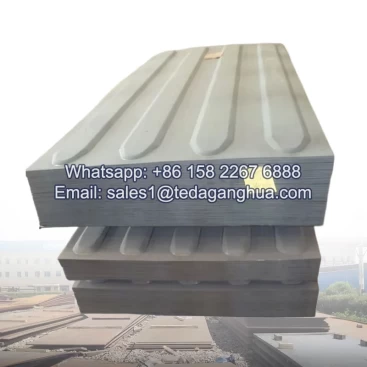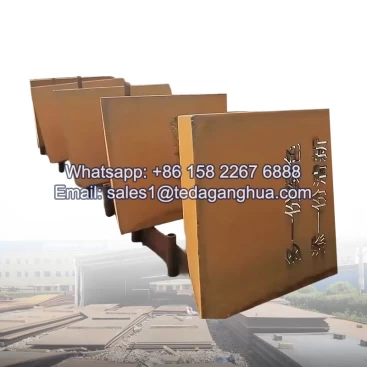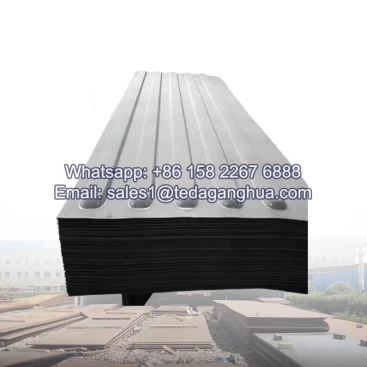
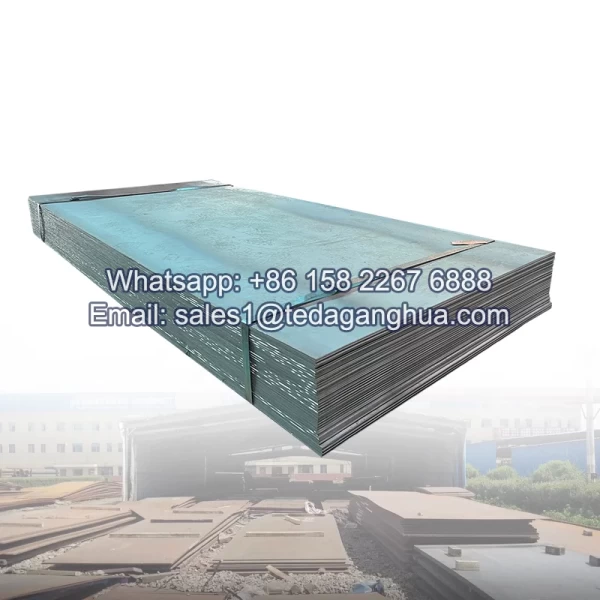
Acier Corten recyclé

Recycled Corten steel maintains the same corrosion-resistant properties as new weathering steel because of its patine rouille stable. Contrairement à la rouille de l'acier ordinaire, the rust layer on Corten steel becomes dense, protecteur, and tightly bonded to the surface, slowing further corrosion.
- Description
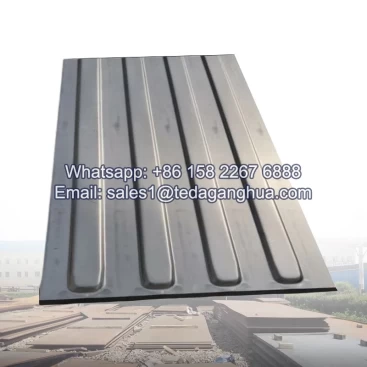
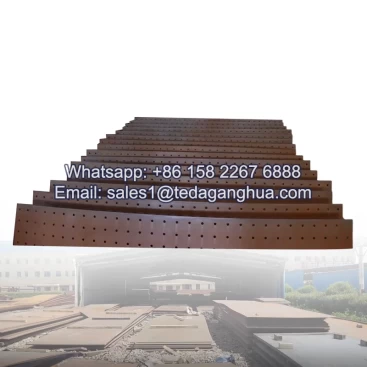
Recycled Corten steel refers to weathering steel that is reused or repurposed after its initial service life. Because weathering steel develops a couche protectrice stable contre la rouille, it can often be recycled or reused in architectural and landscape applications while maintaining its distinctive weathered appearance.
One of the most important characteristics of Corten steel is the unique corrosion mechanism that distinguishes it from ordinary carbon steel.
The Rust Formation Principle of Corten Steel
L'acier Corten contient des éléments d'alliage tels que cuivre, chrome, nickel, et du phosphore. These elements change the way rust forms on the steel surface.
Lorsqu'il est exposé à l'air et à l'humidité, the steel undergoes controlled oxidation:
-
Oxydation initiale
The surface reacts with oxygen and moisture, forming iron oxide. -
Alloy Element Reaction
Cuivre, chrome, and nickel influence the structure of the oxide layer. -
Formation de patine protectrice
A dense and tightly bonded rust layer develops on the surface. -
Stabilisation de la corrosion
The rust layer acts as a barrier that slows further corrosion.
Because of this process, weathering steel can protect itself without paint or coating in many outdoor environments.
Difference Between Corten Steel Rust and Ordinary Steel Rust
Although both materials form rust when exposed to weather, le structure and behavior of the rust layer are very different.
| Propriété | Rouille en acier Corten | Ordinary Carbon Steel Rust |
|---|---|---|
| Structure de la rouille | Dense et stable | Lâche et poreux |
| Adhésion | Fortement lié à la surface | S'écaille et se pèle facilement |
| Taux de corrosion | Ralentit après la formation de patine | Continues to corrode over time |
| Apparence | Uniform reddish-brown patina | Irregular rust patches |
| Entretien | Usually no coating required | Often requires painting or protection |
The key difference is that Corten steel rust becomes protective, tandis que la rouille sur l'acier ordinaire continue d'endommager le matériau.
Role of Alloying Elements in Weathering Steel
The protective rust layer is possible because of specific alloying elements in Corten steel.
| Élément | Fonction |
|---|---|
| Cuivre (Cu) | Promotes formation of a stable rust layer |
| Chrome (Cr) | Améliore la résistance à la corrosion |
| Nickel (Dans) | Enhances atmospheric weather resistance |
| Phosphore (P.) | Helps stabilize the oxide layer |
Ces éléments contribuent à créer un fine-grained, couche d'oxyde étroitement liée that prevents deeper corrosion.
Applications of Recycled Corten Steel
Because the protective patina remains stable over time, weathering steel can be reused or recycled in many outdoor projects.
Les applications courantes incluent:
-
Panneaux muraux architecturaux
-
Bordure de jardin paysager
-
Outdoor sculptures and decorative structures
-
Grilles d'arbres et éléments d'aménagement urbain
-
Retaining walls and landscape features
Recycling Corten steel helps reduce material waste while maintaining the natural weathered aesthetic that is often desired in architectural and landscape designs.