- Keterangan
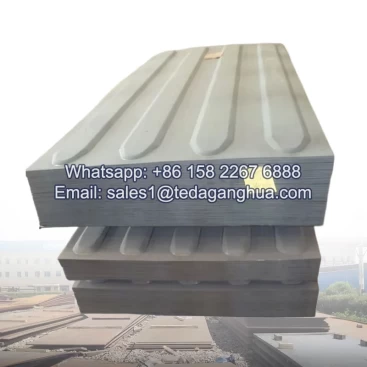
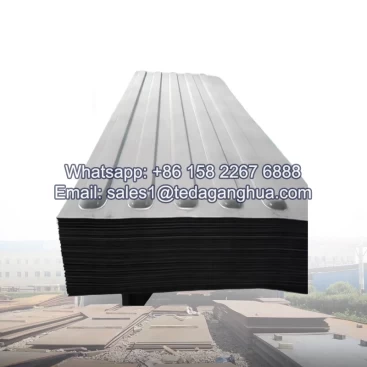
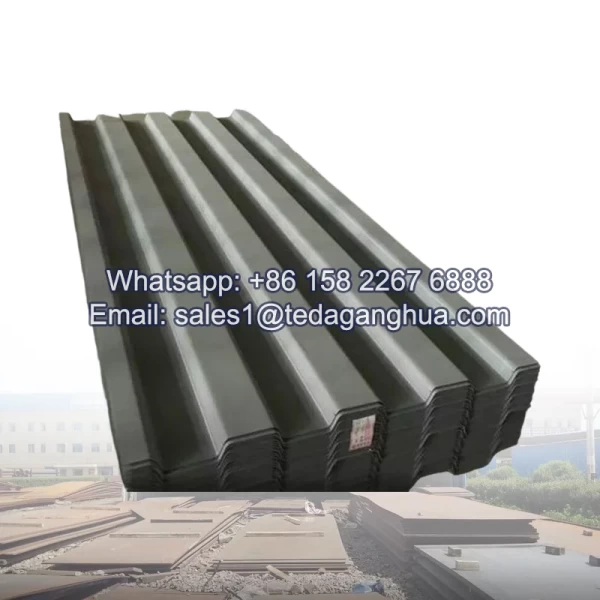
Corten steel roof panels used in shipping containers and modular structures are almost always designed with a corrugated (wavy or ribbed) profile instead of a flat sheet. This shape is not only a manufacturing choice, but a structural engineering requirement that directly affects strength, daya tahan, and service performance.
The corrugated design is especially important for corten steel because container roofs must remain lightweight while resisting heavy environmental and stacking loads.
1. Increasing Structural Strength Without Increasing Thickness
The main reason for corrugation is to improve stiffness.
A flat steel sheet:
- Easily bends under load
- Has low resistance to deformation
- Requires thicker material for strength
A corrugated sheet:
- Increases moment of inertia
- Distributes stress across ribs
- Greatly improves bending resistance
Hal ini memungkinkan thin corten steel sheets (typically 1.0–1.6 mm) to achieve sufficient structural strength for roof applications.
2. Improving Load-Bearing Performance
Shipping container roof panels must handle:
- Stacking pressure from upper containers
- Temporary walking load during inspection
- Wind uplift forces
- Impact from cargo handling equipment
The corrugated structure works like a series of small beams, allowing the roof panel to:
- Transfer load efficiently to side frames
- Prevent local collapse or denting
- Maintain structural stability over long service life
Without corrugation, the roof would deform easily under stacking loads.
3. Enhancing Water Drainage Efficiency
Roof panels are constantly exposed to rainwater.
Corrugation creates:
- Natural drainage channels
- Faster water runoff
- Reduced water accumulation areas
This is critical for corten steel because:
- Water retention can delay rust stabilization
- Standing water may cause uneven corrosion
- Drainage helps form a uniform protective patina
Karena itu, corrugation improves both structural performance and corrosion behavior.
4. Improving Wind Resistance
Container roofs are exposed to strong wind pressure during transport and outdoor storage.
Corrugated profiles:
- Increase surface rigidity
- Reduce panel fluttering
- Improve resistance to wind uplift
- Enhance overall structural stability
This is especially important in offshore or high-wind environments.
5. Reducing Material Usage and Weight
One key advantage of corrugation is material efficiency.
Instead of using thick flat steel:
- Thin corten sheet + corrugation = same or higher strength
This reduces:
- Overall container weight
- Transportation energy cost
- Material consumption
At the same time, structural performance is maintained or improved.
6. Improving Welding and Frame Integration
Corrugated roof panels:
- Match container frame geometry
- Provide stronger welding contact lines
- Increase joint stability
- Reduce stress concentration at edges
This improves long-term durability of the container structure.
7. Standardization in Container Manufacturing
Corrugated shapes are also required for:
- Global container standard compatibility
- Easy stacking and intermodal transport
- Consistent manufacturing across different factories
This ensures containers can be used worldwide without structural mismatch.