Acciaio Corten arrugginito

Rusted Corten steel differs significantly from ordinary rusted steel. The rust layer on Corten steel becomes denso, stabile, and protective, while rust on ordinary steel continues to damage the material.
- Descrizione
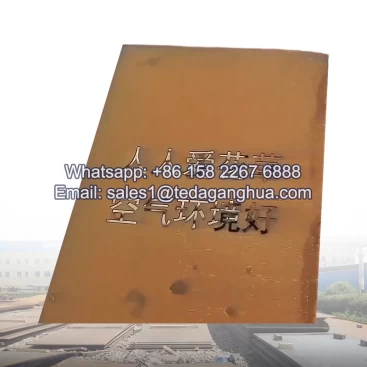
Rusted Corten steel refers to weathering steel that has developed its characteristic rust-colored surface through exposure to air and moisture. A differenza dell'acciaio comune, the rust that forms on Corten steel becomes a stable protective layer, known as a patina, which slows further corrosion and protects the inner metal.
Because of this unique behavior, rusted Corten steel is widely used in architettura, paesaggistico, and outdoor structures where both durability and appearance are important.
Why Corten Steel Rusts Differently
The main difference between Corten steel and ordinary carbon steel is the presence of specific alloying elements. Weathering steel contains elements such as:
-
Rame (Cu)
-
Cromo (Cr)
-
Nichel (In)
-
Fosforo (P)
These elements change the structure of the rust layer and allow it to become dense and stable, rather than loose and destructive.
When exposed to weather conditions, Corten steel undergoes a controlled oxidation process that results in a protective rust patina.
Differences Between Rusted Corten Steel and Rusted Carbon Steel
Although both materials form rust when exposed to moisture and oxygen, the properties of the rust layer are very different.
| Proprietà | Acciaio Corten arrugginito | Rusted Ordinary Steel |
|---|---|---|
| Rust Structure | Dense and compact | Loose and porous |
| Adhesion | Strongly bonded to surface | Easily flakes and peels |
| Corrosion Rate | Slows down after patina forms | Continues to corrode |
| Durabilità | Long-term outdoor resistance | Gradual structural damage |
| Manutenzione | Minimal maintenance | Often requires protective coatings |
The rust layer on ordinary steel continues to expand and weaken the material, while the rust on Corten steel acts as a protective barrier.
Color Differences Between Corten Steel Rust and Ordinary Rust
Another noticeable difference is the color and uniformity of the rust layer.
| Materiale | Typical Rust Color | Aspetto |
|---|---|---|
| Acciaio Corten | Deep reddish-brown | Uniform and stable patina |
| Acciaio al carbonio | Orange or dark brown | Uneven rust patches |
Corten steel gradually develops a rich reddish-brown surface that becomes more stable over time. Al contrario, ordinary steel rust often appears patchy and irregular, with flakes forming on the surface.
Rust Development Stages of Corten Steel
The surface color of weathering steel changes as the rust layer develops.
| Palcoscenico | Surface Color |
|---|---|
| Initial stage | Dark gray metallic surface |
| Early oxidation | Light orange rust |
| Intermediate stage | Brownish-orange tone |
| Stable patina | Deep reddish-brown finish |
This natural aging process gives Corten steel its distinctive architectural appearance.
Applications of Rusted Corten Steel
Because the rust layer becomes stable and decorative, rusted Corten steel is often used intentionally in design applications.
Common uses include:
-
Architectural facade panels
-
Landscape garden edging
-
Outdoor sculptures and decorative walls
-
Tree grates and urban landscaping structures
-
Garden planters and retaining walls
These applications take advantage of both the protective properties and the unique rust appearance of weathering steel.