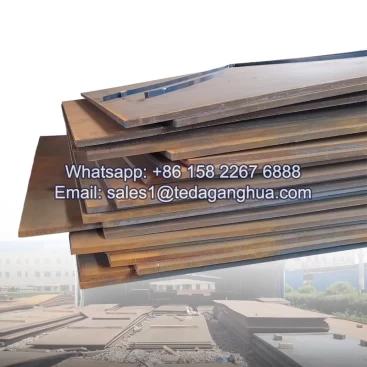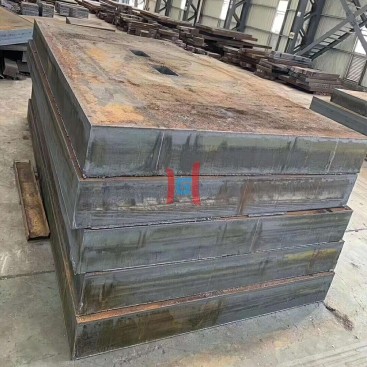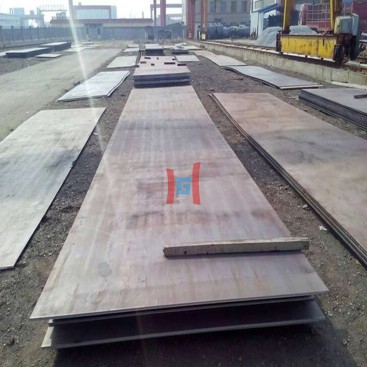
Piastra in acciaio resistente all'usura

Wear resistance in wear resistant steel plate is achieved through a combination of elevata durezza, optimized alloy composition, and controlled microstructure.
It is mainly reflected in:
- High Brinell hardness resisting surface cutting
- Martensitic structure providing strength and stability
- Alloy carbides improving abrasion resistance
- Balanced toughness preventing cracking under impact
- Descrizione
Wear resistant steel plate is a type of high-hardness alloy steel designed to resist surface damage caused by abrasion, impatto, e usura da scorrimento. Its “wear resistance” is not a single property, but the result of a combination of material composition, hardness level, and microstructure control.
Understanding how wear resistance is achieved helps explain why different grades (such as NM, AR, or hardfaced plates) perform differently in real applications.
1. Hardness – The Core Indicator of Wear Resistance
The most direct reflection of wear resistance is Brinell hardness (HBW).
| Livello di durezza | Wear Resistance Performance |
|---|---|
| 300–400 HB | Standard wear resistance |
| 400–500 HB | Elevata resistenza all'usura |
| 500+ HB | Molto alto / estrema resistenza all'usura |
Principle:
Higher hardness means the material surface is more difficult to deform or be cut by abrasive particles such as sand, minerale, or coal.
Tuttavia, hardness alone is not enough; toughness must also be considered.
2. Microstructure – The Internal Structure Behind Wear Resistance
Wear resistant steel is usually produced by quenching and tempering, forming a controlled microstructure:
- Martensite structure (high hardness phase)
- Fine carbide distribution (wear-resistant particles)
- Uniform grain structure (stability under load)
Come funziona:
- Hard martensite resists surface cutting
- Carbides block abrasive particles
- Fine structure reduces crack propagation
This combination ensures long service life under continuous wear.
3. Alloying Elements – Improving Wear Performance
Wear resistance is also improved through alloy design:
| Elemento | Function in Wear Resistance |
|---|---|
| Carbonio (C) | Increases hardness |
| Cromo (Cr) | Forms hard carbides, improves abrasion resistance |
| Manganese (Mn) | Migliora la tenacità e la temprabilità |
| Boro (B) | Enhances hardenability at low content |
Result:
A stronger and more stable steel matrix that resists wear and deformation.
4. Surface Wear Mechanism – How Damage Happens
Wear resistant steel is designed to resist three main types of wear:
1. Usura abrasiva
Caused by hard particles (sabbia, minerale, ghiaia) sliding on the surface
→ Wear steel resists cutting and scratching due to high hardness
2. Impact Wear
Caused by falling or hitting materials
→ Toughness prevents cracking and edge failure
3. Sliding Wear
Caused by continuous friction movement
→ Hard surface layer slows material loss over time
5. Hardness vs Toughness Balance
Wear resistance is effective only when hardness and toughness are balanced.
| Proprietà | Role |
|---|---|
| Durezza | Resists surface abrasion |
| Robustezza | Prevents cracking and fracture |
If hardness is too high without toughness, the plate may become brittle. If toughness is too high without hardness, wear resistance decreases.
6. Real-World Wear Performance Factors
In actual industrial use, wear resistance is influenced by:
- Material hardness grade (NM/AR level)
- Particle size and hardness of abrasive materials
- Impact frequency and load intensity
- Working temperature and environment
- Surface condition and installation method
7. How Wear Resistance Is Evaluated
Wear resistance is typically evaluated through:
- Test di durezza (HBW)
- Laboratory abrasion tests
- Field service life comparison
- Weight loss measurement under friction conditions
Result:
Higher-performance wear steel shows lower material loss over time.