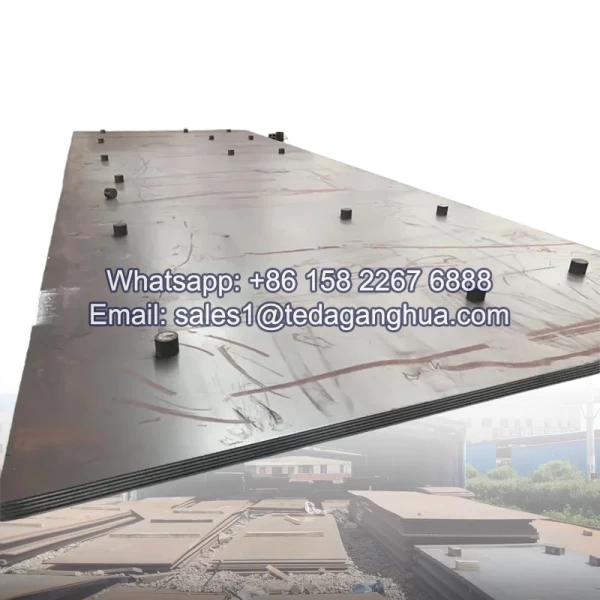
녹슨 판금
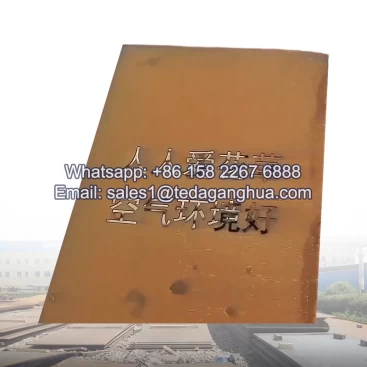
Rusted sheet metal made from Corten steel develops a uniform orange-red appearance because of its controlled alloy composition, stable oxide formation, and self-limiting corrosion behavior. The combination of copper, 크롬, and nickel ensures that rust forms evenly and transforms into a dense protective patina. This is why Corten steel is widely chosen for architectural applications where both durability and a consistent aesthetic rust finish are required.
- 설명
Rusted sheet metal made from Corten steel (풍화강) is widely used in architecture and landscape design because it develops a stable, uniform orange-red rust appearance. 일반 탄소강과 달리, which rusts unevenly and continues to degrade, Corten steel forms a controlled corrosion layer that becomes visually consistent over time.
Why Corten Steel Rust Is Orange-Red
The characteristic orange-red color comes from the formation of iron oxide (mainly Fe₂O₃). 하지만, the key difference is how this oxide layer develops and stabilizes.
In Corten steel:
- 철은 산소와 수분과 반응합니다.
- A thin rust layer forms on the surface
- Alloying elements modify the rust structure
- The layer becomes dense and tightly bonded
- The final stable color is red-brown to orange-red
Why the Rust Layer Is Uniform
1. Controlled Alloy Composition
Corten steel contains small but important alloying elements:
- 구리 (구리)
- 크롬 (Cr)
- 니켈 (~ 안에)
- 인 (피)
These elements ensure that corrosion does not progress randomly. 대신에, they help form a consistent oxide structure across the entire surface.
2. Wet and Dry Cycle Stabilization
Uniform rust formation depends strongly on environmental cycles:
- Rain wets the surface
- Dry air allows oxidation and stabilization
- Repeated cycles promote even rust growth
This alternating process prevents localized deep corrosion and encourages a balanced surface reaction.
3. Dense Protective Patina Formation
As rust develops, it transitions from loose oxidation into a protective layer:
- 초기 단계: light orange, slightly uneven
- 중급: deeper orange-brown
- Final stage: 안정적인, dense patina
This patina:
- 산소 침투를 차단합니다.
- Reduces moisture absorption
- Prevents further deep corrosion
Because the protection effect is consistent across the surface, the color becomes visually uniform.
4. Self-Limiting Corrosion Behavior
Unlike carbon steel, Corten steel rust does not keep expanding uncontrollably. 대신에:
- Rust growth slows down naturally
- Surface stabilizes after full exposure cycle
- Corrosion becomes self-limiting
This prevents patchy over-rusting and helps maintain a consistent appearance.
Why Ordinary Steel Rust Is Not Uniform
Carbon steel produces uneven rust because:
- No alloy stabilization
- Rust layer is porous and unstable
- Moisture and oxygen penetrate irregularly
- Some areas corrode faster than others
- Flaking exposes fresh metal repeatedly
This leads to a patchy, rough, and inconsistent rust surface.
Key Difference in Appearance
| 특징 | 코르텐 강판 | 탄소강판 |
|---|---|---|
| Rust Color | Uniform orange-red | Uneven brown/red/black |
| Surface Texture | 조밀하고 안정적 | Flaky and rough |
| 부식 거동 | 통제됨 | Continuous |
| Aesthetic Result | Decorative and consistent | Industrial and deteriorating |
Common Uses of Rusted Corten Sheet Metal
Because of its stable and uniform appearance, Corten steel is widely used in:
- 건물 정면 및 외부 클래딩
- 건축 벽면 패널
- 조경 및 정원 디자인
- Outdoor art and sculptures
- Commercial design elements
- Bridge decoration and structural skin
- Privacy screens and fencing systems