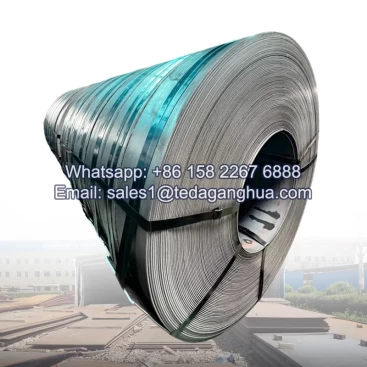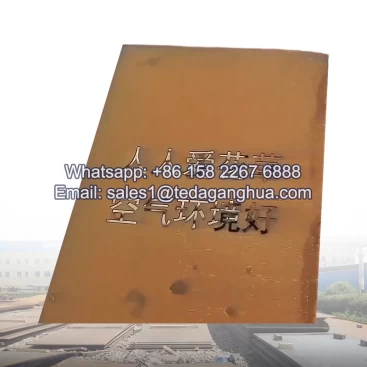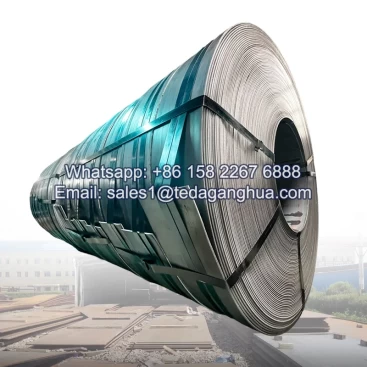
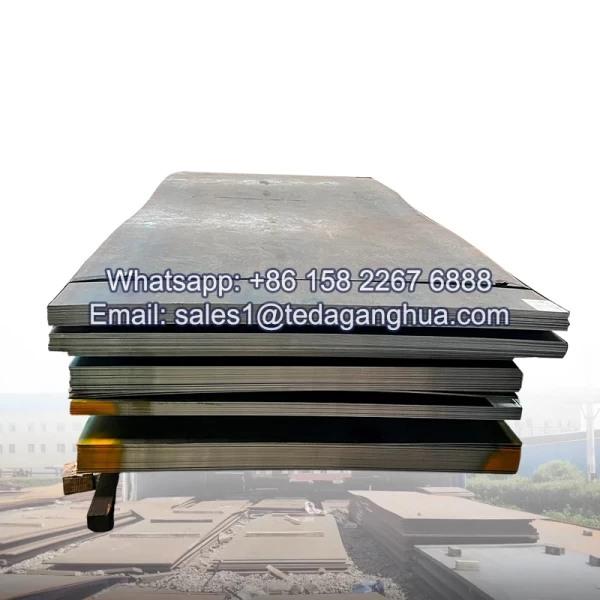
การดัดเหล็ก Corten
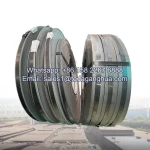

Bending Corten steel is a key fabrication process that enables the production of complex shapes while maintaining durability and corrosion resistance. By optimizing parameters such as bending radius, direction, and temperature, manufacturers can achieve precise and reliable results.
- คำอธิบาย
เหล็กคอร์เทน, หรือที่เรียกว่าเหล็กผุกร่อน, is a high-strength low-alloy material that forms a stable protective oxide layer when exposed to the atmosphere. This layer enhances corrosion resistance and eliminates the need for additional coatings in many environments.
Due to its balanced mechanical strength and ductility, Corten steel is widely used in fabrication processes such as bending, กลิ้ง, และการขึ้นรูป. ดัด, in particular, is essential for producing curved, angular, and customized components used in modern construction and industrial design.
1. Corten Steel Bending Process
1.1 การดัดเย็น
Cold bending is the most widely used method for shaping Corten steel.
- Performed at room temperature
- Suitable for thin and medium thickness plates
- Uses press brakes, ลูกกลิ้ง, or CNC bending machines
- Maintains original mechanical properties
This method ensures high dimensional accuracy and does not interfere with the formation of the protective oxide layer.
1.2 การดัดร้อน
Hot bending is used for thicker plates or when a smaller bending radius is required.
- Heating improves plasticity
- Reduces internal stress and cracking risk
- Requires controlled temperature to prevent structural changes
Careful process control is necessary to maintain strength and corrosion resistance.
1.3 Roll Bending
Roll bending is ideal for producing large-radius curves and cylindrical shapes.
- Applied in curved panels and structural components
- Uses 3-roll or 4-roll bending machines
- Suitable for architectural and industrial fabrication
2. Key Bending Parameters
Minimum Bending Radius
| ความหนาของแผ่น (ที) | Recommended Min Radius | Processing Condition |
|---|---|---|
| 1.5 – 10 มม | ≥ 2 × t | Easy cold bending |
| 10 – 30 มม | ≥ 3 × t | Controlled bending |
| 30 – 60 มม | ≥ 4 × t | Preheating required |
Selecting the correct bending radius is critical to avoid cracking and ensure structural integrity.
Other Important Factors
- Bending direction: Perpendicular to rolling direction improves formability
- สภาพพื้นผิว: Clean surfaces ensure uniform oxidation
- Bending speed: Slower speeds reduce stress concentration
- การอุ่น: Recommended for thick plates to improve ductility
3. Common Bending Defects and Solutions
| Defect | สาเหตุ | สารละลาย |
|---|---|---|
| Surface cracking | Radius too small | Increase bending radius |
| Uneven oxidation | Surface contamination | Clean before processing |
| Springback | High strength material | Apply compensation angle |
| Edge tearing | Improper tooling | Adjust die clearance |
4. Standard Fabrication Workflow
- Material selection based on grade, ความหนา, and application
- Surface preparation to remove oil and impurities
- Process design including bending radius and tooling selection
- Bending operation using cold or hot forming
- Inspection for cracks, การเสียรูป, และความแม่นยำของมิติ
- Optional pre-weathering treatment for consistent surface appearance
5. Applications of Bent Corten Steel
การประยุกต์ทางสถาปัตยกรรม
- Curved facades and cladding systems
- Roofing structures and decorative panels
- Long-life exterior building components
การออกแบบภูมิทัศน์และกลางแจ้ง
- Garden edging and retaining borders
- Planters and outdoor installations
- Low-maintenance landscape structures
วิศวกรรมโครงสร้าง
- Bridges and exposed steel frameworks
- Infrastructure requiring corrosion resistance
Industrial and Artistic Uses
- Sculptures and custom metal fabrication
- Industrial equipment components
6. Advantages of Bending Corten Steel
- High formability with stable mechanical performance
- ทนต่อการกัดกร่อนในชั้นบรรยากาศได้ดีเยี่ยม
- ความต้องการในการบำรุงรักษาลดลง
- Distinctive natural surface appearance