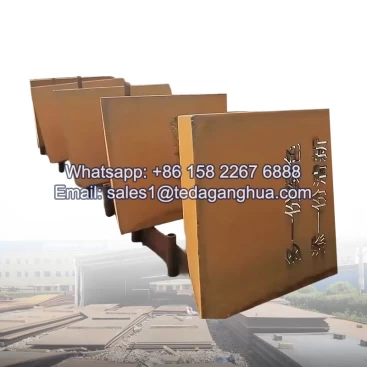
Tấm tôn Corten
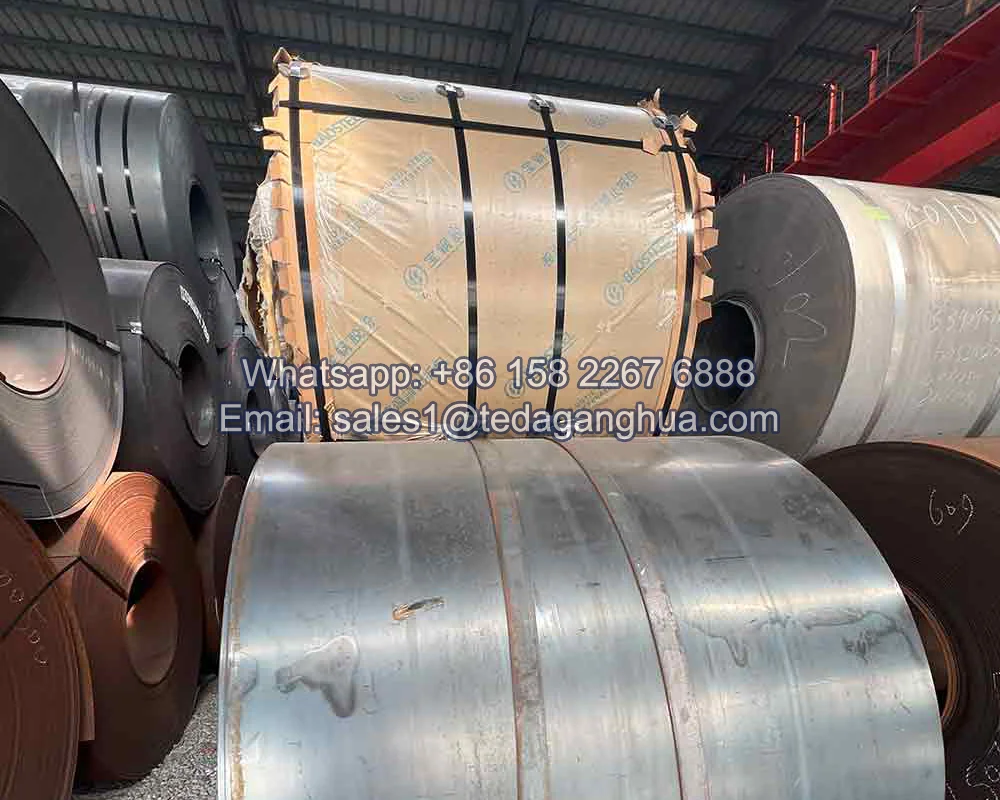
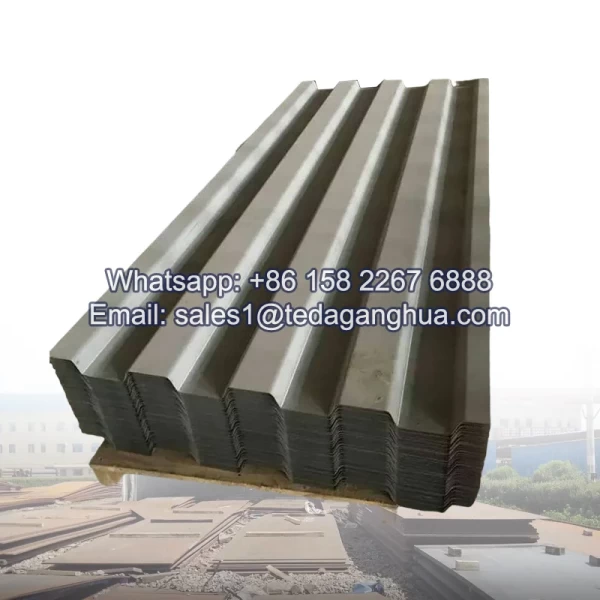
The manufacturing process of corten corrugated panels includes material preparation, cắt chính xác, roll forming or press forming, edge finishing, welding assembly, and surface treatment. These steps ensure that weathering steel sheets are transformed into high-strength, durable corrugated components suitable for shipping containers, modular buildings, and architectural applications. The combination of controlled forming technology and corten steel’s natural corrosion resistance makes it a reliable material system for modern industrial and construction use.
- Sự miêu tả
Corten corrugated panels are made from weathering steel sheets formed into ribbed or wave-shaped profiles. Những tấm này được sử dụng rộng rãi trong các container vận chuyển, modular buildings, industrial walls, and architectural façades. The main advantage of corten steel is its ability to develop a stable rust patina, which improves outdoor corrosion resistance and reduces maintenance requirements.
The performance of corrugated corten panels depends not only on the material itself, but also on the manufacturing and forming process.
1. Raw Material Preparation
The production process begins with selecting corten steel sheets in standard grades such as:
- Loại ASTM A606 4
- ASTM A588
- S355J2W
- Q355NH
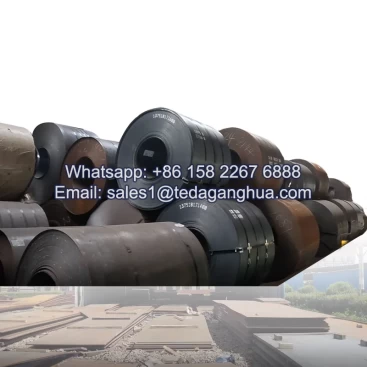
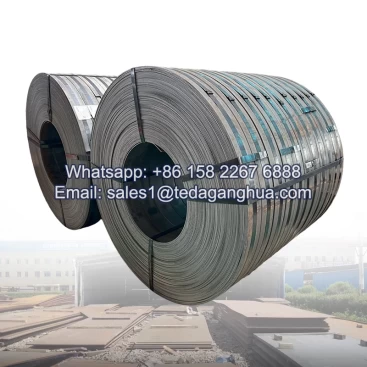
The steel sheets are usually supplied in coil or flat sheet form with controlled thickness depending on application:
- Container side panels: 1.6–2,0mm
- Roof panels: 1.0–1,6 mm
- Structural base panels: 2.0–3,0mm
Before processing, the steel surface is checked for flatness, thành phần hóa học, and thickness tolerance.
2. Cutting Process
The corten steel sheet is cut into required panel sizes before forming.
Các phương pháp cắt phổ biến bao gồm:
- Shearing cutting for straight edges
- CNC cutting for precise dimensions
- Laser cutting for detailed shapes and openings
- Cắt plasma cho tấm dày hơn
Accurate cutting is important to ensure proper fit during container assembly or façade installation.
3. Corrugation Forming Process
This is the key step in manufacturing corten corrugated panels.
Roll Forming Process
Most container panels are produced using continuous roll forming machines:
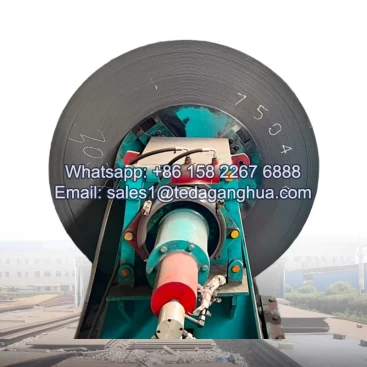
- Steel sheet passes through multiple roller sets
- Gradually shaped into wave or rib profiles
- Ensures consistent geometry and high production efficiency
ép hình thành (Stamping)
For thicker or customized panels:
- Hydraulic press molds are used
- High pressure forms deep corrugation
- Suitable for heavy-duty structural panels
4. Edge Trimming and Shaping
After corrugation, panels are trimmed and finished:
- Edge cutting for precise dimensions
- Corner shaping for container assembly
- Hole punching for bolts or connections
- Slot forming for welding or overlap joints
This step ensures panels can be assembled accurately into container structures.
5. Welding and Structural Assembly (Container Use)
For shipping container production or modular systems:
- Corrugated side panels are welded to steel frames
- Roof panels are attached with reinforced beams
- Bottom structures are integrated with cross members
- Continuous welding ensures structural integrity
Corten steel is well-suited for welding due to its low-alloy composition.
6. Surface Treatment and Weathering Preparation
Corten corrugated panels are usually delivered in three surface conditions:
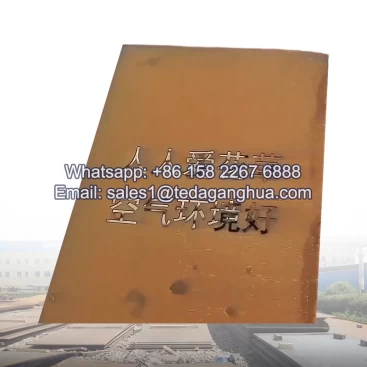
1. Mill Finish (Black Steel Surface)
- Original steel surface
- Naturally develops rust after exposure
2. Pre-Weathered Finish
- Controlled oxidation process before delivery
- Creates uniform rust color
3. Natural Weathered Finish
- Fully exposed outdoor rusting process
- Forms stable protective patina over time
In container applications, controlled surface preparation helps ensure consistent appearance and corrosion behavior.
7. Quality Inspection
Before shipment or installation, corten corrugated panels undergo quality checks:
- Thickness measurement
- Corrugation height consistency
- Flatness and deformation control
- Weld seam inspection (if assembled panels)
- Surface rust uniformity (if pre-weathered)
Ưu điểm chính của quy trình sản xuất
1. High Structural Precision
Roll forming ensures uniform corrugated profiles, which improves stacking strength and dimensional accuracy.
2. Efficient Mass Production
Continuous forming lines allow large-scale production for container manufacturing and industrial projects.
3. Good Formability of Corten Steel
Weathering steel maintains excellent plasticity, making it suitable for deep corrugation without cracking.
4. Compatibility with Welding and Assembly
Corten steel integrates well with structural frames, making it ideal for modular and container systems.