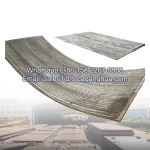
- Sự miêu tả
Tấm phủ: Wear Resistance Mechanism of Hardfaced Weld Layers
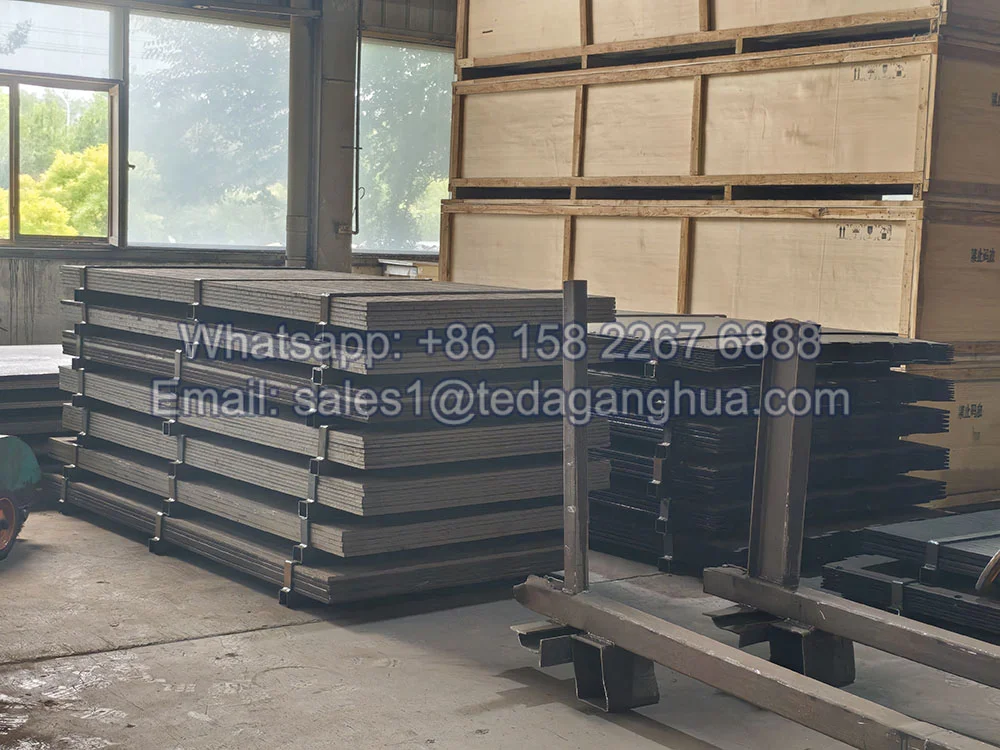
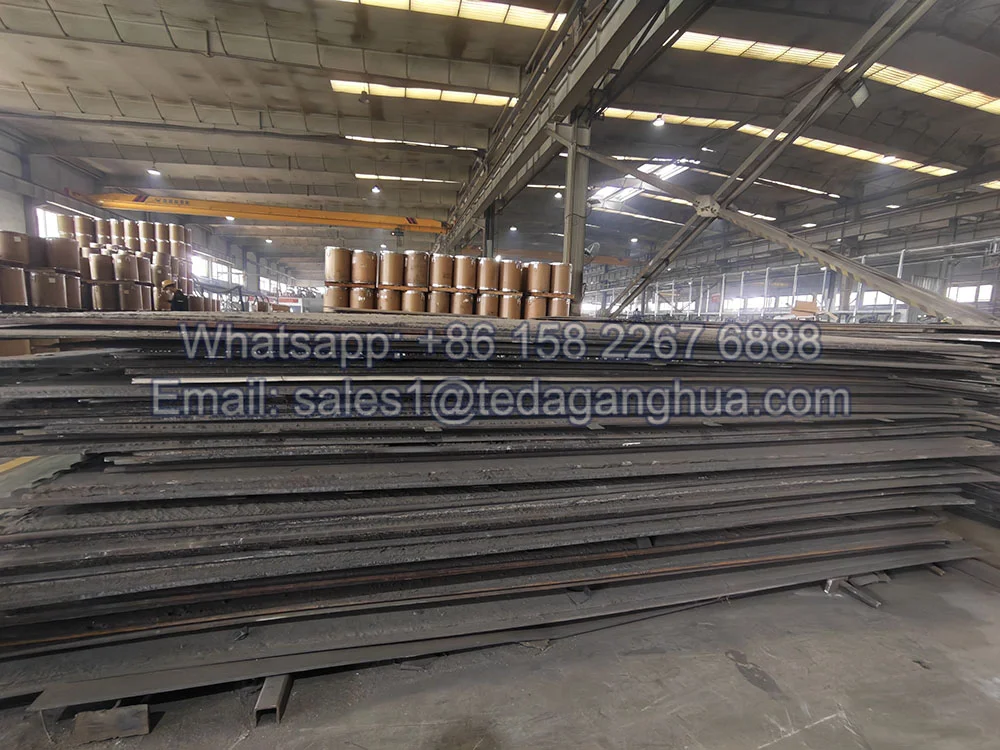
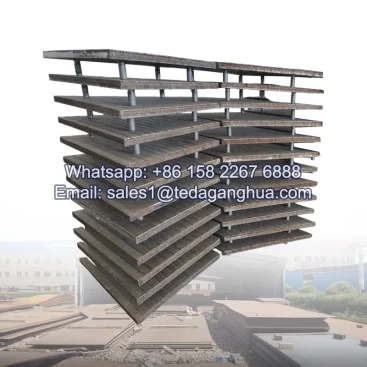
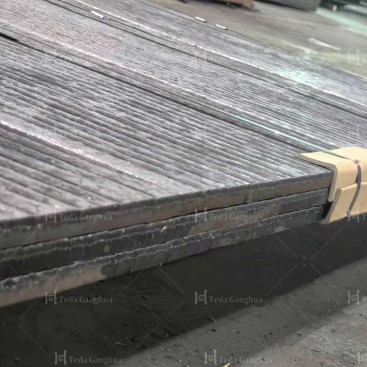
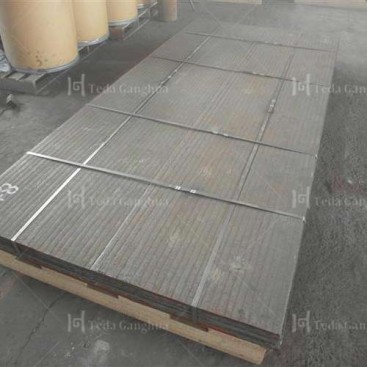
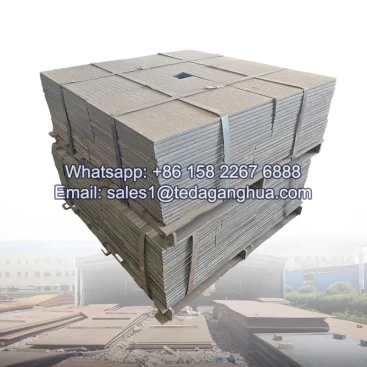
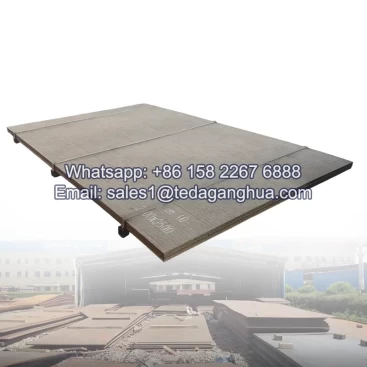
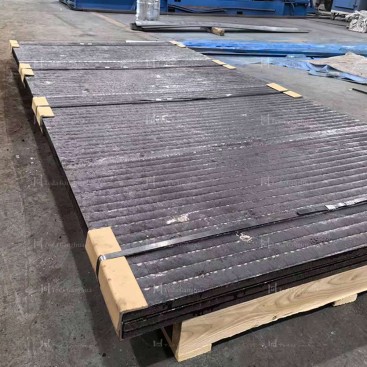
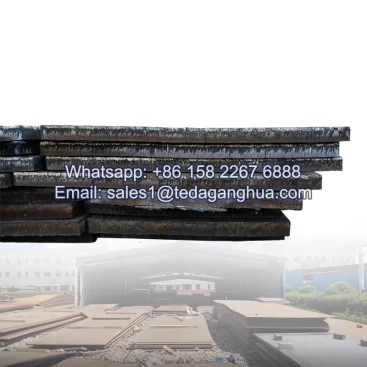
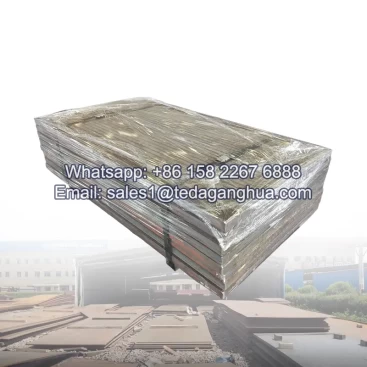
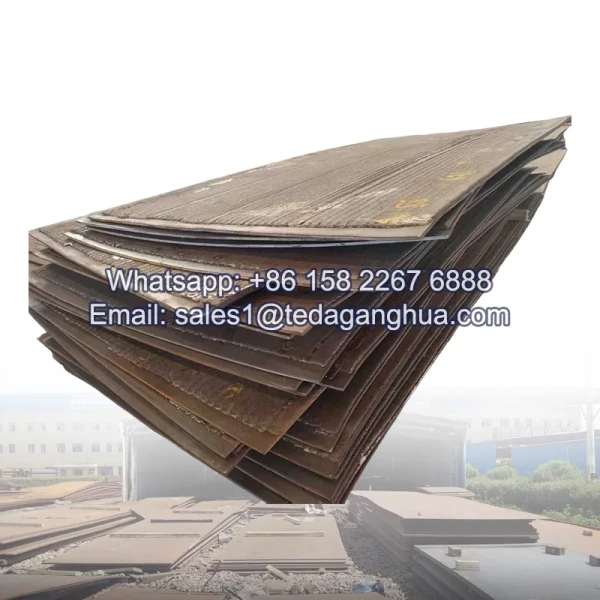
Overlay plate (also called hardfaced plate or weld overlay wear plate) is a composite steel product that achieves high wear resistance by depositing a hard alloy layer onto a steel base plate through welding. Its excellent performance does not come from the base steel, but from the metallurgical structure of the overlay layer.
The wear resistance mechanism is mainly based on the interaction between hard carbides, alloy matrix, and surface stress behavior.
1. Hard Carbide Reinforcement Mechanism
| Yếu tố / Phase | Chức năng chống mài mòn |
|---|---|
| cacbua crom (Cr7C3, Cr23C6) | Primary hard phase resisting abrasion |
| Cacbon (C) | Forms carbide structures with chromium |
| Iron-based matrix | Supports and holds carbides in place |
| Các nguyên tố hợp kim (Nb, Mo, V.) | Refines carbide distribution and improves stability |
The hard carbides act like “micro cutting tools” that resist scratching and cutting from abrasive particles.
2. Two-Phase Composite Wear Structure
The overlay layer is a dual-phase structure:
- Hard phase: Carbides (độ cứng cao, resist wear)
- Tough matrix: Metal binder (absorbs impact and holds structure)
This combination provides both hardness and limited toughness, which is essential for industrial wear conditions.
3. Abrasive Wear Resistance Mechanism
| Wear Type | How Overlay Layer Works |
|---|---|
| Trượt mài mòn | Carbides resist cutting and micro-scratching |
| Xói mòn hạt | Hard surface reduces material loss from impact particles |
| Friction wear | Reduces surface deformation and groove formation |
4. Stress Distribution and Crack Behavior
Trong quá trình hàn, controlled micro-cracks may form on the surface:
- They help release residual stress
- They prevent large-scale fracture
- They do not reduce wear performance
This stress-relief behavior helps maintain long-term stability under heavy wear conditions.
5. Bonding Strength Mechanism
Overlay plates are not mechanically attached—they are liên kết luyện kim.
- Strong fusion between overlay and base plate
- Không có sự phân tách trong điều kiện làm việc bình thường
- Improved load transfer capability
6. Why Overlay Plates Last Longer Than Ordinary Steel
| Nhân tố | Effect on Service Life |
|---|---|
| Độ cứng bề mặt cao | Reduces material loss rate |
| Gia cố cacbua | Prevents cutting wear |
| Composite structure | Balances wear resistance and toughness |
| Controlled alloy design | Improves stability in harsh conditions |
7. Khả năng cung cấp tấm phủ Teda Ganghua
Là nhà cung cấp thép chịu mài mòn chuyên nghiệp, Teda Ganghua provides high-performance overlay plates with optimized carbide structures for mining, xi măng, thép, và các ngành công nghiệp điện. We focus on improving wear resistance through controlled alloy design and stable welding processes.
Chúng tôi cũng hỗ trợ cắt tùy chỉnh, chế tạo, and wear system engineering based on real working environments.
Khám phá các sản phẩm thép chịu mài mòn của chúng tôi tại đây:
Tấm lớp phủ crom cacbua
Phần kết luận
The wear resistance of overlay plates comes from hard carbide reinforcement, composite dual-phase structure, and metallurgical bonding. These mechanisms work together to significantly reduce material loss under abrasion, making overlay plates one of the most effective industrial wear solutions.