
- 描述
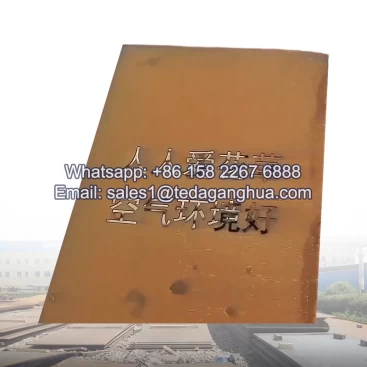
Corten steel cladding is widely used in modern architecture not only for its appearance but also for its 自保护锈层, known as the patina. This red-brown oxide layer forms naturally when the steel is exposed to alternating wet and dry atmospheric conditions.
与普通碳钢不同, where rust leads to continuous corrosion, the rust layer on Corten steel acts as a 防护屏障 that slows down further oxidation.
1. How the Rust Layer Forms
The protective patina develops through a controlled oxidation process:
- Initial exposure to moisture and oxygen
- Formation of a loose rust layer
- Gradual transformation into a dense, 稳定的氧化层
- Surface stabilizes and stops deep corrosion
This process typically takes several months depending on climate conditions such as humidity, 雨量, and air pollution.
2. Core Functions of the Corten Rust Layer
2.1 Corrosion Protection
The most important function of the rust layer is to prevent further corrosion.
- Acts as a barrier against water and oxygen
- Reduces corrosion rate compared to ordinary steel
- Extends service life significantly
This eliminates the need for painting or galvanizing in most outdoor environments.
2.2 Self-Healing Ability
One unique feature of the Corten patina is its ability to self-repair.
- Minor scratches or damage will re-oxidize
- The protective layer reforms automatically
- Ensures long-term durability with minimal maintenance
2.3 降低维护成本
Because the rust layer protects the steel naturally:
- No repainting or coating required
- Lower lifecycle maintenance costs
- Ideal for large-scale facade systems
This is a key factor influencing the overall cladding price advantage over time, even if initial material costs are higher.
2.4 审美价值
The rust layer provides a distinctive architectural appearance:
- Warm, natural red-brown tones
- 颜色随着时间的推移而演变
- Blends well with natural and urban environments
This makes Corten cladding highly popular in modern building design.
3. Impact of the Rust Layer on Cladding Price
Although “price” often refers to initial material cost, for Corten cladding it is more accurate to consider 总生命周期成本.
| 成本因素 | Conventional Steel Cladding | 耐候钢覆层 |
|---|---|---|
| 初始材料成本 | 降低 | 缓和 |
| 表面处理 | 必需的 (painting/coating) | 不需要 |
| 维护成本 | 高的 (repainting, 维修) | 很低 |
| 使用寿命 | 10–20 年 | 30–80+ years |
| Lifecycle Cost | Higher overall | Lower overall |
The protective rust layer is the key reason why Corten steel achieves long-term cost efficiency despite a higher upfront cost.
4. Performance Advantages in Cladding Applications
Architectural Facades
- Long-lasting exterior protection
- No coating degradation issues
- Consistent weathered appearance
Harsh Environments
- Suitable for industrial and coastal areas (with proper design)
- 耐大气腐蚀
Sustainable Construction
- Reduced need for chemical coatings
- Lower maintenance resource consumption
- Long service life reduces material replacement
5. 重要考虑因素
While the rust layer provides many advantages, proper design is essential:
- Avoid constant water exposure (prevents stable patina formation)
- Ensure proper drainage in facade systems
- Consider staining of nearby surfaces during early oxidation stages