- Beschreibung
Submerged Arc Welding Overlay Plate: Why SAW Is the Industry Standard for Large Area Hardfacing
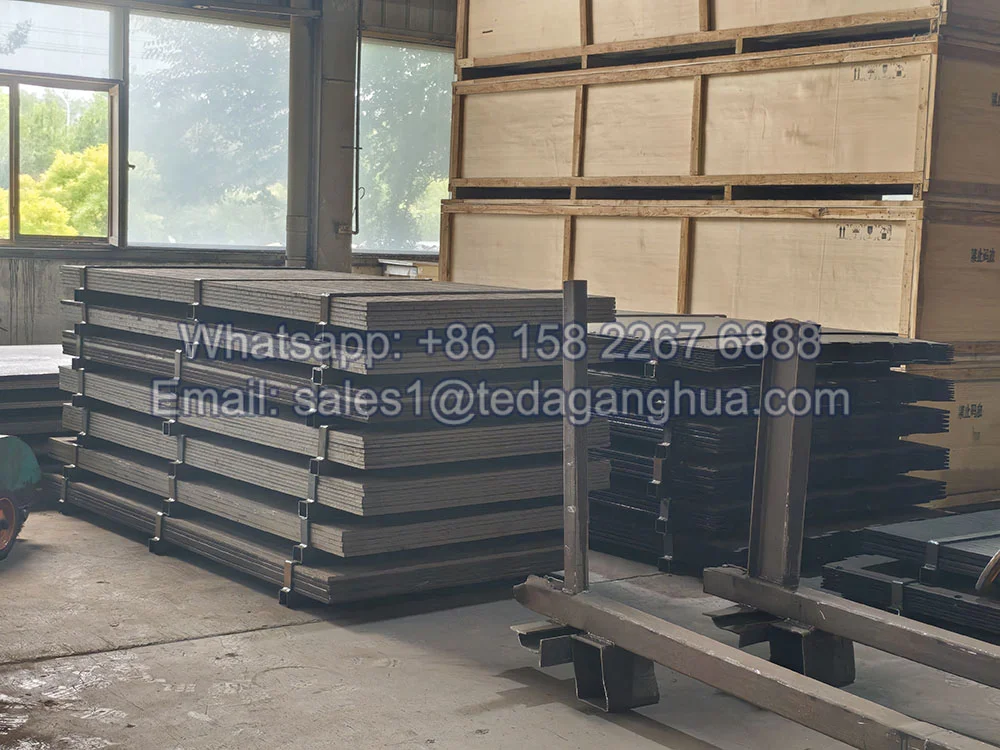
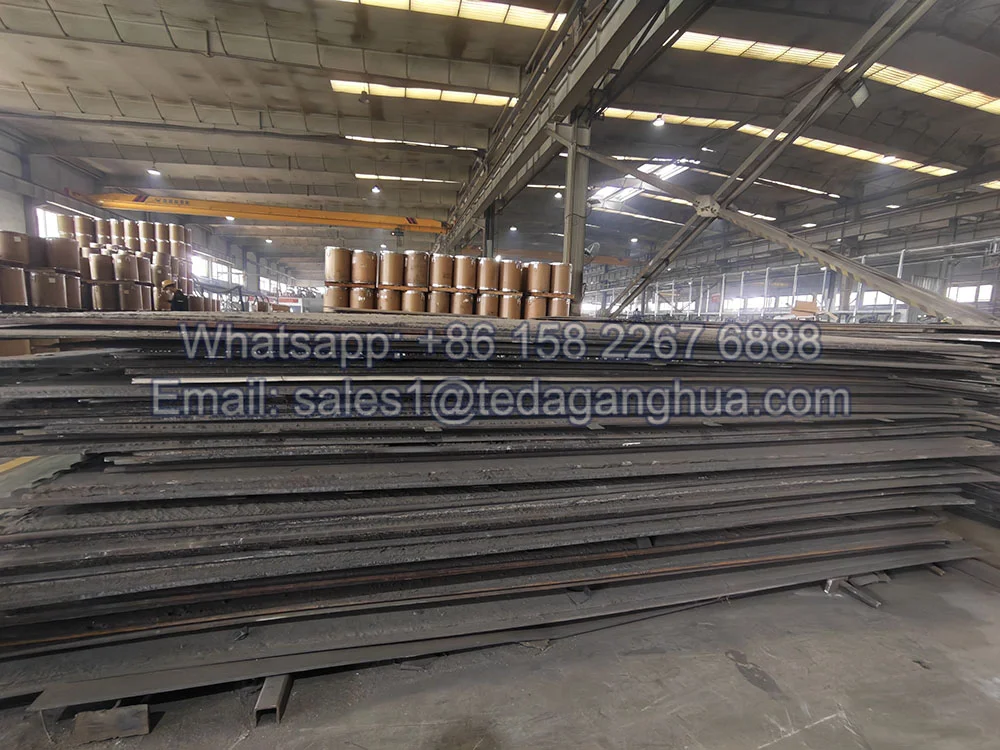
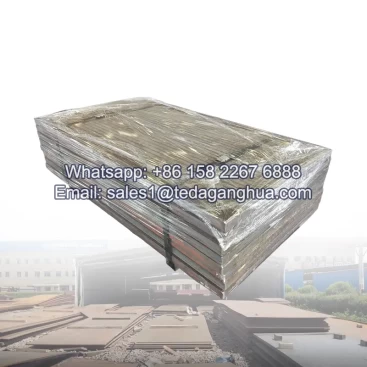
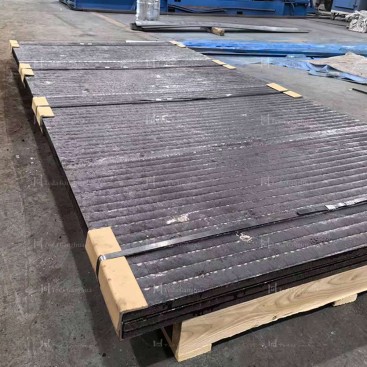
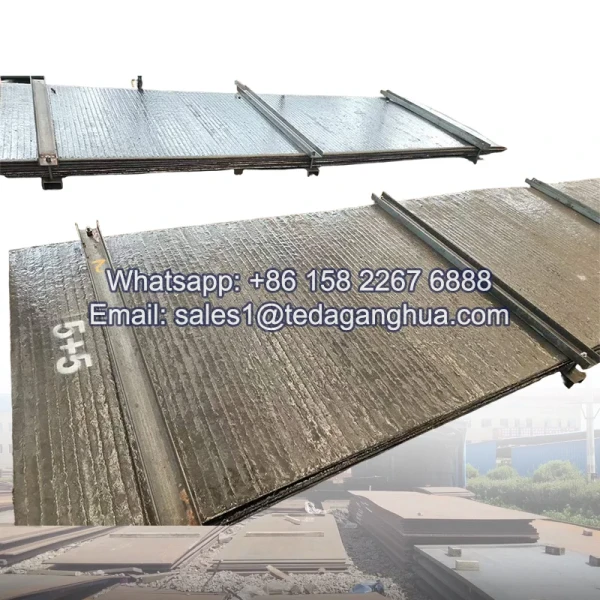
For large-area wear protection applications, manufacturing efficiency and overlay quality are equally important. Unterpulverschweißen (GESEHEN) Overlay-Platte has become one of the most widely adopted hardfacing technologies because it combines high deposition efficiency, stable welding quality, geringe Verdünnung, and excellent surface consistency.
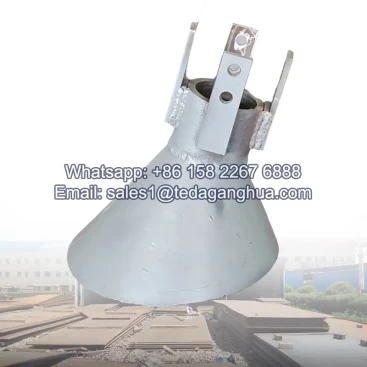
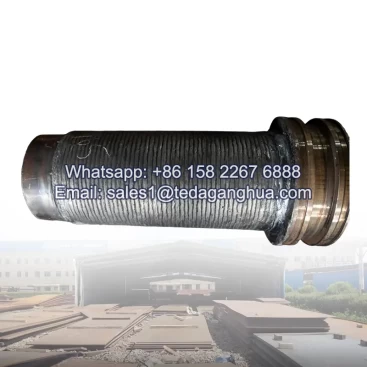
From mining chutes and crusher liners to cement equipment and heavy industrial wear components, SAW technology provides a reliable method to apply high-hardness alloy layers on steel substrates.
This guide explains how SAW hardfacing works, how welding parameters influence overlay performance, and why SAW remains the preferred solution for large-area chromium carbide overlay plates.
1. What Is Submerged Arc Welding Overlay Technology?
Submerged Arc Welding is an automatic welding process where the electric arc burns beneath a layer of granular flux. Unlike open arc welding, the arc is completely covered during operation.
The basic process includes:
| Process Stage | Beschreibung |
|---|---|
| Flux covering | Flux protects the arc from atmosphere contamination |
| Arc melting | Electrical energy melts the welding wire and base surface |
| Alloy deposition | Wear-resistant alloy forms a metallurgical bond with the steel plate |
| Cooling and solidification | Creates a dense and uniform hardfacing layer |
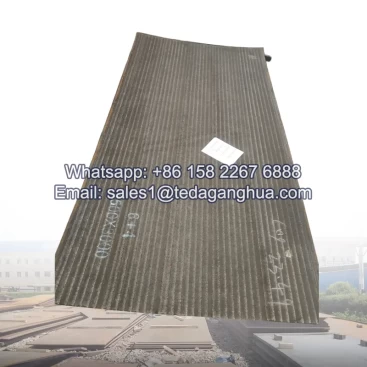
The result is a composite structure:
- Wear-resistant alloy surface layer
- Strong metallurgical bonding interface
- Tough steel backing plate
2. Why SAW Is Ideal for Large Area Hardfacing
Large industrial components require consistent wear protection over wide surfaces. SAW technology offers several advantages:
2.1 High Deposition Efficiency
SAW has a much higher deposition rate compared with many manual welding methods. This makes it suitable for large plates where production speed is critical.
- Higher welding speed
- Lower labor requirements
- Stable production output
2.2 Low Dilution Rate
Dilution refers to the amount of base metal mixed into the overlay layer. Lower dilution helps maintain alloy chemistry and improves wear resistance.
SAW can achieve controlled dilution by optimizing:
- Schweißstrom
- Arc voltage
- Reisegeschwindigkeit
2.3 Smooth and Uniform Surface
Because SAW operates under a protective flux layer, the deposited surface has:
- Excellent bead appearance
- Reduced porosity
- Stable carbide distribution
- Consistent hardness
3. Three Key SAW Parameters Affecting Overlay Performance
3.1 Welding Current
Current directly affects heat input and deposition quantity.
| Current Change | Wirkung |
|---|---|
| Higher current | Higher deposition rate but increased penetration and dilution |
| Lower current | Lower heat input but reduced productivity |
3.2 Arc Voltage
Voltage controls arc length and bead shape.
- Higher voltage → wider bead and smoother surface
- Lower voltage → narrower penetration profile
3.3 Schweißgeschwindigkeit
Travel speed influences layer thickness and heat distribution.
| Travel Speed | Ergebnis |
|---|---|
| Too slow | Higher heat input, increased dilution risk |
| Too fast | Insufficient fusion and uneven thickness |
| Optimized speed | Balanced hardness, Bindungsstärke, and productivity |
4. SAW Chromium Carbide Overlay Plate Performance
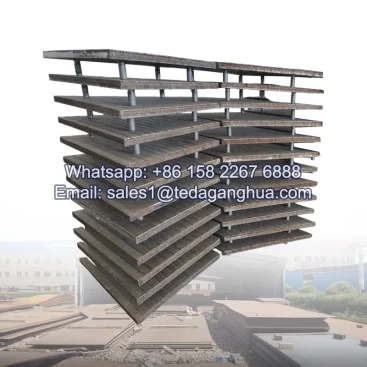
For chromium carbide hardfacing applications, SAW technology is especially suitable because it can produce a high-hardness wear layer with excellent consistency.
Typical performance range:
| Eigentum | Typischer Wert |
|---|---|
| Overlay hardness | HRC 58-62 |
| Overlay-Dicke | 3-12 mm commonly available |
| Grundplatte | Carbon steel or low alloy steel |
| Bond type | Metallurgische Bindung |
This balance makes SAW overlay plates suitable for:
- Mining chutes
- Cement equipment liners
- Crusher protection plates
- Kohlehandhabungssysteme
- Steel plant wear components
5. SAW vs Other Hardfacing Technologies
| Technology | Hauptvorteil | Einschränkung | Typische Anwendung |
|---|---|---|---|
| GESEHEN | Hohe Effizienz, geringe Verdünnung, large-area production | Less flexible for complex shapes | Large wear plates |
| Offenes Lichtbogenschweißen | Flexible and suitable for repair work | Higher oxidation and lower efficiency | On-site repair |
| PTA Welding | Very precise alloy deposition | Lower production speed | Small high-value components |
| Laserauftragschweißen | Minimal heat affected zone and high precision | Higher equipment cost | Precision parts |
6. When Should You Choose SAW Overlay Plate?
SAW is the preferred choice when the application requires:
- Large surface coverage
- High production efficiency
- Stable HRC 58-62 Härte
- Long wear life
- Consistent quality between batches
For small repair areas or complex geometries, other hardfacing methods may provide better flexibility. Jedoch, for industrial wear plates produced in volume, SAW remains one of the most economical and reliable technologies.
7. SAW Overlay Plate Solutions from Teda Ganghua
Teda Ganghua provides professional chromium carbide overlay plate solutions for mining, Zement, Stromerzeugung, Stahl, und schwere industrielle Anwendungen.
Our hardfacing capabilities include:
- SAW chromium carbide overlay plates
- Customized wear plate dimensions
- Cutting and fabrication services
- Wear-resistant material recommendations
With advanced welding technology and strict quality control, Teda Ganghua helps customers improve equipment service life, reduce maintenance frequency, and lower total operating costs.
Learn more:
Chrom -Carbid -Overlay -Platte
Abschluss
Submerged Arc Welding has become the industry standard for large-area hardfacing because it delivers the right combination of productivity, alloy stability, surface quality, und Verschleißleistung.
For applications requiring a consistent HRC 58-62 wear layer over large steel surfaces, SAW chromium carbide overlay plate remains one of the most effective solutions available.