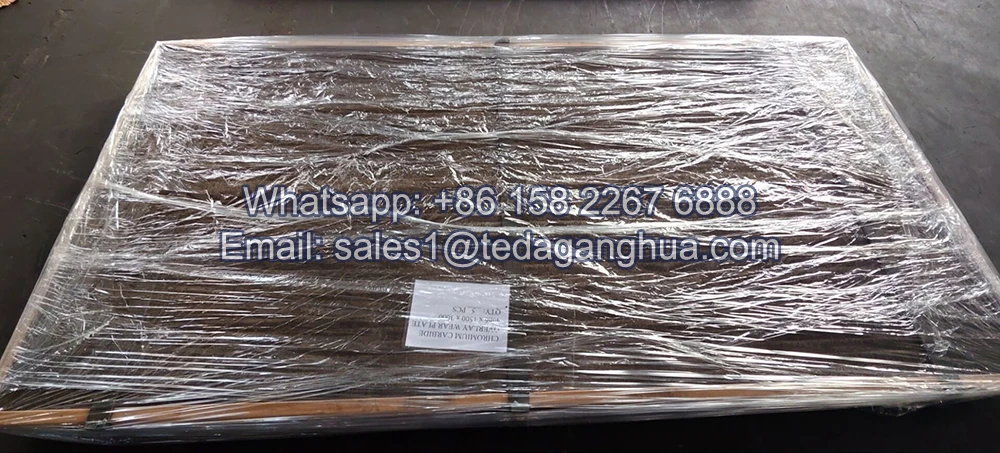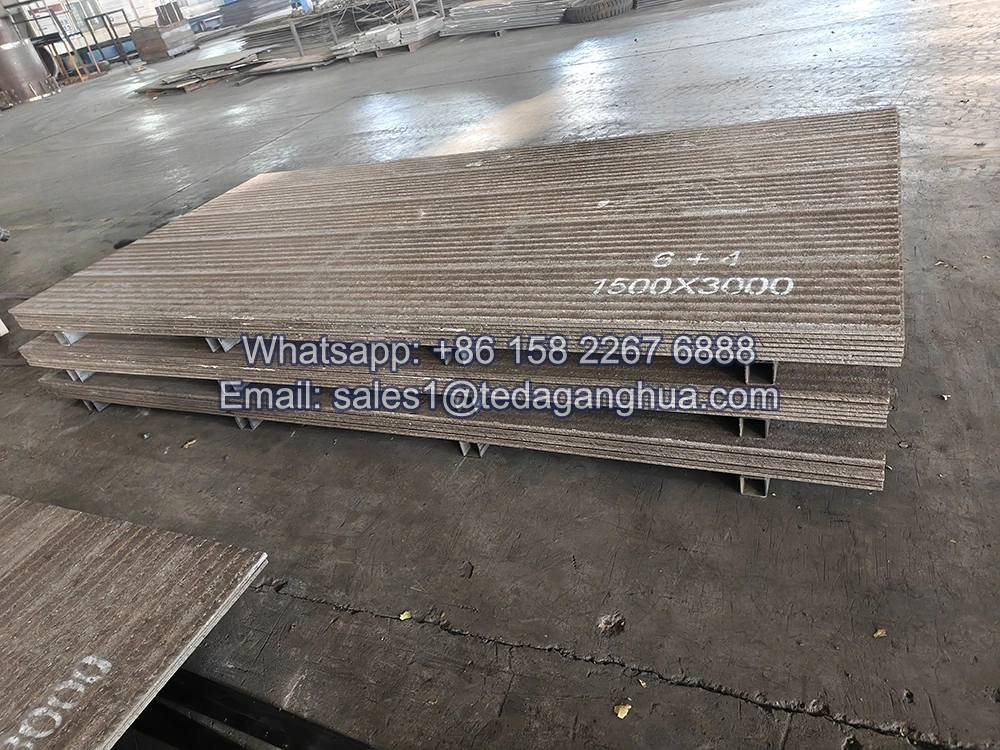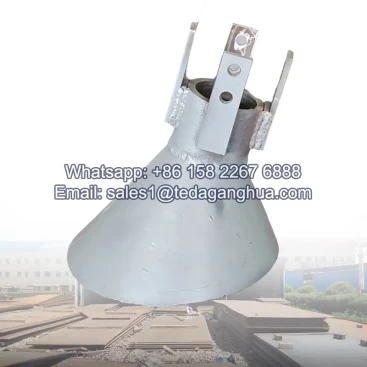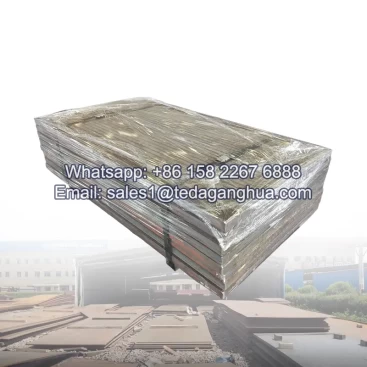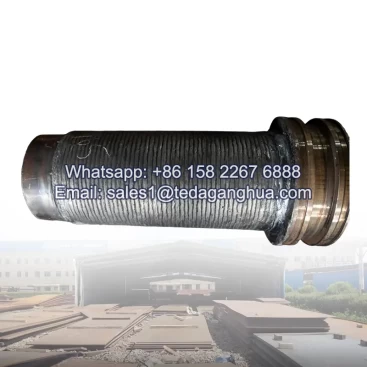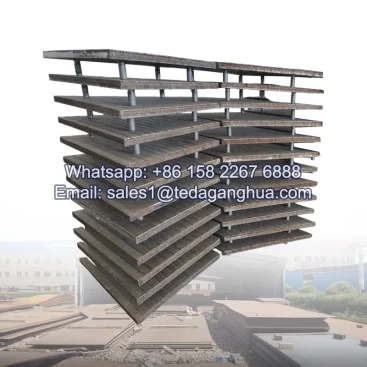
Plaque de recouvrement de soudure
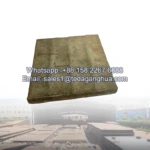
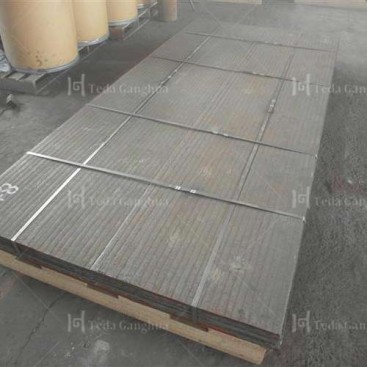
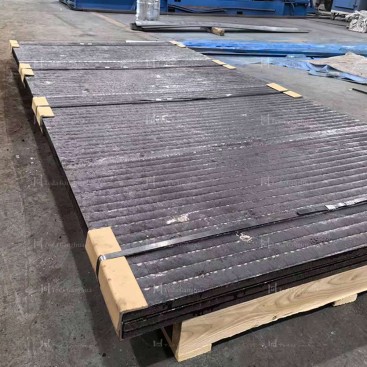
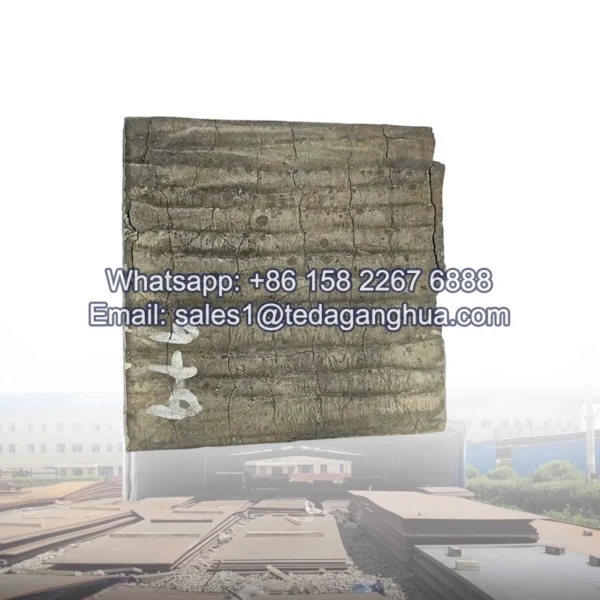
Weld Overlay Plate is manufactured through advanced welding processes such as SAW, FCAW, MOI, and PTA, which deposit a high-chromium carbide wear-resistant layer onto a steel base plate. The process ensures strong metallurgical bonding, haute dureté, et une excellente résistance à l'abrasion, making it one of the most effective solutions for protecting industrial equipment in severe wear conditions.
- Description
Weld Overlay Plate is a composite wear-resistant steel product manufactured by depositing a high-hardness alloy layer onto a carbon steel or low-alloy steel base plate using advanced welding overlay techniques. Il est largement utilisé dans l'exploitation minière, ciment, production d'énergie, usines sidérurgiques, and bulk material handling industries where severe abrasion and impact conditions are present.
The performance of weld overlay plate depends heavily on the quality of the welding process, which determines the hardness, bonding strength, and wear resistance of the surface layer.
Overview of Weld Overlay Process
The weld overlay process is a surface engineering method that applies a wear-resistant alloy layer onto a steel substrate through controlled welding techniques. The process creates a strong metallurgical bond between the base metal and the overlay layer.
Main Welding Overlay Methods
1. Soudage à arc ouvert (SCIE / FCAW Overlay)
This is the most commonly used industrial method for producing weld overlay plates.
- Uses flux-cored wire or submerged arc welding
- Taux de dépôt élevé
- Suitable for large-area production
- Produces uniform chromium carbide layers
Avantages:
- High efficiency
- Stable welding quality
- Cost-effective for mass production
2. Shielded Metal Arc Overlay (SMAW)
A manual welding method used for smaller components or repair work.
- Uses coated electrodes
- Flexible operation
- Convient aux formes complexes
Avantages:
- Low equipment requirement
- Good for repair and maintenance
Limites:
- Lower efficiency compared to automated processes
3. Soudage à l’arc sous gaz-métal (GMAW / MIG Overlay)
A semi-automatic or automatic process.
- Uses continuous wire feeding
- Controlled shielding gas environment
- Bonne qualité de surface
Avantages:
- Stable arc
- Good control of dilution
- Suitable for medium-scale production
4. Arc transféré au plasma (PTA) Soudage
A high-precision overlay method.
- Concentrated arc energy
- Very low dilution rate
- High-quality wear-resistant layer
Avantages:
- Excellent hardness control
- Liaison métallurgique forte
- Ideal for high-performance wear parts
Key Stages of Weld Overlay Manufacturing
1. Préparation de la plaque de base
- Cleaning oil, rouiller, et les impuretés
- Surface grinding or shot blasting
- Ensuring proper welding surface condition
2. Préchauffage (si nécessaire)
- Reduces thermal stress
- Prevents cracking in high-carbon or thick plates
- Typically used for thick base materials
3. Soudage par superposition
- Deposition of wear-resistant alloy layer
- Controlled heat input
- Multi-layer welding for thick overlays
4. Cooling Process
- Controlled cooling to avoid cracking
- Prevents residual stress accumulation
- Ensures stable microstructure formation
5. Traitement post-soudage
- Surface leveling or grinding
- Inspection of hardness and bonding quality
- Dimensional correction if required
Formation d'une couche résistante à l'usure
Pendant le soudage, alloying elements such as chromium and carbon form hard carbide structures:
- Cr₇C₃
- Cr₂₃C₆
These carbide phases are evenly distributed in the weld matrix, creating a highly wear-resistant surface.
Key Process Control Factors
| Facteur | Influence |
|---|---|
| Heat Input | Controls hardness and dilution |
| Welding Speed | Affects layer uniformity |
| Cooling Rate | Determines crack resistance |
| Composition en alliage | Defines wear resistance level |
| Layer Thickness | Impacts service life |
Advantages of Weld Overlay Plate
- Dureté de surface extrêmement élevée (55–65 HRC)
- Strong metallurgical bonding to base plate
- Customizable wear resistance performance
- Longue durée de vie dans les environnements abrasifs
- Suitable for large-scale industrial production
Applications typiques
Weld overlay plates are widely used in:
- Revêtements pour équipement minier
- Goulottes et trémies pour cimenterie
- Systèmes de manutention du charbon
- Systèmes de cendres de centrales électriques
- Steel mill wear parts
- Crusher and conveyor systems
- Bulk material transfer equipment