- Descrizione
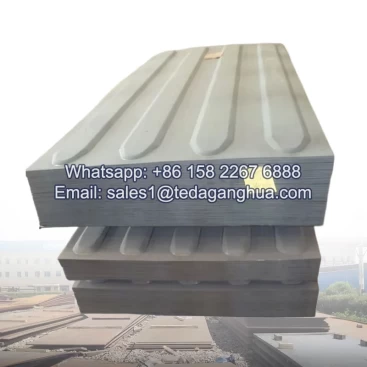
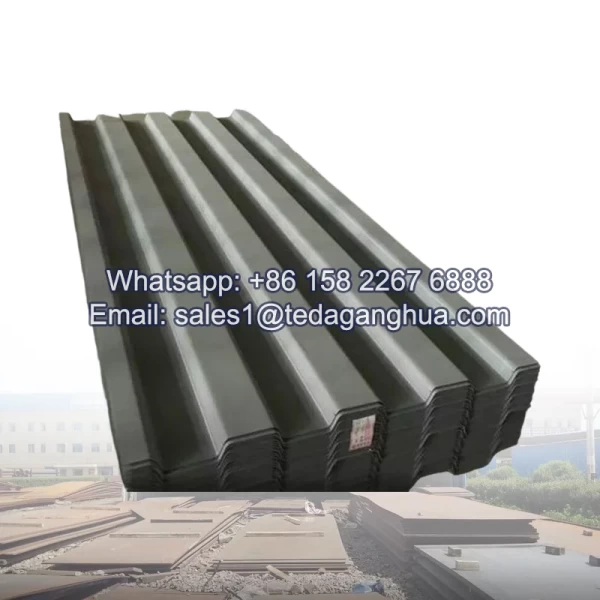
Pannelli di copertura in acciaio corten utilizzati nei container marittimi e nelle strutture modulari sono quasi sempre progettati con a ondulato (ondulato o a coste) profilo invece di un lenzuolo. Questa forma non è solo una scelta produttiva, but a structural engineering requirement that directly affects strength, durabilità, and service performance.
The corrugated design is especially important for corten steel because container roofs must remain lightweight while resisting heavy environmental and stacking loads.
1. Increasing Structural Strength Without Increasing Thickness
The main reason for corrugation is to improve stiffness.
A flat steel sheet:
- Easily bends under load
- Has low resistance to deformation
- Requires thicker material for strength
A corrugated sheet:
- Increases moment of inertia
- Distributes stress across ribs
- Greatly improves bending resistance
This allows thin corten steel sheets (typically 1.0–1.6 mm) to achieve sufficient structural strength for roof applications.
2. Improving Load-Bearing Performance
Shipping container roof panels must handle:
- Stacking pressure from upper containers
- Temporary walking load during inspection
- Wind uplift forces
- Impact from cargo handling equipment
The corrugated structure works like a series of small beams, allowing the roof panel to:
- Transfer load efficiently to side frames
- Prevent local collapse or denting
- Maintain structural stability over long service life
Without corrugation, the roof would deform easily under stacking loads.
3. Enhancing Water Drainage Efficiency
Roof panels are constantly exposed to rainwater.
Corrugation creates:
- Natural drainage channels
- Faster water runoff
- Reduced water accumulation areas
This is critical for corten steel because:
- Water retention can delay rust stabilization
- Standing water may cause uneven corrosion
- Drainage helps form a uniform protective patina
Perciò, corrugation improves both structural performance and corrosion behavior.
4. Improving Wind Resistance
I tetti dei container sono esposti a una forte pressione del vento durante il trasporto e lo stoccaggio all'aperto.
Profili ondulati:
- Aumentare la rigidità della superficie
- Ridurre le fluttuazioni del pannello
- Migliora la resistenza al sollevamento del vento
- Migliorare la stabilità strutturale complessiva
Ciò è particolarmente importante in ambienti offshore o con vento forte.
5. Riduzione dell'utilizzo e del peso dei materiali
Un vantaggio chiave dell'ondulazione è efficienza dei materiali.
Invece di utilizzare acciaio piatto spesso:
- Lastra sottile in corten + ondulazione = resistenza uguale o superiore
Questo si riduce:
- Peso complessivo del contenitore
- Costo energetico dei trasporti
- Consumo materiale
Allo stesso tempo, le prestazioni strutturali vengono mantenute o migliorate.
6. Miglioramento della saldatura e dell'integrazione del telaio
Pannelli ondulati del tetto:
- Abbina la geometria del telaio del contenitore
- Fornire linee di contatto di saldatura più forti
- Aumentare la stabilità articolare
- Ridurre la concentrazione dello stress sui bordi
This improves long-term durability of the container structure.
7. Standardization in Container Manufacturing
Corrugated shapes are also required for:
- Global container standard compatibility
- Easy stacking and intermodal transport
- Consistent manufacturing across different factories
This ensures containers can be used worldwide without structural mismatch.