

耐摩耗性ステンレス鋼


The difference between NM and AR standards mainly involves:
-
National standard system (GB vs commercial/ASTM practice)
-
Degree of chemical composition regulation
-
Documentation and certification structure
Both systems classify abrasion resistant plates based on hardness levels such as 400, 500, または 600 HBW.
- 説明
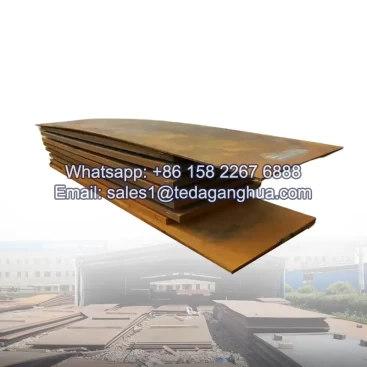
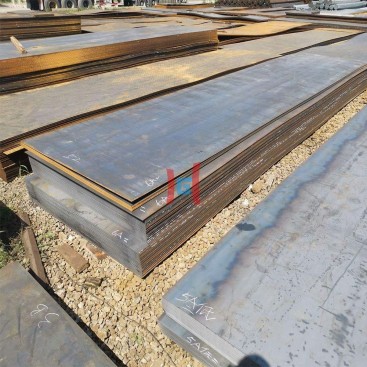
When discussing abrasion resistant materials, NM and AR are two commonly referenced grade systems. Although they are typically associated with wear resistant carbon steel plates rather than stainless steel, these standards are widely used in global markets to classify hardness-based abrasion resistant plates.
Understanding the difference between NM standards そして AR standards is important for international procurement and technical specification alignment.
1. What Is the NM Standard?
ニューメキシコ州 stands for “Nai Mo” (wear resistant) and refers to the Chinese national standard for abrasion resistant steel plates.
-
Governing standard: ギガバイト/トン 24186
-
Country of origin: 中国
-
Classification basis: Nominal Brinell hardness (HBW)
Common grades:
-
NM360
-
NM400
-
NM450
-
NM500
-
NM550
-
NM600
NM Standard Characteristics:
-
Clearly defined chemical composition limits
-
Mechanical property requirements (降伏強さ, 抗張力, impact performance)
-
Controlled carbon equivalent for weldability
-
Standardized inspection and testing under Chinese GB system
The NM designation directly reflects the minimum average Brinell hardness value.
例:
NM400 indicates a nominal hardness around 400 HBW.
2. What Is the AR Standard?
AR stands for “Abrasion Resistant.” It is a general designation widely used in North America and international markets.
-
Commonly aligned with ASTM-related production practices
-
No single unified global AR specification
-
Hardness-based classification similar to NM
Common grades:
-
AR360
-
AR400
-
AR450
-
AR500
-
AR600
AR Standard Characteristics:
-
Primarily hardness-driven classification
-
Chemical composition may vary by producer
-
Mechanical properties depend on mill specifications
-
Often produced according to ASTM A6 general requirements
Unlike NM, AR grades are more commercially defined rather than governed by a single mandatory national standard.
3. Technical Comparison Between NM and AR
| 比較項目 | NM Standard | AR Standard |
|---|---|---|
| 起源 | 中国 (GB system) | 北米 / Global commercial use |
| Governing Specification | ギガバイト/トン 24186 | Typically ASTM-based or mill standard |
| Classification Basis | ブリネル硬さ (HBW) | ブリネル硬さ (HBW) |
| 化学組成 | Defined limits in GB standard | Varies by manufacturer |
| Mechanical Requirements | Standardized yield and tensile values | Often provided by mill certificate |
| International Recognition | Widely used in Asia | Widely used in North America & export markets |
4. Hardness Equivalence
In practice, NM and AR grades with similar numbers are considered roughly equivalent in hardness performance:
| NM Grade | Approximate AR Equivalent |
|---|---|
| NM360 | AR360 |
| NM400 | AR400 |
| NM450 | AR450 |
| NM500 | AR500 |
| NM600 | AR600 |
しかし, exact equivalency should always be confirmed through mechanical property certificates and chemical composition comparison.
5. Application Perspective
Both NM and AR grades are used in:
-
鉱山機械
-
建設機械
-
ダンプトラックの車体
-
クラッシャーライナー
-
コンベヤシステム
The difference lies mainly in standard system origin and specification control, not in fundamental wear mechanism.
6. Important Clarification Regarding Stainless Steel
The NM and AR systems are primarily used for quenched and tempered wear resistant carbon steels, not traditional stainless steels.
Abrasion resistant stainless steel follows different international standards, 通常:
-
ASTM stainless specifications
-
EN stainless standards
-
JIS stainless standards
Stainless wear resistant materials are selected based on corrosion resistance plus hardness, rather than NM or AR classification.