Mn13 고망간강 (해드필드 스틸): 가공경화 메커니즘, 내마모성 & 산업용 애플리케이션
Mn13 고망간강 (Hadfield Steel) 가혹한 충격 조건에서 뛰어난 가공 경화 능력으로 널리 알려져 있습니다.. 하지만, 많은 엔지니어와 구매자가 내마모성 메커니즘을 오해하고 있습니다., 모든 착용 환경에서 동일하게 잘 작동한다고 가정. 실제로는, Mn13은 충격 부하가 없으면 본질적으로 "내마모성"이 아닙니다.. Its performance depends strongly on impact-induced strain hardening.
What Makes Mn13 Steel Unique?
Mn13 steel typically contains 11–14% manganese and around 1.0–1.3% carbon. In its annealed state, it has relatively low hardness (around 180–220 HB), but it exhibits extremely strong work hardening when subjected to impact or high compressive stress.
This means the surface becomes significantly harder only after repeated impact loading, which triggers plastic deformation and strain-induced phase transformation.
The Core Mechanism: Work Hardening Under Impact
Mn13 steel strengthens through a process called strain-induced work hardening. When subjected to high-impact forces, the austenitic structure transforms locally, increasing surface hardness dramatically—sometimes up to 500–600 HB.
하지만, this mechanism requires continuous impact energy input. Without impact, the material remains in its soft austenitic state and cannot develop its full wear resistance potential.


Although simplified here, this represents how material strengthening depends on external energy input over time—without “activation energy” from impact, hardening does not occur effectively.
Why Mn13 Performs Poorly Without Impact Load
In pure sliding wear or low-impact abrasion environments, Mn13 steel does not receive sufficient deformation energy to trigger work hardening. 결과적으로:
• Surface remains relatively soft (low initial hardness)
• Abrasive particles cut rather than deform the surface
• Wear rate increases significantly under dry sliding conditions
• No stable hardened layer is formed
This is why Mn13 is not suitable for applications without strong impact forces.
Mn13 vs Wear-Resistant Alloy Steels (NM 시리즈)
Compared with alloyed wear-resistant steels such as NM400 or NM500, Mn13 relies on dynamic hardening, while NM steels rely on pre-quenched high hardness and alloy strengthening.
For static or sliding wear environments, NM series steels often provide more stable and predictable performance.
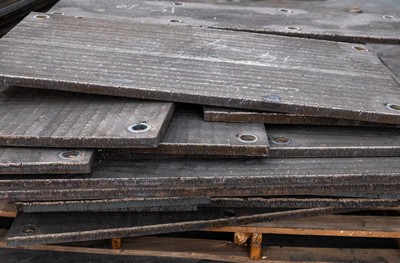
참조, industrial users often evaluate alternatives such as high-hardness wear plates available in modern supply systems like NM400 내마모성 강판.
Industrial Application Scenarios and Misuse Cases
Mn13 is best used in high-impact environments such as:
• Crusher hammers and jaws
• Railway crossings
• Mining impact plates
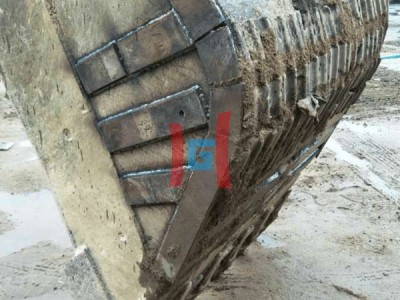
• Excavator bucket teeth and liners
하지만, it performs poorly in:
• Conveyor systems with sliding abrasion
• Low-impact wear plates
• Fine particle erosion environments
• Static friction contact surfaces
구매자와 엔지니어를 위한 상업적 고려 사항
조달 관점에서, selecting Mn13 without evaluating the wear mechanism can lead to premature failure and increased maintenance costs. Many industrial users mistakenly replace it with higher-cost solutions when the real issue is application mismatch rather than material quality.
For OEM manufacturers and distributors, understanding the working principle of Mn13 helps position it correctly in impact-heavy industries and avoid incorrect substitution in sliding wear systems.
FAQ
Why does Mn13 steel need impact to become wear-resistant?
Because its hardness increases through strain-induced work hardening, which only occurs under impact or strong deformation.
Is Mn13 steel hard in its original state?
아니요, it is relatively soft in the annealed state and only hardens after impact loading.
Can Mn13 replace NM400 wear-resistant steel?
Not always. NM400 performs better in sliding and low-impact wear environments due to its pre-hardened structure.
Where is Mn13 steel most effective?
It is most effective in high-impact applications such as mining, 눌러 터뜨리는, and heavy impact machinery parts.
What is the main limitation of Mn13 steel?
Its limitation is poor performance in non-impact or low-strain wear conditions.