

- 설명
바이메탈 마모 플레이트: Is It a Composite Steel Plate and How to Verify Its Weld Overlay Composition?
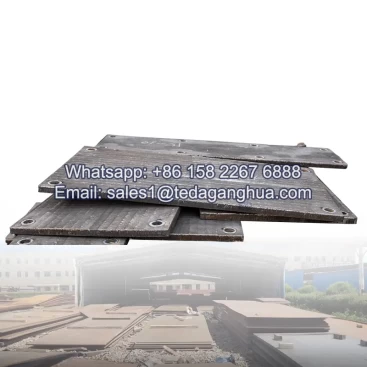
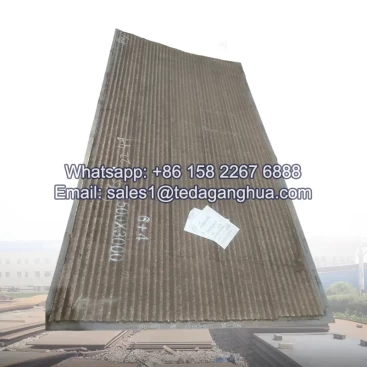
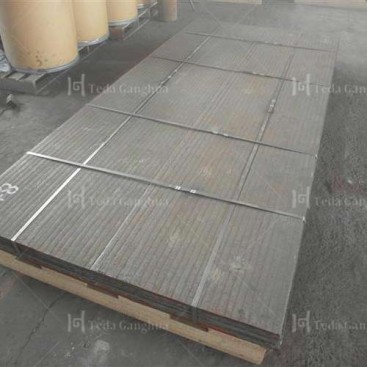
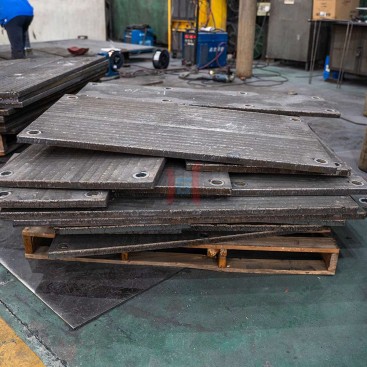
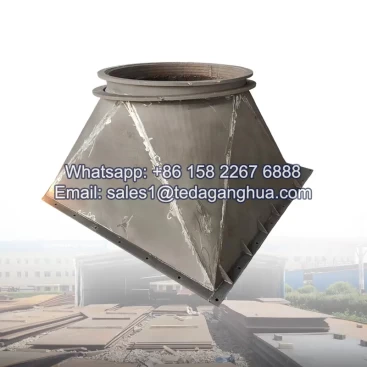
Bimetal wear plate is a composite steel plate consisting of a base metal and a wear-resistant overlay layer. In most industrial applications, 그것은 다음을 가리킨다. 용접 오버레이 (딱딱한) wear plate, where a high-hardness alloy layer is metallurgically bonded onto a steel substrate.
So yes—bimetal wear plate is essentially a composite metal steel plate, designed to combine toughness and wear resistance in one structure.
1. Is Bimetal Wear Plate a Composite Steel Plate?
| Structure Type | 설명 |
|---|---|
| 베이스 레이어 | Carbon steel or low-alloy steel for strength |
| 오버레이 레이어 | Hard alloy (크롬 탄화물, 복합 탄화물, 등.) 내마모성을 위해 |
This dual-layer structure makes it a true 바이메탈 복합 재료.
2. Is It the Same as Weld Overlay Plate?
In most industrial contexts:
- Bimetal wear plate = general concept of two-metal structure
- Weld overlay plate = specific manufacturing method using hardfacing welding
그러므로, weld overlay plate is the most common form of bimetal wear plate.
3. How to Verify Whether the Composition Meets Standards?
Quality verification of weld overlay composition focuses on chemical content, 경도, and microstructure rather than only surface appearance.
(1) Spectrometric Chemical Analysis (OES / XRF)
| Test Method | 목적 |
|---|---|
| OES (Optical Emission Spectroscopy) | Accurate measurement of Cr, 기음, 망, 모, Nb content |
| XRF analysis | Quick surface alloy verification |
These methods confirm whether chromium carbide and alloy elements meet design specifications.
(2) 경도 테스트 (HRC / HV)
- Checks surface wear resistance level
- Typical chromium carbide overlay: HRC 58–65
- Uniform hardness indicates stable alloy distribution
(3) Metallographic Examination
- Observes carbide distribution (Cr₇C₃ / Cr²₃C₆)
- Checks bonding between overlay and base steel
- Detects dilution or structural defects
(4) Thickness Measurement of Overlay Layer
| 매개변수 | Requirement |
|---|---|
| 오버레이 두께 | Typically 3–12 mm depending on application |
| Uniformity | No significant thickness variation across plate |
(5) Bonding Strength Inspection
- Ensures metallurgical fusion between layers
- Prevents delamination under impact or abrasion
- Often tested by bend or shear evaluation
(6) Surface Crack Inspection
Controlled micro-cracks are normal in chromium carbide overlay, but inspection ensures:
- No deep or through-thickness cracks
- No peeling or flaking of overlay layer
4. Why Composition Control Is Critical
| 요인 | 성능에 미치는 영향 |
|---|---|
| Chromium content | Determines carbide formation and hardness |
| Carbon content | Affects carbide density and wear resistance |
| Alloy additives (NB, 모) | Improve toughness and microstructure stability |
5. Teda Ganghua Bimetal Wear Plate Quality Control
전문적인 내마모성 강철 공급업체로서, 테다강화 ensures strict quality control of bimetal wear plates through chemical analysis, hardness testing, and metallographic inspection to guarantee stable chromium carbide composition and reliable service performance.
We provide customized overlay solutions for mining, 시멘트, 강철, and power industries with consistent quality and engineered wear resistance.
여기에서 내마모성 강철 제품을 살펴보세요.:
크롬 카바이드 오버레이 플레이트
결론
Bimetal wear plate is a true composite steel plate, most commonly produced by weld overlay technology. Its quality can be verified through chemical composition analysis, hardness testing, metallography, thickness measurement, and bonding inspection to ensure the wear-resistant layer meets design standards.