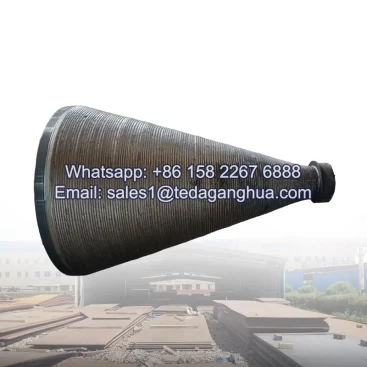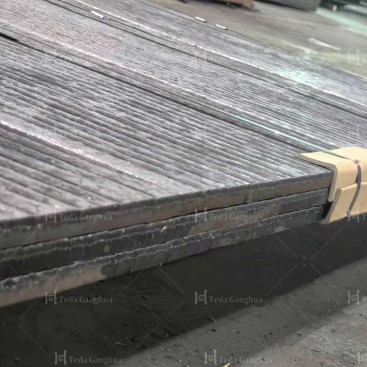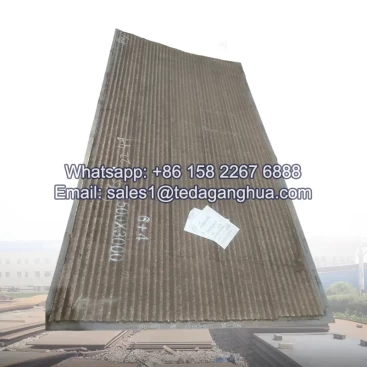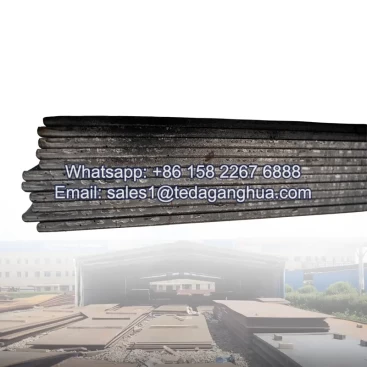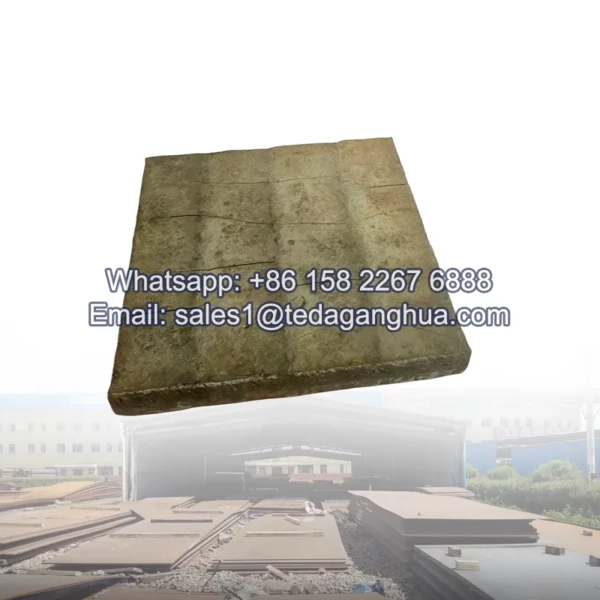
고크롬 카바이드 오버레이


High Chromium Carbide Overlay and low-chromium overlay systems are both widely used in wear-resistant engineering, but they serve different operational needs. High-chromium systems deliver superior hardness and abrasion resistance for extreme wear conditions, while low-chromium systems offer better toughness and impact resistance for mixed working environments. Proper selection ensures optimal performance, 더 긴 서비스 수명, and reduced maintenance costs in industrial applications.
- 설명
고크롬 카바이드 오버레이 (CrC 오버레이) is a wear-resistant welding layer deposited onto a steel base plate to improve surface hardness and abrasion resistance. 광산에서 널리 사용됩니다., 시멘트, 발전, 및 벌크 자재 취급 산업. According to chromium content and carbide structure, overlay systems are generally divided into high-chromium overlay 그리고 low-chromium overlay.
These two systems differ significantly in composition, 경도, wear resistance mechanism, 및 적용 조건.
Material Composition Difference
High-Chromium Carbide Overlay
High-chromium overlay contains a higher percentage of chromium, 일반적으로:
- 크롬 (Cr): 25-35%
- 탄소 (기음): 3–5%
- 철 (철): 균형
- 사소한 요소: 망, Si for weld stability
This composition promotes the formation of dense, hard carbide phases such as Cr₇C₃ and Cr₂₃C₆.
Low-Chromium Carbide Overlay
Low-chromium overlay has reduced chromium content:
- 크롬 (Cr): 12-20%
- 탄소 (기음): 2–4%
- 철 (철): 균형
- Additional alloying elements may be used to balance toughness
The carbide formation is less dense compared to high-chromium systems.
Hardness and Microstructure Comparison
| 재산 | High-Chromium Overlay | Low-Chromium Overlay |
|---|---|---|
| Chromium Content | 25-35% | 12-20% |
| Carbide Density | 높은 | 중간 |
| 표면 경도 | 58-65HRC | 50–58 HRC |
| 내마모성 | 훌륭한 | Moderate–High |
| 인성 | 중간 | 더 높은 |
High-chromium systems prioritize extreme hardness, while low-chromium systems balance hardness and toughness.
내마모 메커니즘
High-Chromium Overlay
- Dense chromium carbide network
- Strong resistance to cutting and grinding wear
- Excellent performance under severe abrasion conditions
- Better suited for dry, high-impact particle environments
Low-Chromium Overlay
- Less carbide saturation
- Improved crack resistance and toughness
- Better performance under mixed impact and wear conditions
- Suitable for unstable or shock-heavy environments
충격 저항 비교
| 특징 | High-Chromium Overlay | Low-Chromium Overlay |
| 충격 저항 | 중간 - 낮음 | 중간~높음 |
| Crack Sensitivity | 더 높은 | 낮추다 |
| Structural Flexibility | 낮추다 | 더 높은 |
High-chromium systems may require more careful process control to avoid cracking under heavy impact.
Typical Application Differences
High-Chromium Carbide Overlay Applications
- 시멘트 공장 슈트 및 라이너
- Mining transfer systems
- 석탄 취급 장비
- High-abrasion conveyor surfaces
- Dry particle erosion environments
Low-Chromium Carbide Overlay Applications
- Excavator buckets with impact load
- 덤프 트럭 라이너
- Crusher components with mixed wear
- Material handling with variable particle size
- Shock-prone industrial equipment
Process and Fabrication Considerations
| 요인 | High-Chromium | Low-Chromium |
| Welding Difficulty | 더 높은 | 낮추다 |
| Cracking Risk | 더 높은 | 낮추다 |
| Heat Control Requirement | Strict | 보통의 |
| 비용 수준 | 더 높은 | 낮추다 |
High-chromium overlays require tighter control of heat input and cooling to maintain surface integrity.
Performance Summary
- High-chromium overlays provide 최대 내마모성 for severe wear environments
- Low-chromium overlays provide a balanced combination of wear and impact resistance
- Selection depends on whether the application prioritizes hardness or toughness