- Описание
Chrome Carbide Plate: Cutting and Bending Process of Overlay Wear Plate
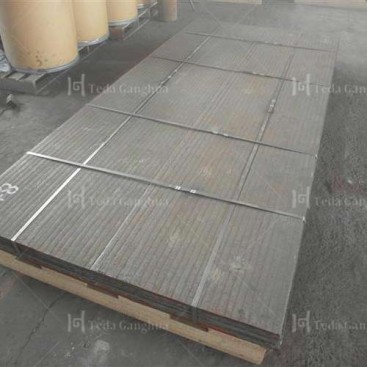
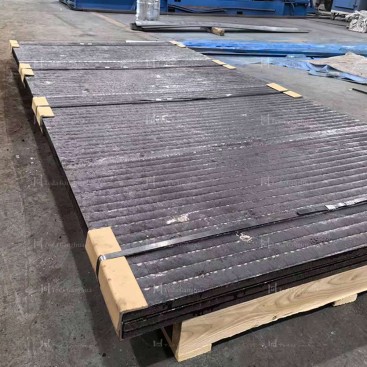
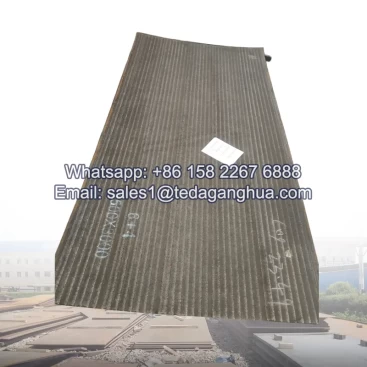
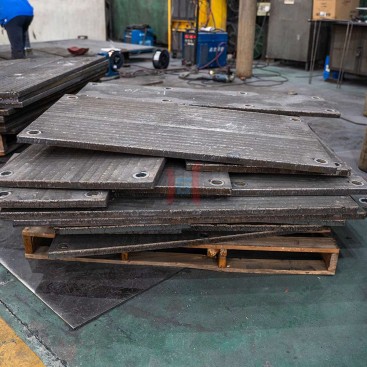
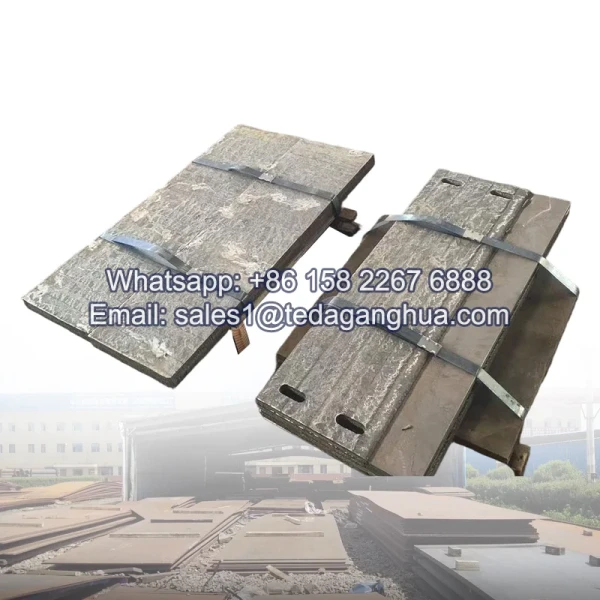
Chrome carbide plate (износостойкая пластина из карбида хрома) is a bimetallic composite material with a hard wear-resistant overlay layer deposited on a mild steel or low-alloy steel base. Because of its extremely high surface hardness (typically HRC 58–65), its cutting and bending processes are very different from ordinary steel plates.
Proper processing methods are essential to avoid cracking, edge chipping, and damage to the carbide layer.
1. Why Chrome Carbide Plate Is Difficult to Process
| Фактор | Impact on Processing |
|---|---|
| High hardness overlay layer | Cannot be cut with standard mechanical tools |
| Brittle carbide structure | Prone to edge cracking under impact |
| Bimetal structure | Different thermal expansion between layers |
| Residual welding stress | Requires controlled cutting and bending |
2. Cutting Methods of Chrome Carbide Plate
(1) Плазменная резка
- Most common industrial method
- Suitable for medium-thickness plates
- Fast and cost-effective
(2) Waterjet Cutting
- Нет зоны термического влияния
- Best for high-precision parts
- Prevents micro-cracking of carbide layer
(3) Лазерная резка
- Высокая точность резки
- Suitable for thin overlay plates
- Requires strict parameter control
(4) Abrasive Wheel Cutting
- Used for simple straight cuts
- Lower cost but slower process
- Higher risk of edge wear
3. Key Cutting Precautions
- Avoid overheating to prevent carbide layer damage
- Control cutting speed to reduce cracking risk
- Use proper fixturing to avoid vibration
- Allow stress relief after cutting if needed
4. Bending Process of Chrome Carbide Plate
Bending is more challenging than cutting because the hard overlay layer has low ductility.
| Метод | Applicability |
|---|---|
| Cold bending | Limited to small angles and thin plates |
| Hot bending (controlled heating) | Снижает риск растрескивания |
| Rolling forming | Suitable for large-radius curves |
5. Bending Limitations
- Small bending radius is not recommended
- Excessive bending may cause surface cracking
- Overlay layer is less ductile than base steel
В большинстве случаев, design optimization is preferred over heavy deformation processing.
6. Best Practice: Fabrication First Design
To reduce processing difficulty and cost, engineers often design wear parts considering:
- Straight plate assembly instead of deep bending
- Segmented liners instead of single curved parts
- Welded modular structures
7. Teda Ganghua Chrome Carbide Plate Supply Capability
Как профессиональный поставщик износостойкой стали, Теда Ганхуа provides chrome carbide overlay plates with professional cutting and fabrication support, including plasma cutting, waterjet cutting, and custom wear part manufacturing for mining, цемент, сталь, и энергетическая отрасль.
We help customers optimize design to reduce processing difficulty and improve service life.
Ознакомьтесь с нашей продукцией из износостойкой стали здесь:
Хромий карбид накладка
Заключение
Chrome carbide plates require special cutting and bending methods such as plasma, водоструйная очистка, or laser cutting, and controlled bending techniques due to their high hardness and brittle carbide structure. Proper processing ensures integrity and extends service life in wear applications.