
- 描述
Surfacing Wear Plate Alloy Design: Chromium Carbide vs Complex Carbide vs Tungsten Carbide Overlay Systems
The performance of surfacing wear plates is fundamentally determined by alloy design and microstructure control. Different carbide systems provide different combinations of hardness, 韧性, 抗冲击性, and abrasion performance.
Among industrial wear-resistant overlay systems, three major alloy categories dominate demanding applications:
- High chromium carbide alloy systems
- 复杂碳化物合金系统
- Tungsten carbide reinforced alloy systems
This guide explains the metallurgical structure, carbide formation mechanism, 硬度范围, and ASTM G65 abrasion performance differences between these advanced overlay solutions.
1. Why Alloy Design Determines Wear Plate Performance
A surfacing wear plate is not simply a hard metal layer. Its service life depends on the relationship between hard carbide particles and the supporting metal matrix.
An optimized overlay structure requires:
- High hardness carbide phases to resist cutting abrasion
- Tough metallic matrix to absorb impact energy
- Strong metallurgical bonding with the base steel
- Uniform carbide distribution for stable wear behavior
The wrong alloy selection can result in either premature wear or brittle cracking under impact conditions.
2. High Chromium Carbide Overlay System: The Industrial Standard
High chromium carbide overlay is the most widely used wear-resistant alloy system for mining, 水泥, 钢, 和散装物料搬运行业.
Its typical microstructure consists of:
| Microstructural Component | 功能 |
|---|---|
| Primary M₇C₃ Chromium Carbides | Provide high abrasion resistance |
| Austenite/Martensite Matrix | Supports carbide particles and improves toughness |
| Iron-based Bonding Phase | Provides metallurgical connection |
Typical Performance Range
- 硬度: HRC 55-62
- 优异的抗滑动磨损能力
- 硬度和韧性之间良好的平衡
- Cost-effective for large-area wear protection
典型应用包括:
- 矿用卡车内衬
- Cement chute liners
- Crusher protection plates
- Conveyor wear components
- 料斗内衬
3. Complex Carbide Overlay System: Multi-Element Wear Protection
Complex carbide systems improve conventional chromium carbide technology by adding multiple carbide-forming elements.
Common reinforcement phases include:
- 碳化铬 (肌酐)
- 碳化铌 (铌碳)
- 碳化钒 (VC)
显微组织特征
| Phase | Performance Contribution |
|---|---|
| 肌酐 | Main abrasion-resistant carbide phase |
| 铌碳 | Improves high-temperature stability and carbide refinement |
| VC | Creates extremely hard fine carbide particles |
Typical Performance Range
- 硬度: HRC 58-65
- Improved wear resistance compared with standard CrC systems
- Better performance under combined abrasion and impact
- Higher temperature stability
Complex carbide overlays are commonly selected for:
- High-temperature conveying systems
- 钢厂设备
- Power plant wear components
- Cement kiln systems
4. Tungsten Carbide Overlay System: 极端耐磨性
Tungsten carbide reinforced overlays represent one of the highest-performance wear protection technologies available.
The typical structure contains:
| 成分 | 角色 |
|---|---|
| WC/W₂C Hard Particles | Provide extreme hardness and cutting resistance |
| Nickel-Based Binder Phase | Provides toughness and particle support |
| Metallurgical Bond Layer | Ensures coating attachment |
Typical Performance Range
- 硬度: HRC 60-68
- Outstanding erosion resistance
- Excellent performance in severe abrasion environments
- Higher cost compared with chromium carbide systems
典型应用:
- Oil and gas drilling equipment
- Mining cutting tools
- Extreme erosion components
- High-speed material flow systems
5. Alloy System Comparison: Microstructure and Performance
| Alloy System | Main Carbide Phase | Matrix | 硬度 | 主要优势 |
|---|---|---|---|---|
| High Chromium Carbide | M₇C₃ | Austenite/Martensite | HRC 55-62 | Best cost-performance balance |
| 复合碳化物 | 肌酐 + 铌碳 + VC | Alloy matrix | HRC 58-65 | Higher wear resistance and stability |
| 碳化钨 | WC/W₂C | Nickel alloy binder | HRC 60-68 | Extreme abrasion protection |
6. ASTM G65 Abrasion Test Performance Comparison
ASTM G65 dry sand rubber wheel testing is widely used to evaluate abrasion resistance of wear-resistant materials.
| Material System | ASTM G65 Wear Resistance Level | Typical Wear Behavior |
|---|---|---|
| Standard Chromium Carbide Overlay | 高的 | 优异的滑动耐磨性 |
| 复合硬质合金堆焊层 | 非常高 | Lower volume loss under severe abrasion |
| 碳化钨堆焊层 | 极端 | Superior resistance against cutting erosion |
7. How to Select the Right Overlay Alloy
| 使用条件 | Recommended Alloy |
|---|---|
| Large-area mineral abrasion | 碳化铬堆焊层 |
| 磨损 + 中等影响 | Complex carbide overlay |
| Extreme erosion and cutting wear | 碳化钨堆焊层 |
| High-temperature abrasion | Complex carbide with Nb/VC modification |
8. Teda Ganghua Wear Plate Solutions
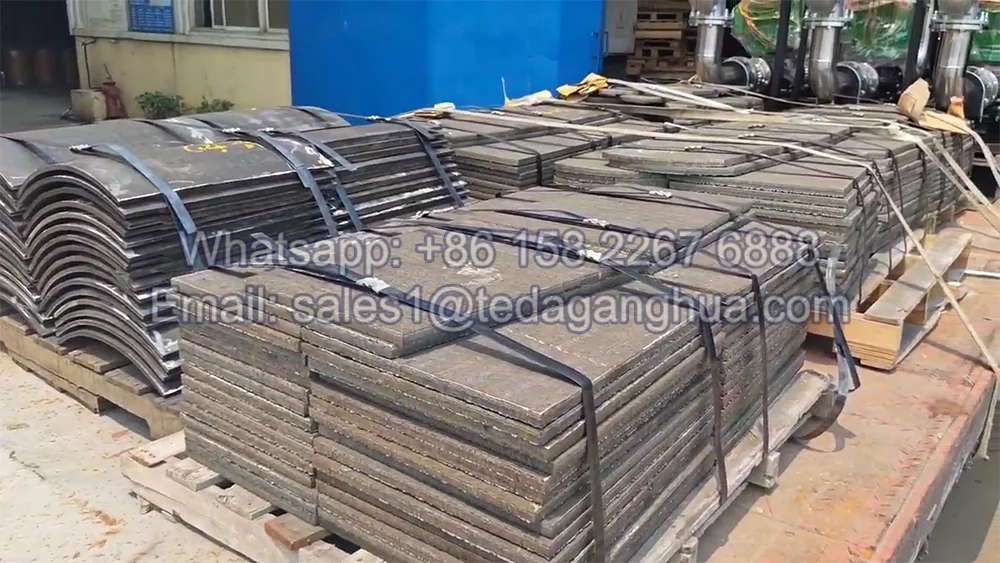
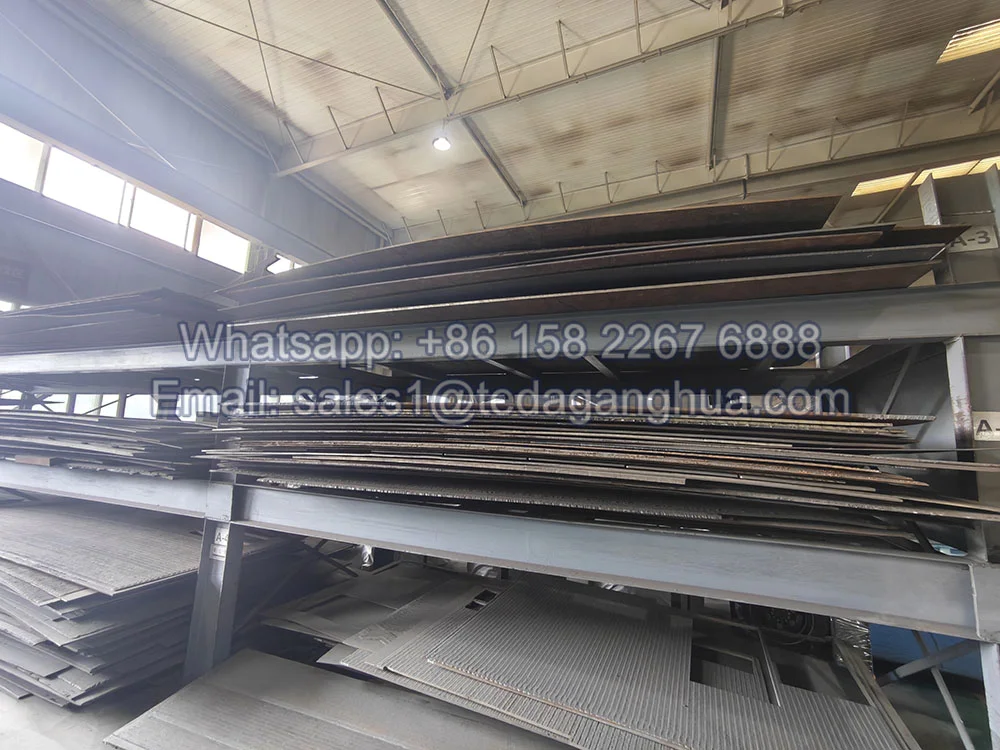
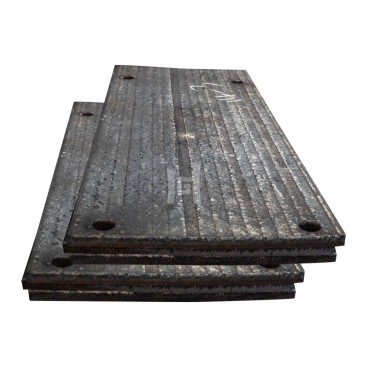
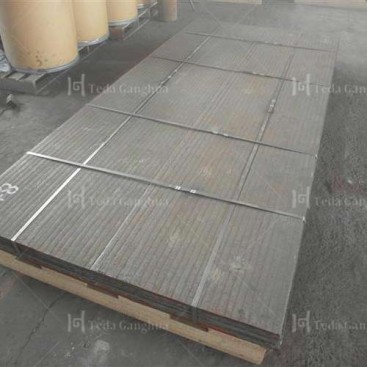
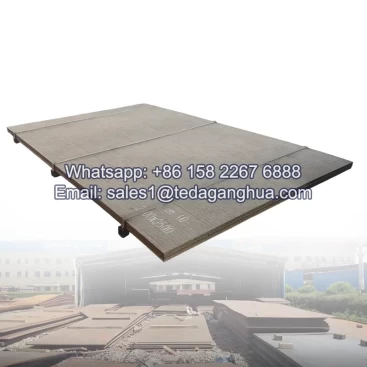
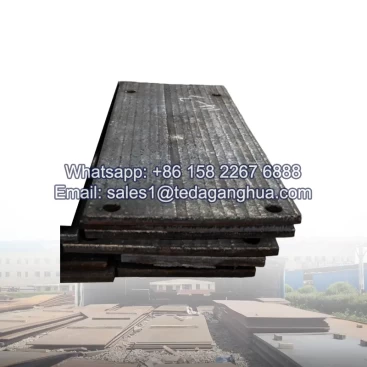
Teda Ganghua supplies advanced chromium carbide overlay plates designed for severe industrial wear environments.
Our solutions include:
- High chromium carbide overlay plates
- Complex alloy wear-resistant plates
- Customized overlay thickness and hardness options
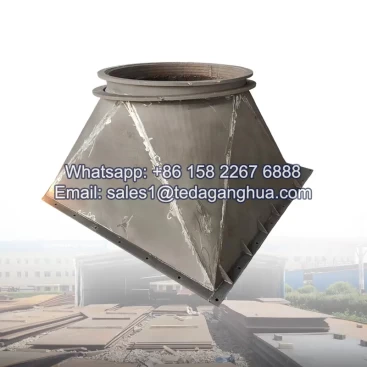
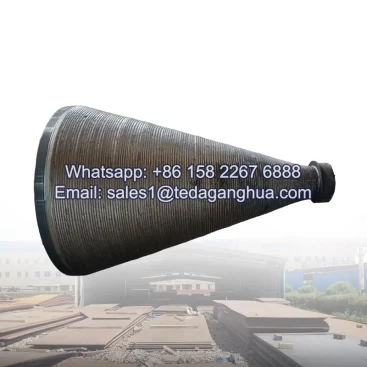
- CNC cutting and fabrication services
- Engineering-based material selection support
With optimized alloy design and strict production control, Teda Ganghua helps customers extend equipment life and reduce maintenance costs in mining, 水泥, 钢, and energy industries.
Learn more:
结论
碳化铬, 复合碳化物, and tungsten carbide overlay systems each serve different wear conditions. Chromium carbide provides the best overall value, complex carbide offers enhanced protection for demanding environments, and tungsten carbide delivers maximum performance where extreme abrasion resistance is required.
Selecting the correct alloy system based on wear mechanism, 温度, and impact conditions is the key to achieving maximum service life from surfacing wear plates.