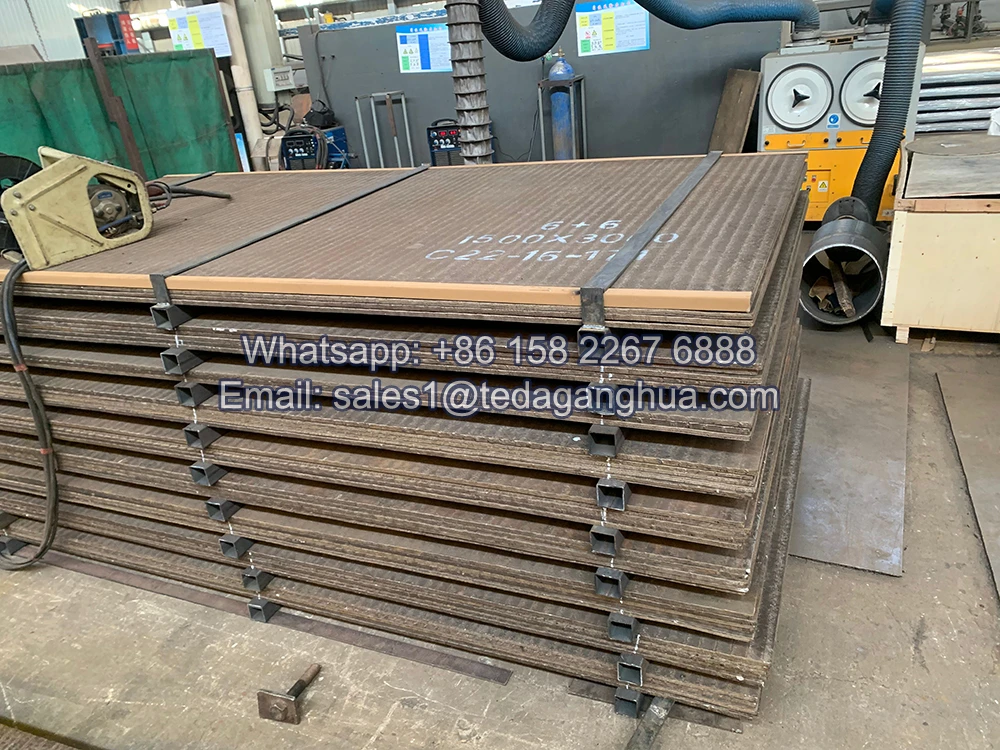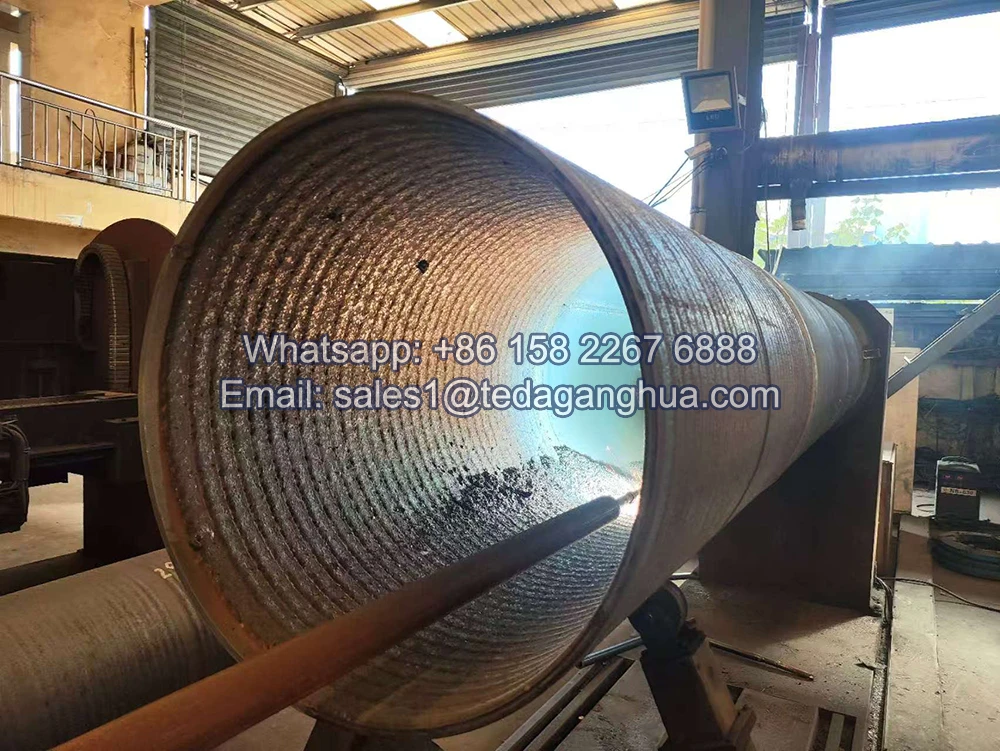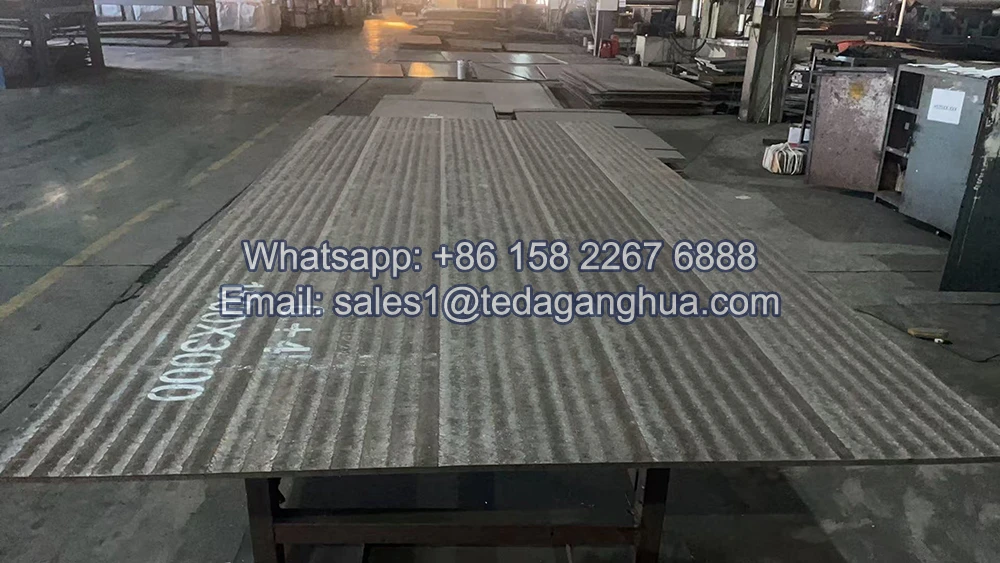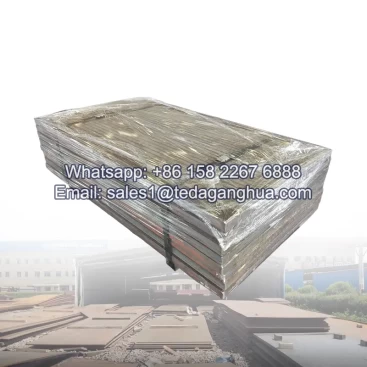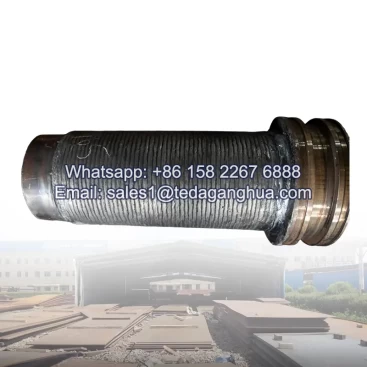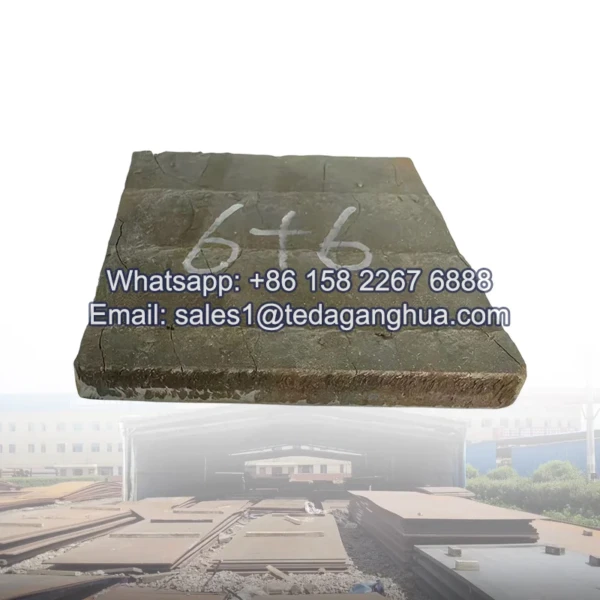
Piastra di overlay in carburo di cromo


Chromium Carbide Overlay Plate and wear resistant steel plates are both designed for wear protection but serve different engineering needs. CCO plates provide extreme abrasion resistance due to their hard chromium carbide surface, making them ideal for high-wear, low-impact environments. Wear resistant steel plates, on the other hand, offer a more balanced combination of hardness and toughness, making them suitable for applications involving both impact and abrasion.
- Descrizione
Piastra di overlay in carburo di cromo (Piastra CCO) is a composite wear-resistant material produced by welding a high-chromium carbide alloy layer onto a steel base plate. È ampiamente utilizzato in ambienti soggetti a forte usura come le miniere, cementifici, centrali elettriche, e sistemi di movimentazione di materiali sfusi.
A common technical question in industry applications is the difference between Chromium Carbide Overlay Plate and traditional wear-resistant steel plates.
Material Structure Difference
Piastra di overlay in carburo di cromo (Piastra CCO)
CCO plate is a materiale composito bimetallico:
- Top Layer: High-hardness chromium carbide alloy (sovrapposizione di saldatura)
- Strato di base: Mild steel or low-carbon steel
I due strati sono legati metallurgicamente.
Piastra in acciaio resistente all'usura (AR Steel)
Acciaio resistente all'usura (come l'AR400, AR500, Serie NM) is:
- UN single homogeneous alloy steel
- Hardness is achieved through quenching and tempering
- No separate overlay layer
Composition and Hardness Comparison
| Proprietà | Piastra CCO | Acciaio resistente all'usura |
|---|---|---|
| Material Type | Composite (sovrapposizione + base) | Homogeneous steel |
| Main Alloying Element | High Chromium + Carbonio | Carbonio + Manganese + Boro |
| Durezza | 55–65HRC (surface layer) | 360–550 HB |
| Struttura | Hard surface + base dura | Uniform hardness throughout |
| Resistenza all'usura | Extremely high | Alto |
Meccanismo di resistenza all'usura
Piastra di overlay in carburo di cromo
The wear resistance comes from:
- Hard chromium carbide particles (Cr₇C₃, Cr₂₃C₆)
- Extremely hard surface layer
- Resistance to cutting, macinazione, e abrasione
Acciaio resistente all'usura
The wear resistance is achieved through:
- Microstruttura martensitica
- Overall hardness of the entire plate
- Balanced toughness and wear resistance
Confronto della resistenza all'impatto
| Proprietà | Piastra CCO | Acciaio resistente all'usura |
| Resistenza all'ambiente | Medio | Alto |
| Resistenza alle crepe | Lower under heavy impact | Meglio |
| Shock Absorption | Base steel only | Whole plate supports load |
Wear resistant steel performs better in high-impact conditions, while CCO plate is optimized for high abrasion environments.
Service Life Performance
- Piastra CCO: Longer service life in severe abrasion conditions such as sliding wear and particle erosion
- Acciaio resistente all'usura: More balanced performance in mixed impact and abrasion conditions
Typical Applications Comparison
Chromium Carbide Overlay Plate Applications
- Cement chutes and liners
- Mining conveyor systems
- Attrezzature per la movimentazione del carbone
- Sistemi di ceneri di centrali elettriche
- Fodere del frantoio
- Heavy abrasion transfer points
Wear Resistant Steel Applications
- Benne per escavatori
- Cassoni di autocarri con cassone ribaltabile
- Loader blades
- Structural wear components
- Mining equipment subjected to impact loads
Processing and Fabrication Difference
| Processo | Piastra CCO | Acciaio resistente all'usura |
| Taglio | Difficult (hard surface layer) | Più facile |
| Saldatura | Requires special procedure | Standard welding possible |
| Formazione | Limited flexibility | Buona formabilità |
| Lavorazione | Very difficult | Relatively easier |