Qual è la prestazione della piastra di rivestimento resistente all'usura?
Performance Analysis
Composizione chimica
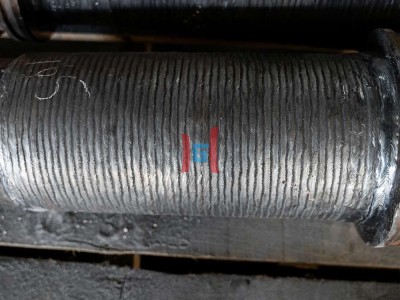
The wear resistance of cladding composite plates is achieved through a low-carbon steel substrate layered with a chromium carbide alloy. Special elements enhance carbide formation, with carbides constituting over 50% of the metallographic structure.
Durezza
The surface hardness depends on the wear-resistant layer thickness, adjustable within HRC56-65. Chromium carbide microhardness reaches HV1800, ensuring durability in various conditions.
Flatness and Thickness
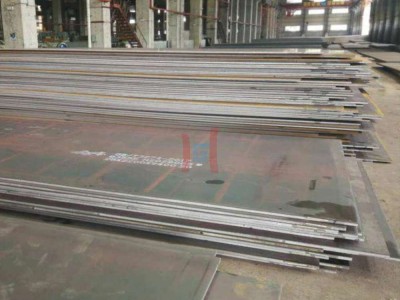
Flatness error remains within ±3mm/m, ensuring stable installation and usage. The wear-resistant layer maintains uniform thickness with a positive tolerance of 0-0.5mm, extending its lifespan.
Dimensioni
Larghezza
Maximum width reaches 2200mm, facilitating large equipment production while minimizing cutting, splicing, and costs.
Lunghezza
Maximum length of 10,000mm suits large-scale projects like mining machinery, frantoi, and mill liners, enhancing durability and reducing maintenance costs.
Conventional Plate Thickness Specifications
Light and Thin
Options such as 3+3, 4+4, E 5+5 are suitable for low-wear environments.
Heavy-Duty
Options like 16+6, 18+8, E 20+10 suit high-temperature and high-pressure applications, such as metallurgical rollers and coal conveyor belts.
Teda provides a variety of plate thicknesses to meet diverse industrial needs.
Thickness Specifications by Plate Type
High Chromium Wear-Resistant Plate
With a wear layer up to 32mm thick, carbon content between 3.5%-5.5%, and chromium at 27%-40%, this plate forms over 50% Cr₇C₃ carbides, offering extreme hardness. Common substrate thickness is 6-10mm, balancing strength and wear resistance.
Impact-Resistant Plate
Wear layer thickness ranges from 20-40mm, absorbing high-speed impacts in stone-crushing production. The substrate, typically 8-12mm, supports impact dispersion and stability.
High-Temperature Wear-Resistant Plate
Designed for extreme heat, the wear layer ranges from 25-50mm. Suitable for furnace tuyeres and slag outlets, it withstands molten iron, slag, and thermal stress. The substrate, 10-15mm di spessore, resists deformation under high temperatures.
Crack-Free Wear-Resistant Composite Plate
With a 15-30mm wear-resistant layer, this plate ensures durability in steel rolling applications, preventing cracks in precision components. The base plate, 6-9mm di spessore, provides structural stability.
Special Element Wear-Resistant Plate
Wear layer thickness varies between 10-40mm, with elements like Mo, N.B, In, W, and Y added for corrosion and wear resistance in chemical processing. The base plate, typically 5-10mm, ensures long-term equipment stability.
Applications and Advantages
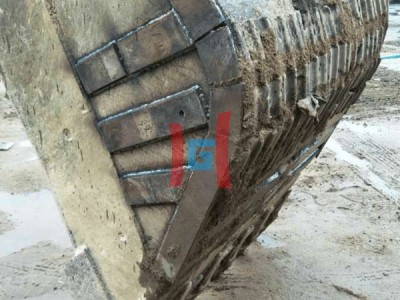
Wear-resistant cladding composite plates are widely used in industries such as mining, produzione di cemento, centrali elettriche, e metallurgia. Their benefits include superior wear resistance, easy processing, and customization based on user requirements, reducing downtime and operational costs.