เหล็กทนต่อการสึกหรอและเหล็กแมงกานีสสูง: วัสดุใดดีกว่าสำหรับการใช้งานที่มีการสึกหรอมาก?
เหล็กที่ทนต่อการสึกหรอและเหล็กแมงกานีสสูง [Mn13 เหล็กแมงกานีสสูง (แฮดฟิลด์ สตีล): กลไกการแข็งตัวของงาน, ความต้านทานการสึกหรอ & การใช้งานทางอุตสาหกรรม] มีการใช้กันอย่างแพร่หลายในสภาพแวดล้อมการสึกหรอที่รุนแรง, แต่ประสิทธิภาพจะแตกต่างกันอย่างมากภายใต้สภาพการทำงานที่แตกต่างกัน. ผู้ซื้อหลายรายถือว่าความแข็งเป็นปัจจัยเดียวในการต้านทานการสึกหรอ, yet actual service life often depends on the balance between abrasion resistance and impact resistance. In heavy industries such as mining, ปูนซีเมนต์, การทำเหมืองหิน, และการจัดการวัสดุจำนวนมาก, selecting the right material can significantly reduce downtime and maintenance costs.
Understanding the Two Materials
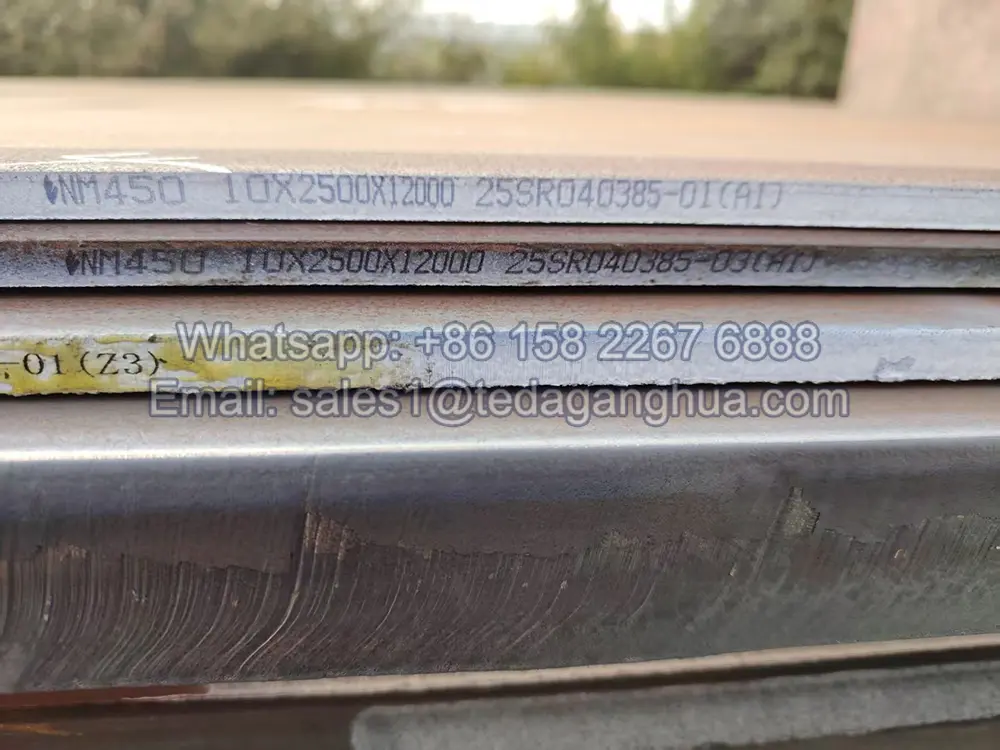
เหล็กทนต่อการสึกหรอ [NM400 กับ NM450 กับ NM500 เหล็กทนทานต่อการสึกหรอ: ระดับความแข็ง, การเปรียบเทียบประสิทธิภาพ & การใช้งานทางอุตสาหกรรม] is engineered primarily for high hardness and strong resistance against sliding abrasion, cutting wear, and surface erosion. Typical grades are designed to maintain stable hardness throughout service life, making them ideal for applications dominated by friction and abrasive wear.
เหล็กแมงกานีสสูง, commonly represented by Mn13, works on a completely different principle. Instead of relying only on initial hardness, it uses exceptional toughness and work hardening ability to resist wear under impact-heavy environments. [การตัดเหล็กแมงกานีสสูง: เหตุใดจึงไม่แนะนำให้ตัดเปลวไฟด้วยออกซิเจน-อะเซทิลีน]
Core Mechanism: Hardness vs Work Hardening
The wear resistance mechanism of wear-resistant steel is straightforward: high initial hardness resists cutting and scratching from abrasive particles. This makes it highly effective in low-impact, high-friction environments.
High manganese steel follows the principle of “becoming stronger under impact.” Under repeated impact loading, the surface rapidly work-hardens while the inner core remains tough. This creates a hardened outer layer combined with a ductile core.
Without sufficient impact force, high manganese steel cannot fully activate its work-hardening behavior, and its wear resistance may perform below expectations.
| คุณสมบัติ | เหล็กทนต่อการสึกหรอ | เหล็กแมงกานีสสูง |
|---|---|---|
| Core Strength | มีความแข็งสูง | มีความเหนียวสูง |
| กลไกการสึกหรอ | ทนต่อการขัดถู | Work hardening |
| ทนต่อแรงกระแทก | ปานกลาง | ยอดเยี่ยม |
| Best Use Case | การเสียดสีแบบเลื่อน | Heavy impact |
Application Matrix: Which Material Wins?
Scenario A: High Impact + Large Material Size
Applications such as primary crusher liners, hammer crushers, ทางข้ามทางรถไฟ, and mining jaw plates involve extreme impact loads. ในสภาพแวดล้อมเหล่านี้, high manganese steel is typically the superior choice because it can absorb impact while hardening during operation.
🏆 Winner: เหล็กแมงกานีสสูง
Scenario B: Low Impact + High Sliding Abrasion
Applications such as chutes, กรวย, truck dump bodies, cement silos, and conveyor liners are dominated by friction and abrasive wear rather than impact.
[NM500 เหล็กทนต่อการสึกหรอสำหรับซับรางปูนซีเมนต์: 3× อายุการใช้งานยาวนานขึ้น]
High surface hardness provides better protection against constant abrasion.
🏆 Winner: เหล็กทนต่อการสึกหรอ
Scenario C: Mixed Working Conditions
When both impact and abrasion exist, material selection becomes more complex. Engineers must balance hardness, ความเหนียว, and lifecycle cost to determine the optimal solution.
ในบางกรณี, layered wear solutions or hybrid designs may provide the best performance. [เหล็กแมงกานีสสูงเทียบกับแผ่นซ้อนทับโครเมียมคาร์ไบด์สำหรับคมตัดหัวจับเศษเหล็ก]
Fabrication and Maintenance Considerations
Material selection also affects fabrication efficiency and maintenance strategy.
Wear-resistant steel often requires controlled cutting procedures and preheating before welding, especially for thicker plates. Improper welding may introduce cracking risk. [วิธีการติดตั้งแผ่นสึกหรอ: การเชื่อมต่อแบบ Bolt กับการเปรียบเทียบการเชื่อมแบบปลั๊ก]
High manganese steel requires careful thermal control during welding because prolonged high-temperature exposure can reduce its work-hardening properties and toughness.
From a maintenance perspective, total cost of ownership matters more than material price alone. Frequent replacement leads to higher labor costs, production downtime, and operational losses.
Decision Matrix for Material Selection
| Impact Intensity | Abrasive Hardness | วัสดุที่แนะนำ |
|---|---|---|
| ต่ำ | สูง | เหล็กทนต่อการสึกหรอ |
| สูง | Low-Medium | เหล็กแมงกานีสสูง |
| สูง | สูง | Case-by-case engineering analysis |
Commercial Value for Industrial Buyers
For distributors, OEM manufacturers, and industrial project contractors, choosing the correct wear material improves equipment uptime and reduces long-term maintenance costs. Selecting the wrong material often results in premature failure, higher replacement frequency, and significant production losses.
Reliable sourcing of high-quality เหล็กทนต่อการสึกหรอ and industrial wear materials ensures stable quality and consistent performance across demanding applications.
If working conditions are uncertain, professional wear analysis and engineering consultation can significantly improve material selection accuracy and reduce operational risk.
คำถามที่พบบ่อย
Is harder steel always better for wear resistance?
เลขที่. Hardness improves abrasion resistance, but impact resistance and toughness are equally important in many applications.
Why does high manganese steel perform poorly in low-impact environments?
Because it depends on impact-induced work hardening to achieve optimal wear resistance. [เหตุใดแผ่นไลเนอร์เหล็กแมงกานีสสูงของฉันจึงเปลี่ยนรูป? สาเหตุ, การวินิจฉัย &แอมป์; ทางเลือก NM400]
Which material is better for crusher liners? [ซับคั้นรอง: เหตุใดเหล็กแมงกานีสสูงจึงเข้ามาแทนที่เหล็กทนทานต่อการสึกหรอในเหมืองทองคำ]
High manganese steel is usually preferred because of its excellent impact resistance and work-hardening capability.
Which material is better for chutes and hoppers?
Wear-resistant steel is typically more effective in high-abrasion, low-impact conditions.
How should industrial buyers choose between the two?
Material selection should be based on impact intensity, abrasive hardness, and total ownership cost rather than purchase price alone. [เครื่องคำนวณต้นทุนเหล็กที่ทนต่อการสึกหรอ: ต้นทุนการซื้อครั้งแรกเทียบกับการประหยัดการบำรุงรักษาระยะยาว]