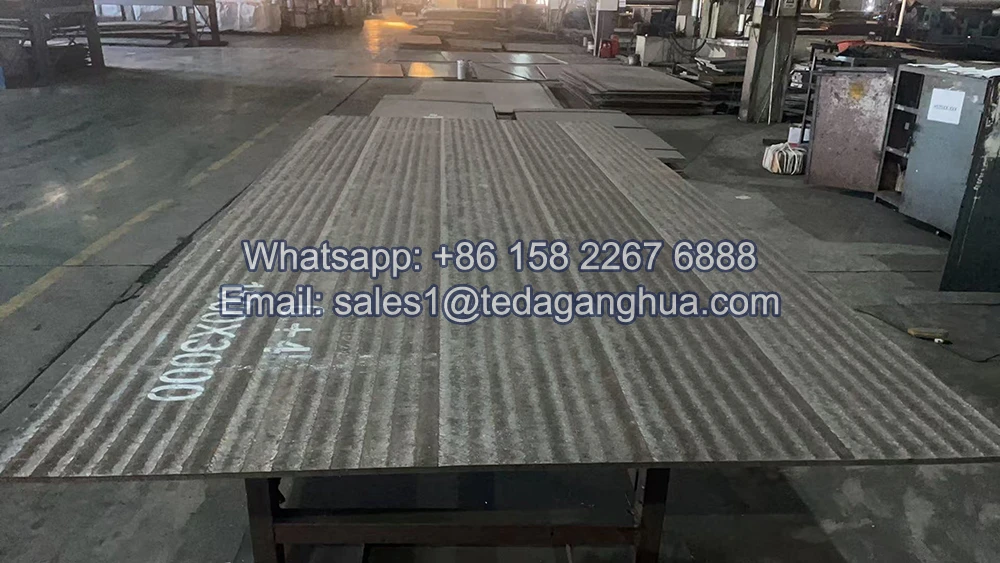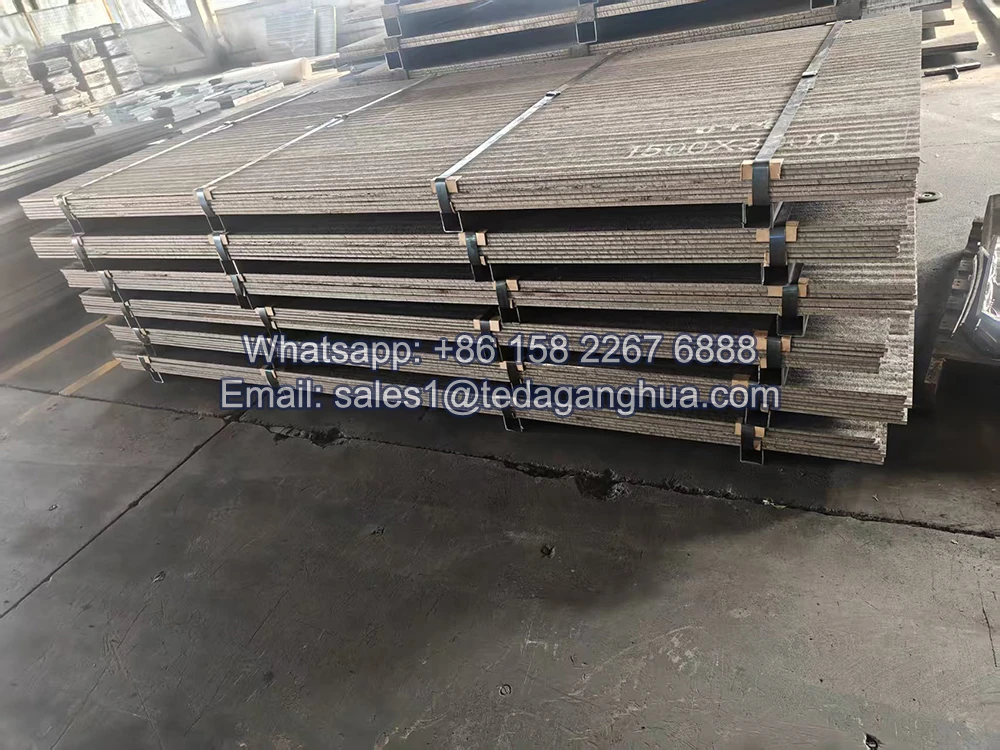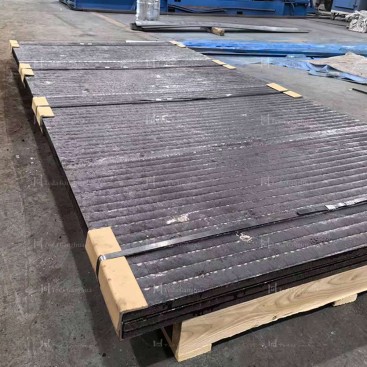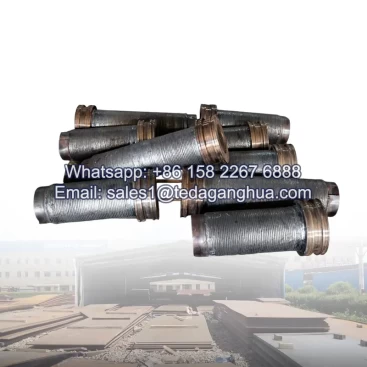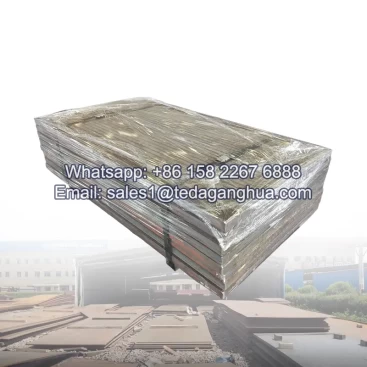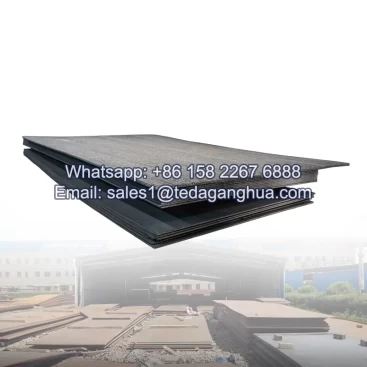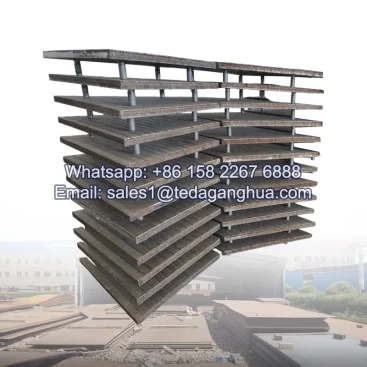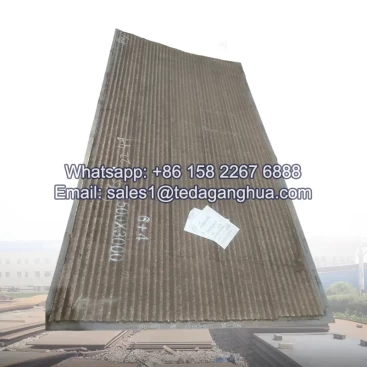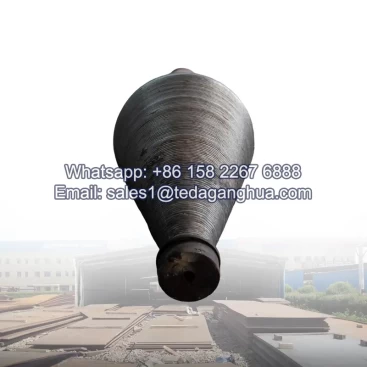
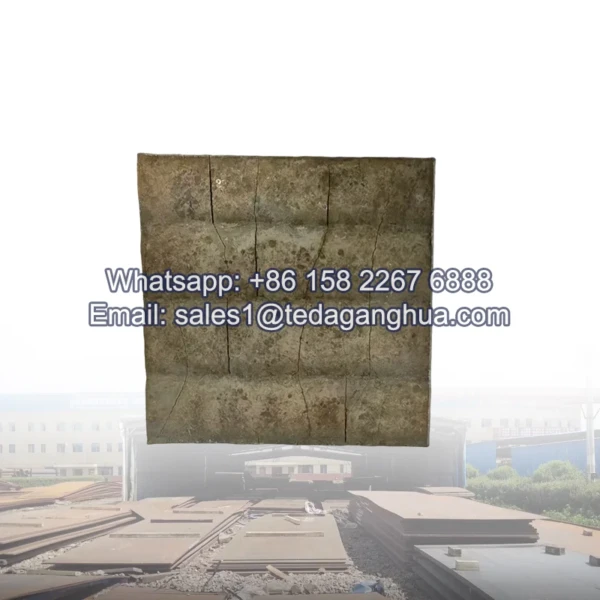
Abrasion Resistant Overlay Plate
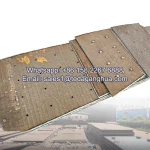
Abrasion Resistant Overlay Plate delivers superior wear resistance through a combination of high-hardness chromium carbide formation and a tough steel backing structure. Its ability to withstand sliding, インパクト, and erosive wear makes it an essential material for heavy-duty industrial applications where long-term durability and reliability are required.
- 説明
Abrasion Resistant Overlay Plate is a composite wear-resistant steel product manufactured by depositing a high-hardness alloy layer onto a carbon steel or low-alloy steel base through welding overlay technology. 鉱山で広く使用されています, セメント, 発電, 鉄鋼工場, and bulk material handling systems where severe abrasive conditions occur.
The key value of this material lies in its exceptional ability to resist surface material loss caused by friction, インパクト, and particle erosion.
Wear Resistance Principle
The abrasion resistance of overlay plate is achieved through a combination of hard alloy phases and a tough supporting base.
1. Hard Carbide Reinforcement
The overlay layer contains high levels of chromium and carbon, which form extremely hard carbide phases such as:
- Cr₇C₃
- Cr₂₃C₆
These carbide particles act as rigid barriers that resist cutting and grinding from abrasive materials.
2. 高い表面硬度
The wear-resistant layer typically achieves:
- 55–65 HRC hardness
- High microhardness in carbide-rich zones
This significantly reduces surface material removal during friction and impact.
3. Dual-Layer Structure Support
The structure consists of:
- Hard overlay layer (耐摩耗性)
- Tough base steel (impact absorption)
The base plate prevents cracking and deformation under mechanical load, while the overlay resists surface wear.
4. Controlled Microstructure
The weld overlay process produces a controlled distribution of carbides within a metallic matrix, 確保する:
- Uniform wear resistance
- Stable mechanical performance
- Reduced localized failure
Types of Wear Resistance
Abrasion Resistant Overlay Plate is designed to resist multiple wear mechanisms:
- 滑り摩耗: caused by continuous material movement across the surface
- Impact abrasion: caused by falling or striking materials
- Erosive wear: caused by high-speed particle flow
- Gouging wear: caused by large particle scraping
性能比較
| 財産 | オーバーレイプレート | Standard Carbon Steel | 耐摩耗鋼 |
|---|---|---|---|
| 表面硬度 | 非常に高い | 低い | Medium–High |
| 耐摩耗性 | 素晴らしい | 貧しい | 良い |
| 耐衝撃性 | 中くらい | 高い | 高い |
| 耐用年数 | Very Long | 短い | 長さ |
Key Factors Affecting Wear Performance
合金組成
Higher chromium and carbon content increase carbide formation and improve wear resistance.
オーバーレイの厚さ
Thicker wear layers provide longer service life under severe abrasion conditions.
Carbide Distribution
Uniform carbide dispersion ensures consistent wear performance across the surface.
Welding Process Control
Heat input and cooling rate affect hardness, crack resistance, and microstructure stability.
Typical Industrial Applications
Abrasion Resistant Overlay Plates are widely used in:
- マイニング機器ライナー
- セメントプラントのシュートとホッパー
- 石炭処理システム
- 発電所灰システム
- Steel mill conveyors
- Crusher and screening equipment
- 掘削機のバケットとダンプトラック
- バルク材料移送システム
産業用途でのメリット
- Extremely high resistance to abrasive wear
- Long service life under harsh conditions
- Reduced maintenance and downtime
- Customizable overlay composition
- ベースプレートとの強力な冶金的接合