- Описание
Automated Weld Overlay Plate Production: How Robotics and CNC Control Ensure Batch Consistency
For large-scale industrial applications, wear plate quality cannot depend on operator experience alone. Automated weld overlay production has become the key technology for achieving stable hardness, равномерная толщина, and consistent wear performance across every production batch.
By integrating robotic welding systems, CNC motion control, automated wire feeding, and precision positioning equipment, manufacturers can produce chromium carbide overlay plates with significantly improved repeatability compared with manual or semi-automatic welding methods.
This article explains how automated weld overlay systems work, why they improve production consistency, and why automation has become a quality requirement for high-volume industrial buyers.
1. What Is Automated Weld Overlay Plate Production?
Automated weld overlay production uses computer-controlled equipment to deposit a wear-resistant alloy layer onto a steel substrate with precisely controlled welding parameters.
Unlike manual welding, where quality may vary between operators, automated systems maintain consistent control over:
- Welding speed
- Arc current and voltage
- Wire feeding rate
- Толщина наложения
- Тепловложение
- Welding path accuracy
This makes automation especially important for mining, цемент, сталь, власть, and bulk material handling industries where thousands of wear plate components may require identical performance.
2. Main Components of an Automated Overlay Welding System
A modern automated weld overlay production line typically consists of several integrated systems:
| System Component | Основная функция |
|---|---|
| Welding power source | Provides stable electrical energy and controls arc characteristics |
| Wire feeding system | Maintains constant welding consumable supply |
| Welding torch travel mechanism | Controls precise movement and welding path |
| Positioning equipment | Rotates or moves workpieces for optimal welding angles |
| CNC control system | Stores welding programs and ensures repeatable production |
| Robotic automation system | Enables continuous and precise overlay deposition |
3. SAW and Open Arc Automated Overlay Technologies
3.1 Automated Submerged Arc Welding (ПИЛА)
Automated SAW overlay is widely used for large-area chromium carbide wear plates because of its high deposition efficiency and stable welding environment.
Ключевые преимущества включают в себя:
- Высокая скорость осаждения
- Excellent layer uniformity
- Low operator influence
- Stable metallurgical bonding
3.2 Automated Open Arc Welding
Open arc systems provide flexibility for different alloy compositions and plate geometries.
They are commonly used when:
- Customized wear alloys are required
- Complex shapes need processing
- Rapid production adjustment is necessary
4. Automated vs Manual Weld Overlay Production
The difference between automated and manual overlay welding becomes significant in high-volume manufacturing.
| Performance Factor | Руководство / Semi-Automatic Welding | Automated Welding |
|---|---|---|
| Deposition efficiency | Operator dependent | 3-5 times higher production efficiency |
| Dilution control | More variation | Controlled within approximately ±2% |
| Surface flatness | Depends on welding skill | Controlled around ±0.5 mm |
| Hardness consistency | Batch variation possible | Hardness deviation controlled within ±1 HRC |
| Production repeatability | Highly operator dependent | Program-controlled consistency |
5. Why Dilution Control Matters in Overlay Plates
Dilution refers to the amount of base steel mixed into the overlay alloy during welding.
Excessive dilution can reduce:
- Chromium carbide concentration
- Твердость поверхности
- Устойчивость к истиранию
- Service life
Automated welding systems maintain stable heat input and travel speed, helping control dilution within a narrow range and ensuring that the wear layer delivers its designed performance.
6. CNC Control and Batch-to-Batch Consistency
The biggest advantage of CNC-controlled overlay production is repeatability.
Once welding parameters are optimized, the production program can be reused for future orders, ensuring consistent results across multiple batches.
Controlled parameters include:
- Welding current settings
- Voltage parameters
- Скорость движения
- Layer overlap distance
- Plate positioning sequence
7. Quality Control in Automated Production
Automation improves production stability, but professional inspection remains essential.
| Inspection Method | Quality Objective |
|---|---|
| Проверка твердости | Verify wear-resistant alloy performance |
| Измерение толщины | Confirm overlay layer consistency |
| Surface inspection | Detect cracks, pores, or uneven deposition |
| Metallographic analysis | Evaluate carbide distribution and bonding structure |
8. Why Automation Is the Quality Baseline for Large Orders
For small repair projects, manual welding may be acceptable. Однако, for large industrial procurement, automated production provides several critical advantages:
- Identical performance across thousands of plates
- Predictable wear life calculations
- Stable hardness distribution
- Reduced rejection rates
- Reliable delivery schedules
This is why many mining, цемент, and steel companies consider automated weld overlay production a minimum requirement when selecting long-term suppliers.
9. Automated Weld Overlay Plate Solutions from Teda Ganghua
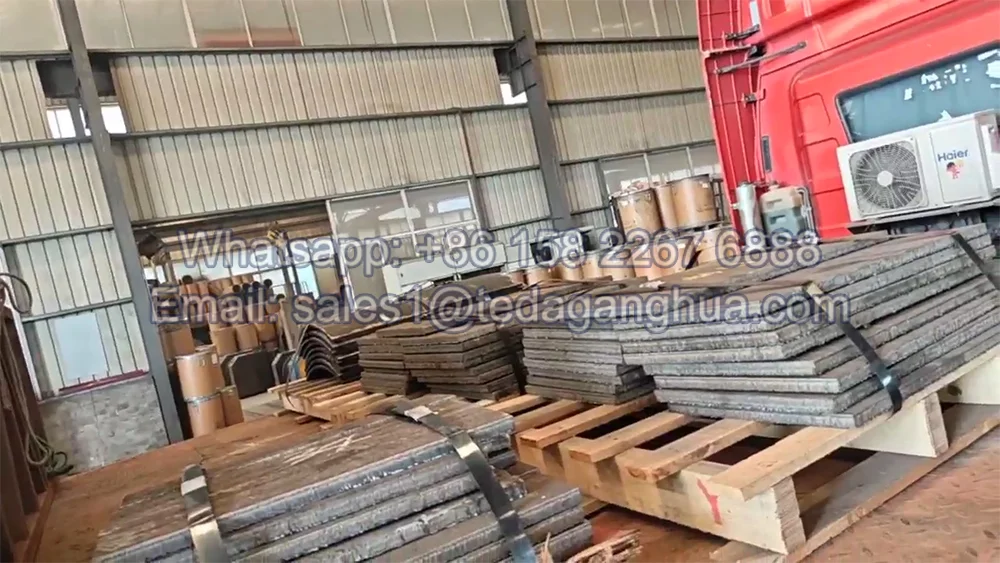
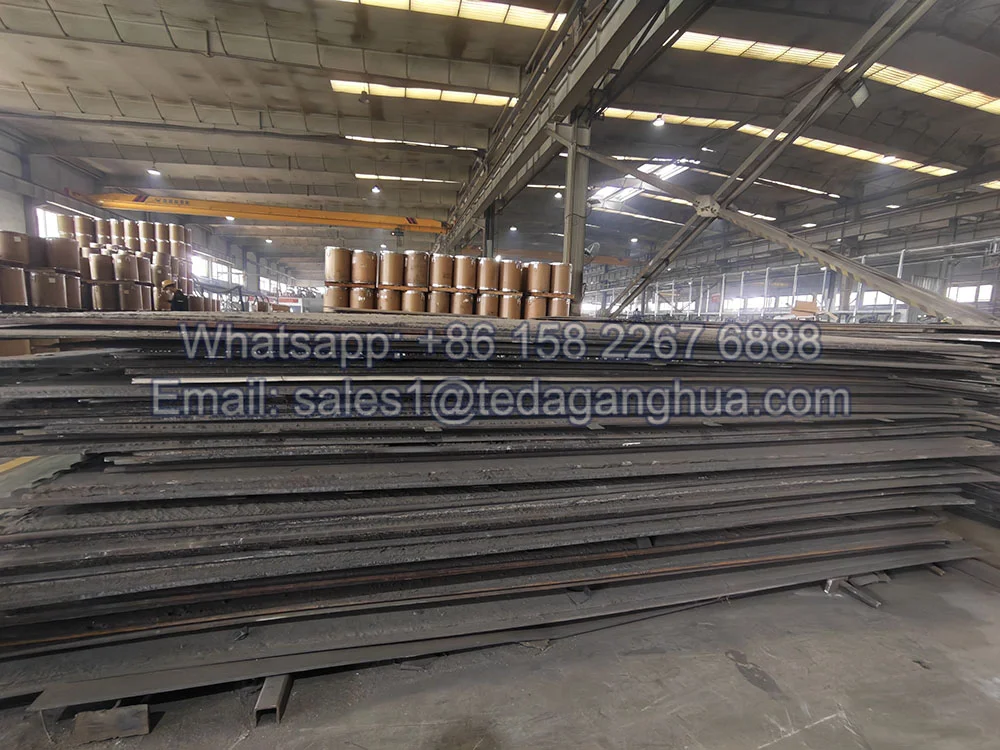
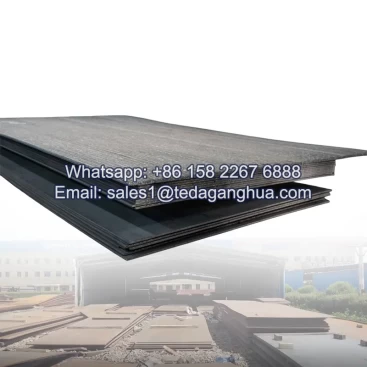
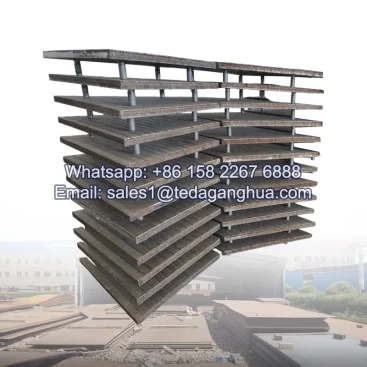
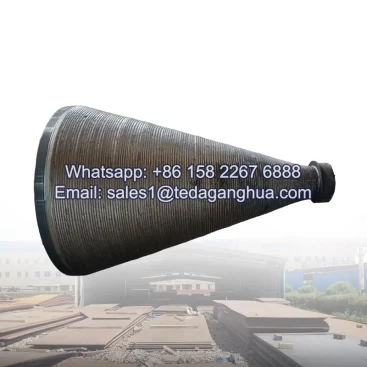
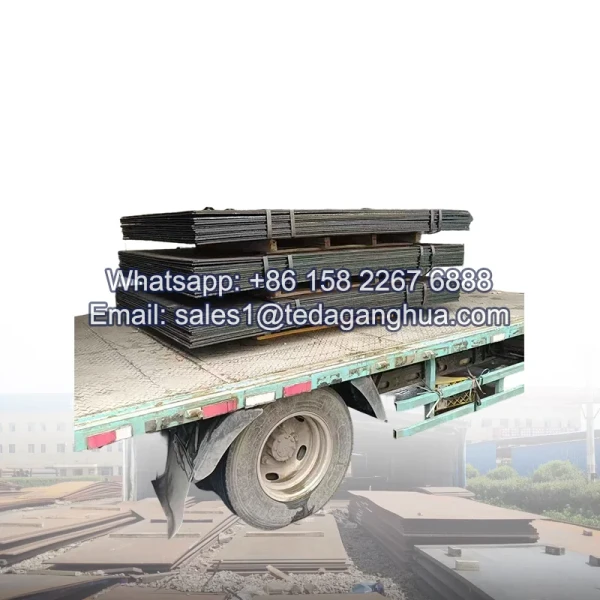
Teda Ganghua applies advanced weld overlay technologies to manufacture chromium carbide overlay plates for severe abrasion applications.
Our production advantages include:
- Automated SAW and open arc overlay systems
- Computer-controlled welding parameters
- Stable hardness and thickness control
- Customized dimensions and processing services
- Strict quality inspection before shipment
With automated manufacturing capability and engineering-based material recommendations, Teda Ganghua helps customers achieve longer equipment service life and lower maintenance costs.
Learn more:
Заключение
Automated weld overlay plate production represents the future of industrial wear protection manufacturing. Through robotics, CNC control, and precise welding parameter management, manufacturers can achieve higher productivity, lower variation, and reliable batch consistency.
For large-volume applications requiring predictable wear performance, automated chromium carbide overlay plate production provides the quality foundation needed for long-term industrial operation.