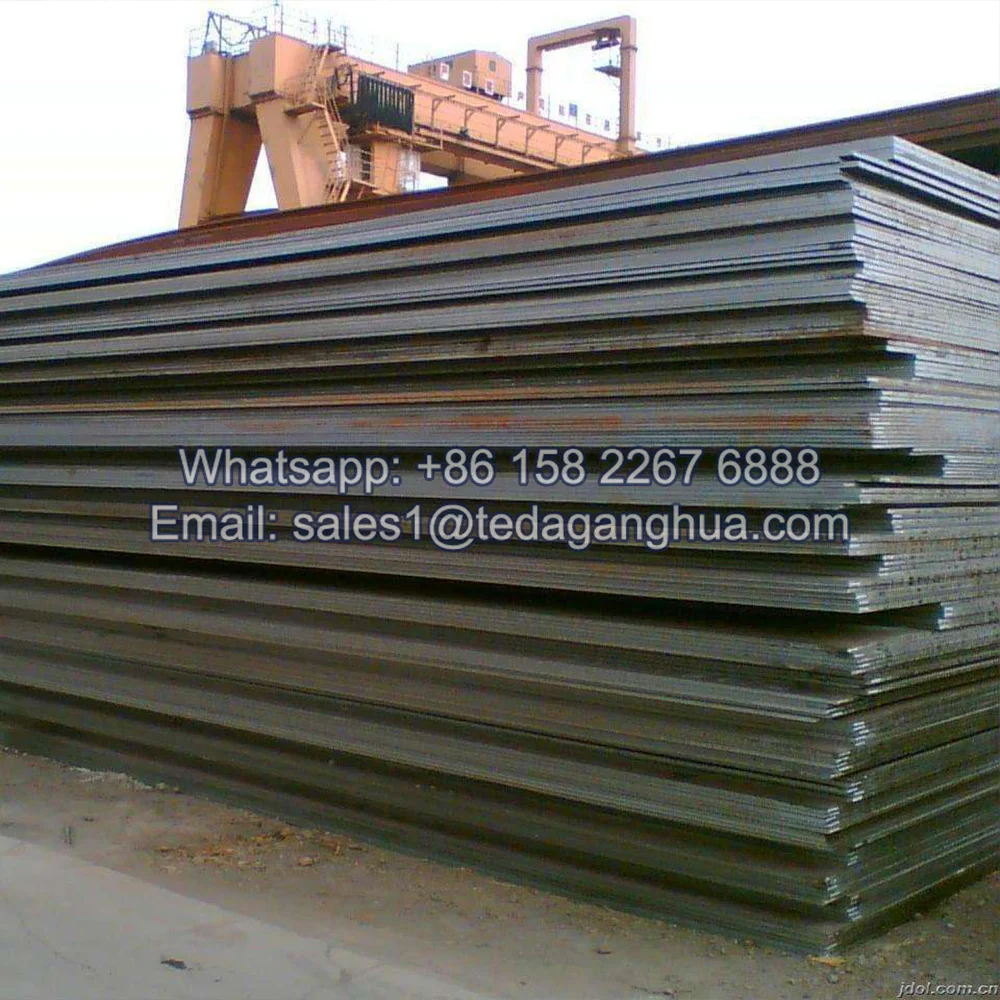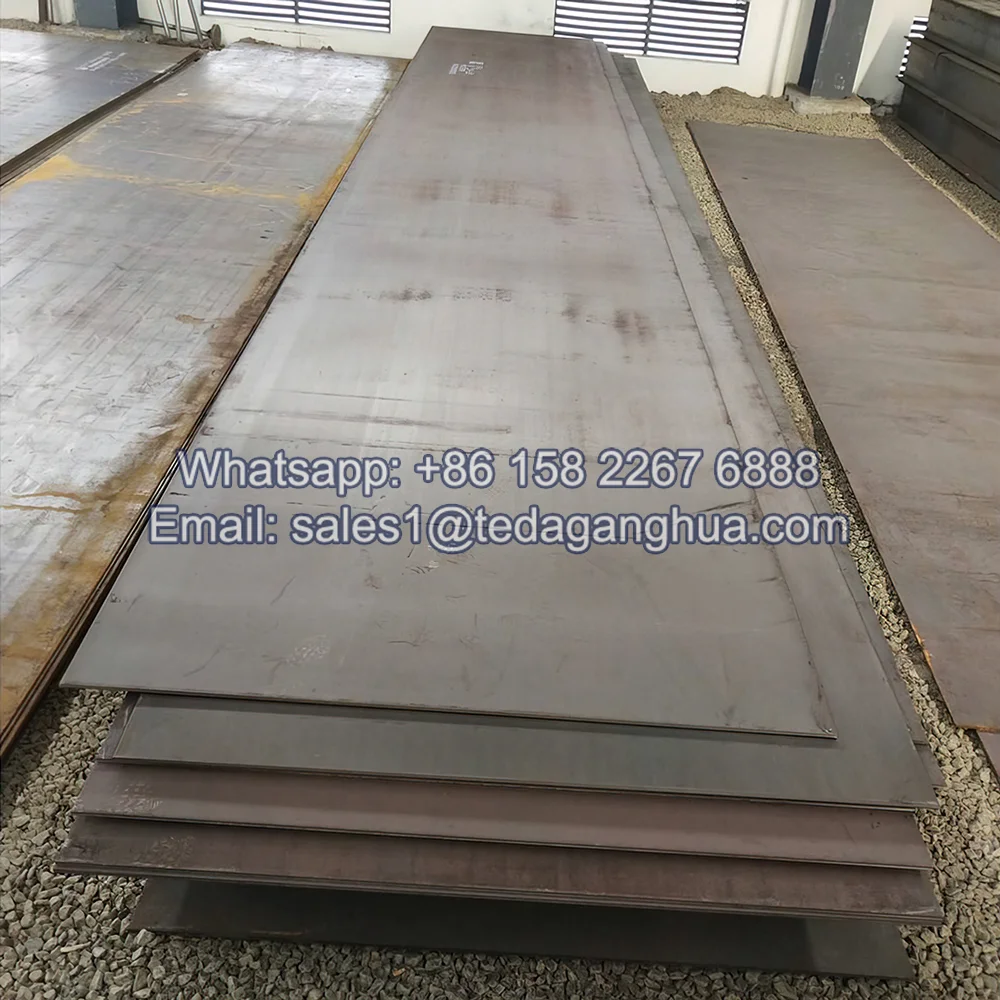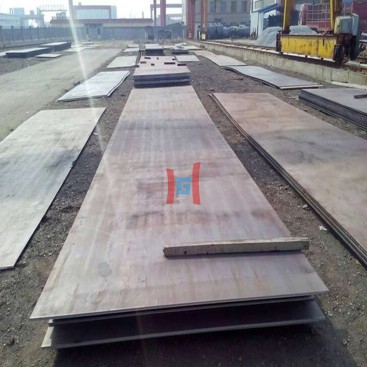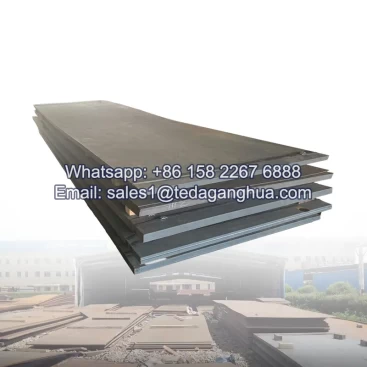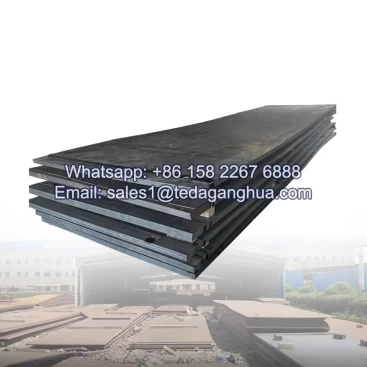
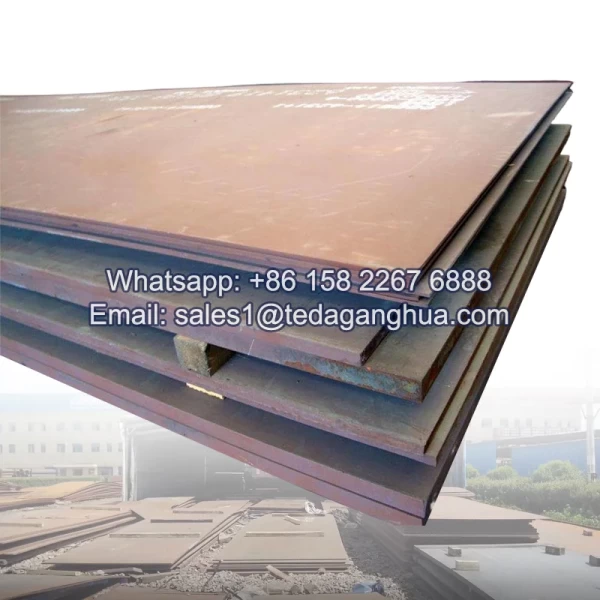
Wear Steel Plate
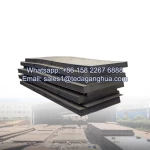
Wear steel plate is engineered through a carefully balanced alloy system and heat treatment process to achieve high hardness and strong toughness.
Its main advantages include:
- High carbon and alloy element design for wear resistance
- Hardness range from 360 HB to 500+ HB
- Martensitic/bainitic microstructure for durability
- Excellent performance in abrasion and impact environments
- Description
Wear steel plate (wear resistant steel plate) is a type of high-strength alloy steel designed to resist abrasion, impact, and sliding wear in harsh working environments. It is widely used in mining, construction machinery, cement plants, and bulk material handling systems where standard steel cannot provide sufficient service life.
The performance of wear steel plate mainly depends on its carbon content, alloying elements, and microstructure control.
1. Typical Chemical Composition of Wear Steel Plate
Wear resistant steel is usually based on medium-carbon low-alloy steel systems, optimized for hardness and toughness balance.
| Element | Typical Range | Function |
|---|---|---|
| Carbon (C) | 0.20 – 0.35% | Increases hardness and wear resistance |
| Manganese (Mn) | 0.50 – 1.60% | Improves toughness and hardenability |
| Silicon (Si) | 0.20 – 0.70% | Strengthens matrix structure |
| Chromium (Cr) | 0.50 – 2.50% | Enhances wear and corrosion resistance |
| Nickel (Ni) | 0 – 1.50% | Improves toughness and impact resistance |
| Boron (B) | trace (0.001–0.005%) | Increases hardenability significantly |
2. Hardness Performance of Wear Steel Plate
Wear steel is primarily classified by its Brinell hardness (HB) level:
| Grade | Hardness (HBW) | Performance Level |
|---|---|---|
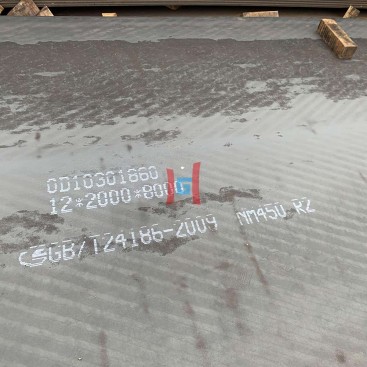
| NM360 | ~330–390 HB | Standard wear resistance |
| NM400 | ~380–460 HB | Medium-high wear resistance |
| NM450 | ~430–500 HB | High wear resistance |
| NM500 | ~470–550 HB | Extra high wear resistance |
Key principle:
Higher hardness = better wear resistance, but slightly reduced formability.
3. Mechanical Properties
Wear steel plates are designed for high-load and high-impact conditions.
- High tensile strength
- Strong impact resistance
- Good fatigue resistance
- Controlled hardness distribution
Typical tensile strength range:
- 1000 – 1600 MPa (depending on grade and heat treatment)
4. Microstructure Characteristics
Wear steel performance is achieved through controlled heat treatment:
- Martensite or bainite dominant structure
- Fine carbide dispersion in matrix
- Uniform hardness distribution across thickness
Result:
Combination of high hardness + sufficient toughness prevents brittle fracture under impact.
5. Key Performance Features
1. Excellent Abrasion Resistance
- Resists sliding and particle wear
- Suitable for sand, ore, coal, and gravel environments
2. High Impact Resistance
- Maintains structural integrity under heavy loading
- Reduces cracking in dynamic working conditions
3. Good Weldability (Controlled)
- Can be welded with proper preheating and procedures
- Suitable for structural fabrication and repair
4. Long Service Life
- Significantly extends equipment lifetime
- Reduces maintenance and replacement costs
6. Common Applications of Wear Steel Plate
Wear resistant steel is widely used in:
- Mining machinery and dump trucks
- Cement plant liners and chutes
- Coal handling systems
- Excavator buckets and blades
- Construction machinery wear parts
- Bulk material hoppers and conveyors