

Chromium Carbide Overlay Wear Plate
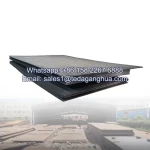
The Chromium Carbide Overlay layer is the heart of CCO wear plates, providing:
-
High hardness for abrasion resistance
-
Strong metallurgical bonding for toughness
-
Customizable thickness for different industrial requirements
- Description
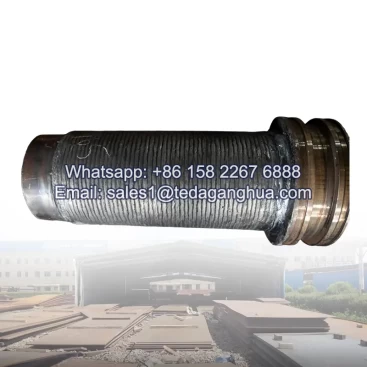
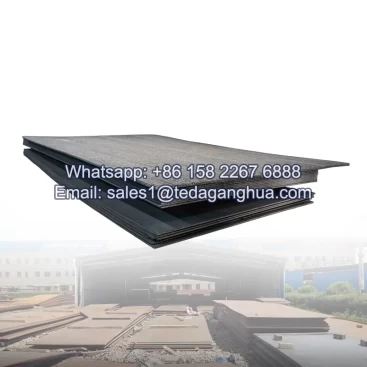
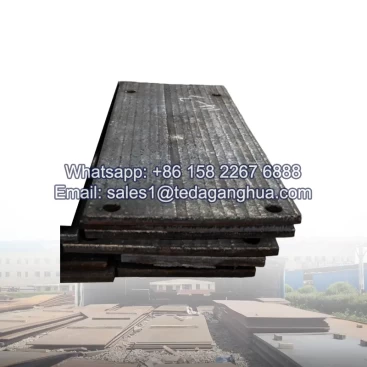
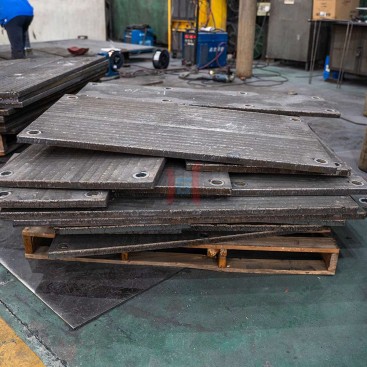
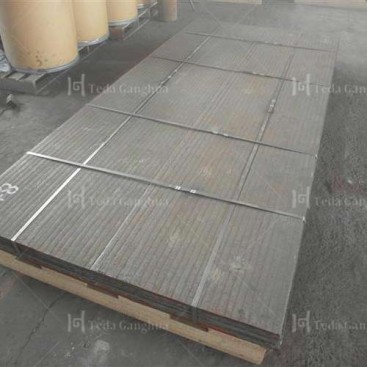
Chromium Carbide Overlay (CCO) Wear Plates are bimetallic steel plates where a high-hardness chromium carbide layer is welded onto a tough steel base.
The overlay layer is the key component that provides the plate’s extreme wear resistance, making it ideal for mining, cement, power, and material handling applications.
Structure of the Chromium Carbide Overlay Layer
-
Surface Layer (Chromium Carbide):
-
Composition: Mainly chromium (Cr) and carbon (C), often with small amounts of Ni, Mo, or Fe.
-
Microstructure: Dense, hard chromium carbide particles embedded in a metallic matrix.
-
Hardness: Typically 58–65 HRC, depending on grade and overlay thickness.
-
Function: Provides high resistance to sliding wear and abrasion.
-
-
Transition Zone:
-
Purpose: Ensures metallurgical bonding between the overlay and the steel base.
-
Characteristics: Slightly lower hardness than the surface, maintains adhesion and toughness, and reduces risk of cracking.
-
-
Steel Base Layer:
-
Usually Q235, S355, NM400, or AR400/450.
-
Purpose: Provides impact toughness and structural strength while supporting the hard overlay.
-
Characteristics of the Overlay Layer
| Property | Description | Effect on Performance |
|---|---|---|
| Hardness (HRC) | 58–65 | Resists severe sliding and abrasive wear |
| Thickness (mm) | 3–20 | Adjusted according to application severity |
| Microstructure | Chromium carbide particles in metallic matrix | High wear resistance with some toughness |
| Bonding Strength | Strong metallurgical weld with base | Prevents delamination during impact |
| Surface Finish | Shot-blasted or ground | Ensures consistent wear and smooth material flow |
Manufacturing Considerations of the Overlay
-
Overlay Material Selection:
-
Chromium carbide alloy wires, rods, or powders are used.
-
Alloy composition affects hardness, wear resistance, and cracking susceptibility.
-
-
Welding Process:
-
Submerged Arc Welding (SAW): High deposition rate for large plates.
-
Plasma Transferred Arc (PTA): Produces uniform hardness with low dilution.
-
Flux-Cored Arc Welding (FCAW) / SMAW: Flexible, for small plates or repairs.
-
-
Overlay Thickness Control:
-
Critical to ensure optimal wear life.
-
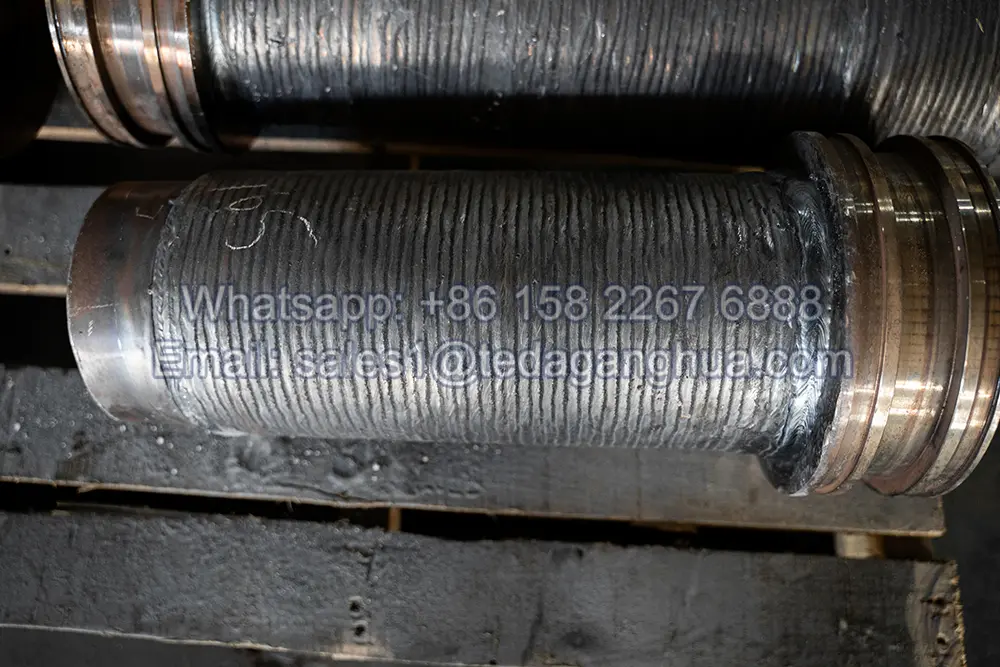
Multi-pass welding builds up the desired thickness while maintaining surface hardness.
-
-
Heat Treatment and Stress Relief:
-
Post-weld heat treatment may be applied at 150–200°C.
-
Reduces residual stress and prevents cracking during service.
-
-
Surface Finishing:
-
Grinding or shot blasting removes slag, spatter, and irregularities.
-
Ensures uniform wear and consistent abrasion resistance.
-
Applications of Chromium Carbide Overlay Layer
The overlay layer enables wear plates to perform in extremely abrasive and impact-heavy environments, including:
-
Mining: Crusher liners, hammer plates, ore hoppers
-
Cement & Concrete: Slurry chutes, mixer liners, screw conveyors
-
Power Plants: Coal handling systems, ash chutes
-
Recycling & Material Handling: Shredders, impact plates, conveyor liners
Key Advantages of the Overlay Layer
-
Extreme Abrasion Resistance: Chromium carbide particles resist sliding wear and impact.
-
Long Service Life: Properly designed overlays can last 5–10× longer than mild steel.
-
Impact Support: Transition zone and base steel absorb energy, preventing delamination.
-
Customizable Design: Thickness, hardness, and size can be tailored to application needs.