- Description
Cored Wire Overlay Plate: How Flux-Cored and Metal-Cored Wires Create Different Wear-Resistant Alloys
Cored wire technology is one of the most important innovations in modern hardfacing production. By using specially designed flux-cored or metal-cored welding wires, manufacturers can create different wear-resistant alloy systems for extreme abrasion, impact, and high-temperature applications.
The composition design inside the welding wire directly determines the final overlay structure, carbide formation, hardness level, and service life of chromium carbide overlay plates.
This article explains the differences between flux-cored wire and metal-cored wire, how alloy elements are introduced, and how different alloy systems achieve specific wear performance.
1. What Is Cored Wire Overlay Technology?
Cored wire overlay welding uses tubular welding wires filled with alloy powders or metallic alloy materials to create a wear-resistant surface layer on a steel substrate.
Compared with traditional solid welding wires, cored wires provide greater flexibility in alloy design because different carbide-forming elements can be added according to application requirements.
Typical alloying elements include:
- Chromium (Cr) for carbide formation and abrasion resistance
- Carbon (C) for hard carbide structures
- Tungsten (W) for extreme wear resistance
- Molybdenum (Mo) for high-temperature performance
- Niobium (Nb) for carbide refinement
2. Flux-Cored Wire vs Metal-Cored Wire
Although both technologies use tubular wires, their internal structures and welding characteristics are different.
| Comparison Factor | Flux-Cored Wire | Metal-Cored Wire |
|---|---|---|
| Internal filling material | Flux powder + alloy powder | Metal alloy powder only |
| Slag formation | Produces protective slag | Little or no slag formation |
| Alloy adjustment flexibility | Very high | High |
| Deposition efficiency | High | Very high |
| Surface cleaning requirement | Requires slag removal | Minimal post-cleaning |
| Main advantage | Complex alloy design | High productivity and smooth deposition |
3. How Alloy Elements Are Added into Cored Wires
3.1 Powder-Filled Alloy Design in Flux-Cored Wire
In flux-cored wire, alloying elements are added as specially formulated powders placed inside a metal sheath.
This design allows manufacturers to precisely control:
- Chromium carbide formation
- Carbon content
- Tungsten carbide distribution
- Final overlay hardness
The powder mixture melts during welding and forms a reinforced wear-resistant microstructure.
3.2 Metal Alloy Filling in Metal-Cored Wire
Metal-cored wires use metallic powder cores without traditional flux components.
They are mainly designed for:
- Higher deposition efficiency
- Lower slag generation
- Better welding productivity
- Cleaner overlay surfaces
4. Main Cored Wire Alloy Systems for Wear Plates
Different wear mechanisms require different alloy systems. The selection of welding wire chemistry determines the final performance of the overlay layer.
| Alloy System | Main Composition | Typical Hardness | Main Wear Advantage |
|---|---|---|---|
| C-Cr-Fe Alloy | Carbon + Chromium + Iron | HRC 55-60 | Good general abrasion resistance |
| CrC Alloy | High Chromium + Carbon | HRC 58-65 | Excellent sliding abrasion resistance |
| WC Alloy | Tungsten Carbide Reinforced | HRC 65-70+ | Extreme wear and erosion resistance |
5. Chromium Carbide Cored Wire System
Chromium carbide alloy wires are among the most widely used materials for overlay wear plates.
During welding, chromium and carbon react to form hard chromium carbide particles embedded in an iron-based matrix.
The resulting structure provides:
- High resistance against mineral abrasion
- Stable hardness at room temperature
- Long service life in sliding wear conditions
- Excellent cost-performance balance
6. Tungsten Carbide Cored Wire System
For extremely aggressive wear environments, tungsten carbide reinforced wires provide higher protection than conventional chromium carbide alloys.
Typical applications include:
- Oil and gas drilling equipment
- Severe impact abrasion components
- Mining cutting tools
- High-speed material flow systems
The high hardness of tungsten carbide particles provides exceptional resistance against cutting and erosion wear.
7. How Cored Wire Selection Affects Wear Plate Performance
| Working Condition | Recommended Alloy System |
|---|---|
| Low-stress sliding abrasion | Chromium carbide alloy |
| Heavy mineral impact | C-Cr-Fe alloy with improved toughness |
| High-speed erosion | WC reinforced alloy |
| High-temperature abrasion | CrC + Nb modified alloy |
| Mixed abrasion and impact | Balanced carbide alloy system |
8. Quality Control of Cored Wire Overlay Plates
Professional overlay production requires strict control of both welding parameters and alloy chemistry.
- Wire chemical composition inspection
- Hardness testing
- Overlay thickness measurement
- Carbide microstructure analysis
- Surface defect inspection
9. Cored Wire Overlay Plate Solutions from Teda Ganghua
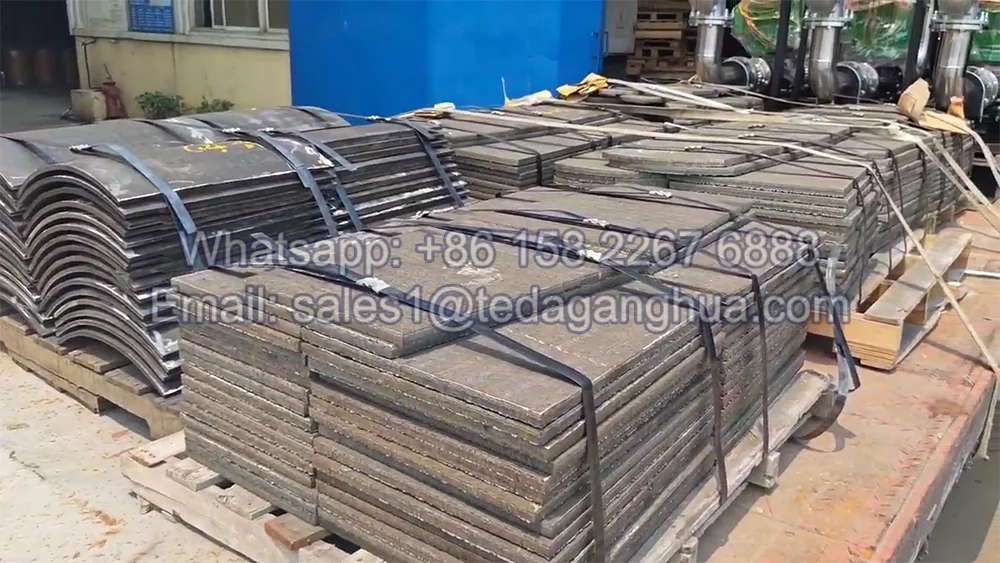
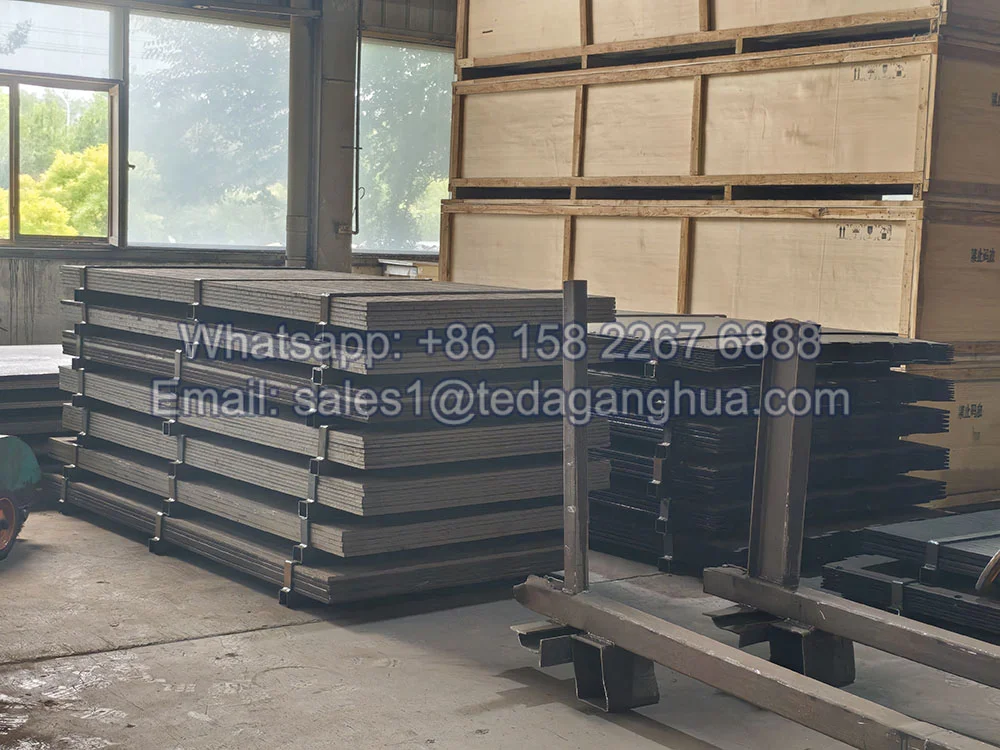
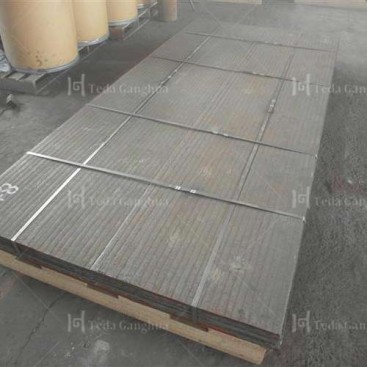
Teda Ganghua provides chromium carbide overlay plates manufactured with advanced cored wire welding technology for demanding industrial wear applications.
Our wear-resistant solutions include:
- Chromium carbide overlay plates
- Customized alloy compositions
- Different overlay thickness options
- Precision cutting and fabrication services
- Application-based material recommendations
With optimized welding technology and strict quality management, Teda Ganghua helps customers improve equipment reliability and reduce maintenance frequency in mining, cement, steel, and heavy industries.
Learn more:
Chromium Carbide Overlay Plate
Conclusion
Cored wire technology allows manufacturers to engineer wear-resistant alloys according to specific operating conditions. Flux-cored wires provide maximum alloy design flexibility, while metal-cored wires deliver higher productivity and cleaner deposition.
By selecting the correct C-Cr-Fe, CrC, or WC alloy system, industrial users can achieve the right balance between hardness, toughness, and service life for their wear protection requirements.