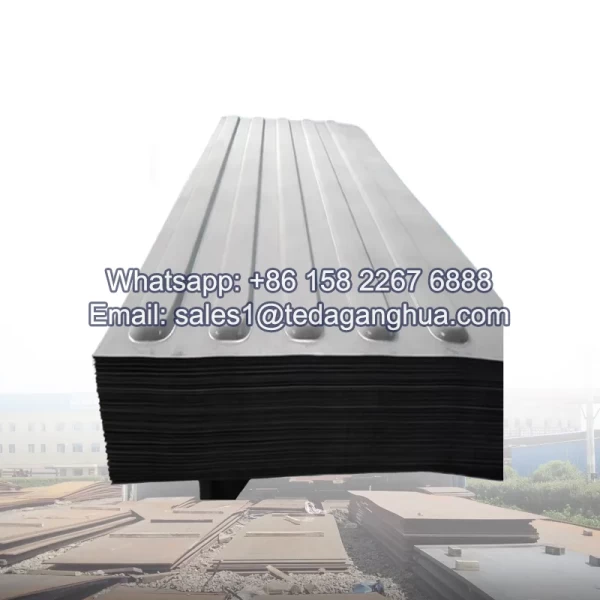
Corten Steel Containers
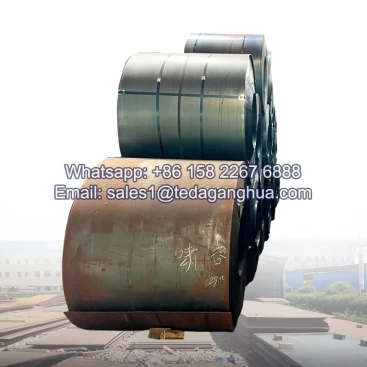
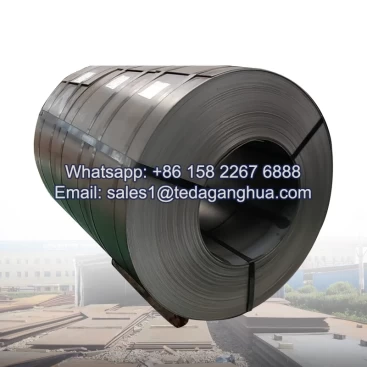
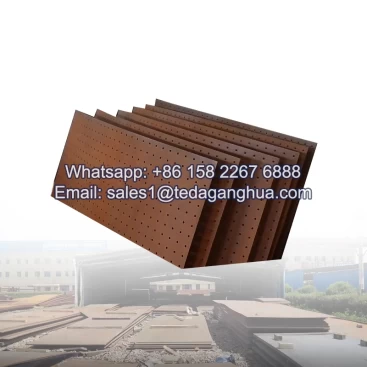
Corten steel containers are manufactured through roll forming, cutting, welding, and structural assembly processes to create durable corrugated panels. When exposed to air and moisture, the steel gradually develops a reddish-brown protective patina, which forms due to the interaction between alloy elements and environmental conditions.
- Description
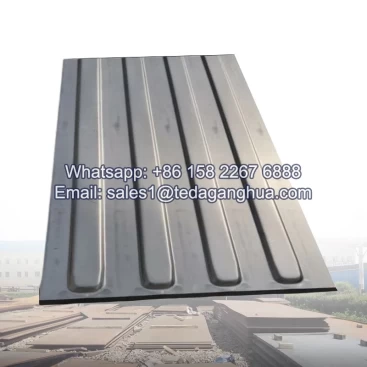
Corten steel containers are widely used in global logistics because weathering steel offers excellent strength, durability, and atmospheric corrosion resistance. Container wall panels, roof panels, and structural components are commonly manufactured from corrugated Corten steel plates, which improve rigidity and impact resistance during transportation.
One of the most distinctive characteristics of Corten steel containers is that the surface steel can gradually develop a reddish-brown patina when exposed to outdoor environments.
Processing Technology of Corten Steel Container Panels
The production of container panels requires several specialized steel fabrication processes to ensure high structural strength and dimensional accuracy.
| Processing Step | Description | Purpose |
|---|---|---|
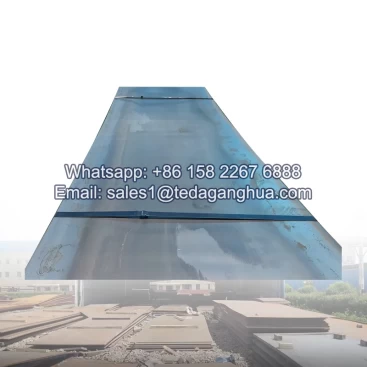
| Steel Plate Preparation | Weathering steel plates are selected according to required grades and thickness | Ensure material quality and mechanical performance |
| Roll Forming | Flat plates are passed through forming rollers to create corrugated profiles | Increase panel rigidity and structural strength |
| Cutting | CNC plasma or laser cutting is used to produce accurate panel sizes | Ensure compatibility with container frames |
| Welding | Panels are welded to structural frames and corner posts | Provide container structural integrity |
| Surface Exposure | Panels are exposed to outdoor conditions or treated for pre-weathering | Allow protective oxide layer to form |
The corrugated structure created during roll forming allows relatively thin steel plates to achieve high stiffness and impact resistance, which is essential for container transportation.
Will Corten Steel Containers Turn Red?
Yes, Corten steel surfaces gradually change color over time. When exposed to air and moisture, the steel develops a stable rust-colored layer, which usually evolves through several stages.
| Stage | Surface Appearance | Description |
|---|---|---|
| Initial Stage | Dark gray steel surface | Newly manufactured steel with mill scale |
| Early Oxidation | Light brown spots | Surface begins to react with oxygen and moisture |
| Developing Patina | Brown to orange rust | Protective oxide layer forms gradually |
| Stable Patina | Dark reddish-brown | Dense protective layer slows further corrosion |
This natural transformation is a controlled oxidation process, different from ordinary rusting in carbon steel.
Principle of Weathering Steel Corrosion Resistance
The corrosion resistance of Corten steel comes from the alloy elements added to the steel composition. These elements promote the formation of a dense and stable oxide layer on the surface.
| Alloy Element | Function |
|---|---|
| Copper (Cu) | Improves atmospheric corrosion resistance |
| Chromium (Cr) | Enhances oxidation resistance |
| Nickel (Ni) | Increases durability in harsh environments |
| Phosphorus (P) | Helps form a dense protective rust layer |
This oxide layer acts as a barrier that reduces oxygen and moisture penetration, significantly slowing down further corrosion. As a result, Corten steel containers can maintain long service life even in outdoor or marine environments.
Advantages of Corten Steel for Container Manufacturing
Corten steel provides several benefits for container structures:
-
High mechanical strength for heavy cargo transport
-
Excellent atmospheric corrosion resistance
-
Reduced need for protective coatings
-
Distinctive weathered appearance over time
-
Long service life in outdoor environments