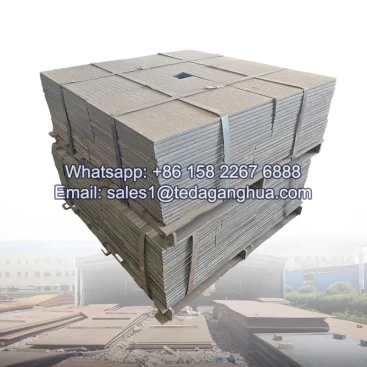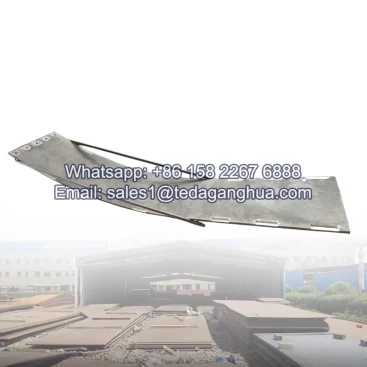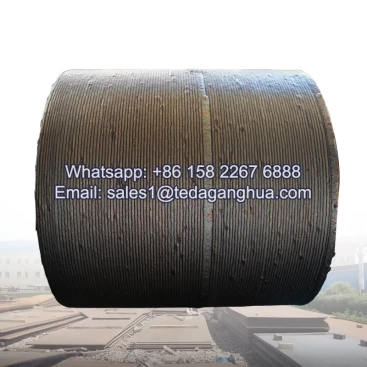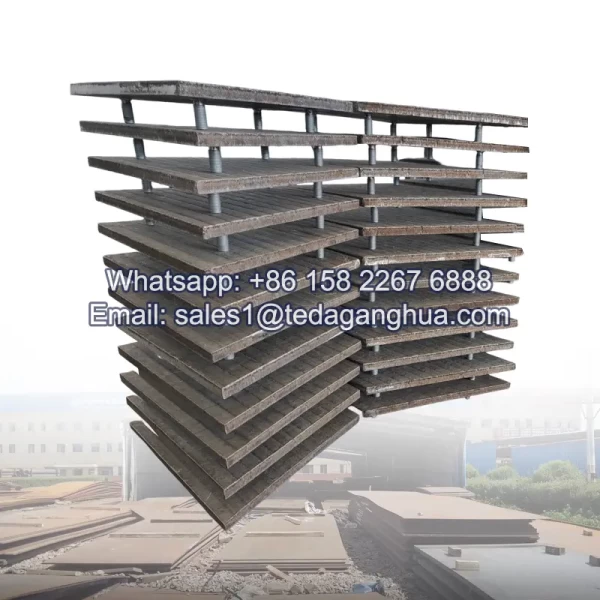
Chromium Carbide Plates

Chromium carbide plates are ideal for any process where abrasion, erosion, or impact shortens equipment life. Their customizable size, strong bonding, and outstanding hardness make them a preferred material for industrial wear protection.
- Description
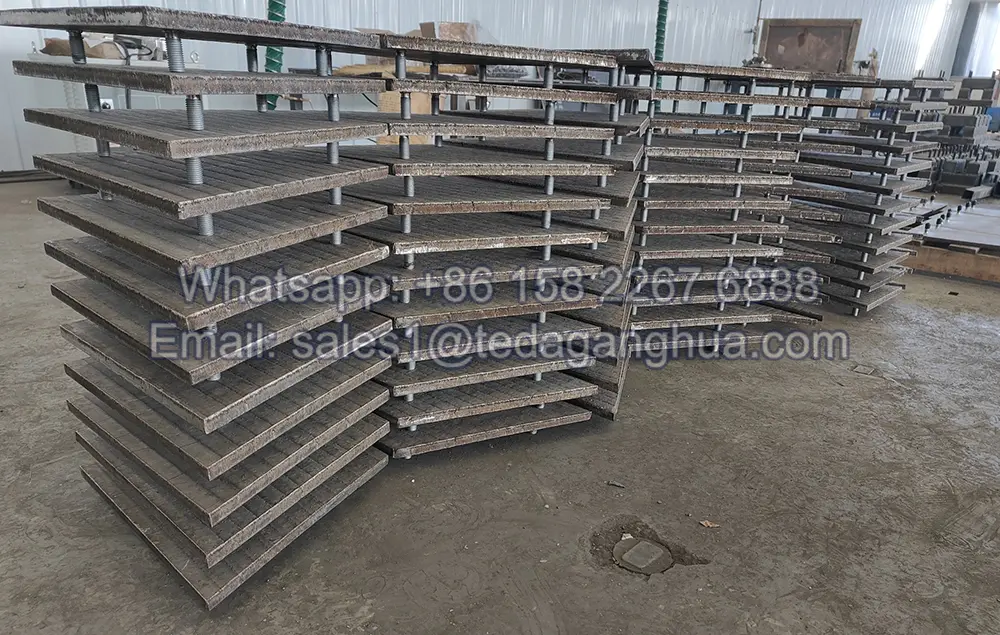
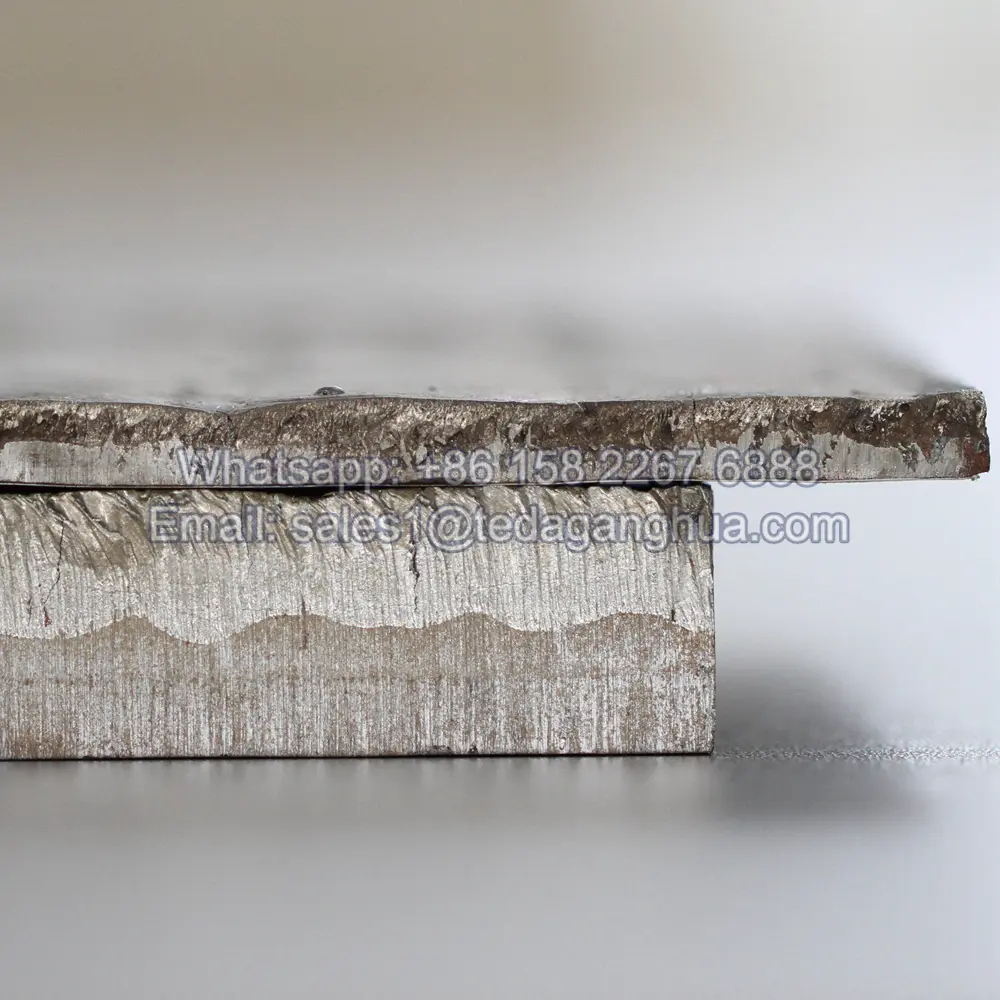
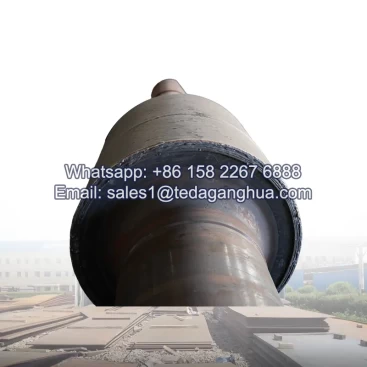
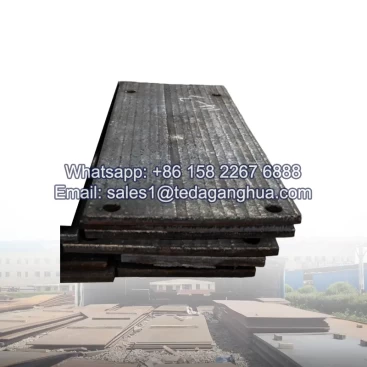
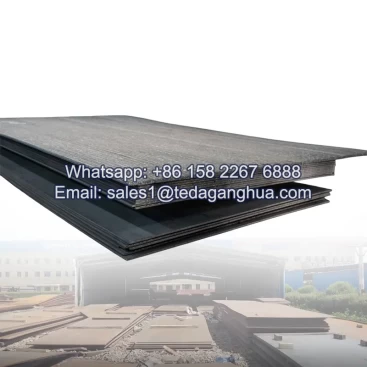
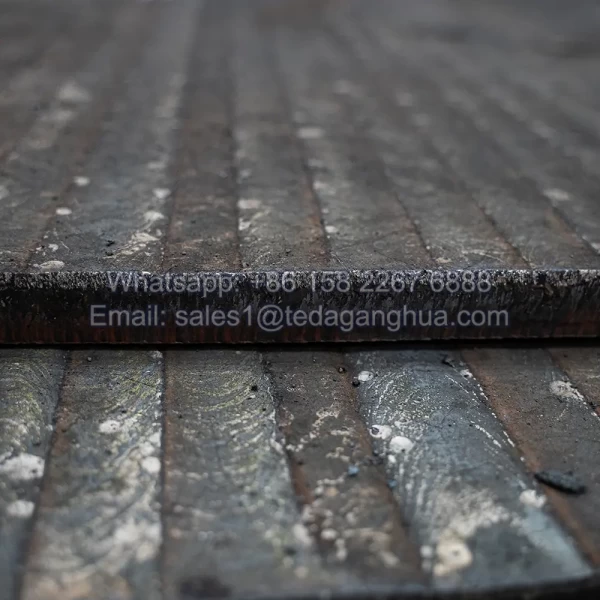
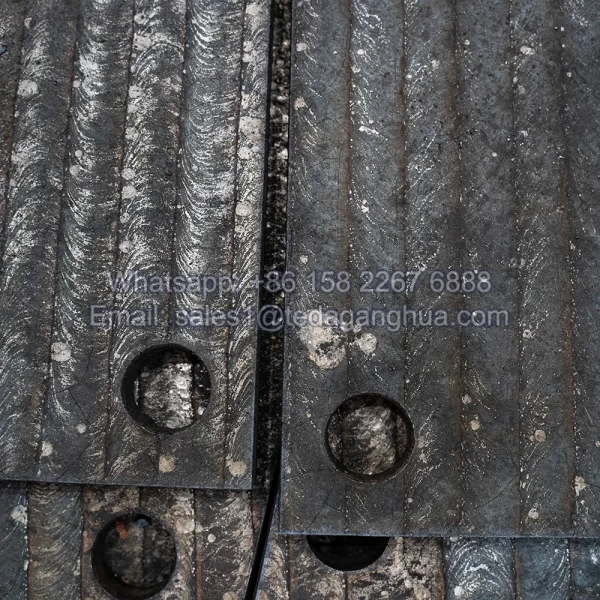
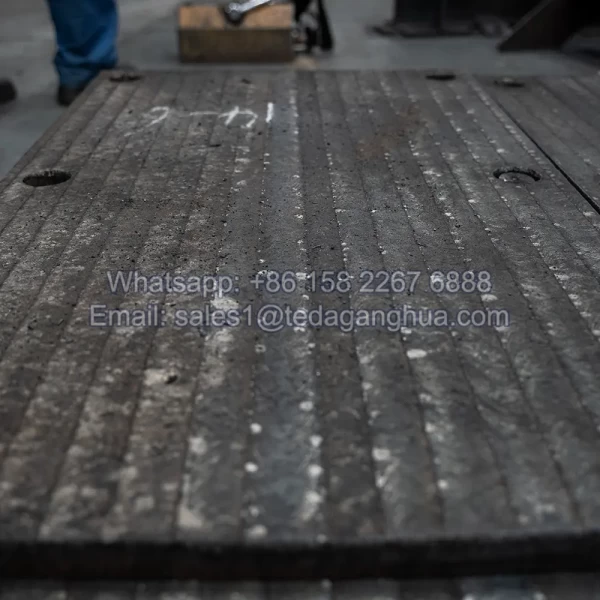
Chromium Carbide Plates (also known as Chromium Carbide Overlay Plates or CCO Plates) are wear-resistant steel plates made by welding a hard chromium carbide layer onto a mild steel or stainless steel base. The resulting composite plate combines the strength and toughness of the base metal with the superior hardness and wear resistance of chromium carbide.
These plates are widely used in industries that require long-lasting protection against abrasion, impact, and high-temperature wear.
1. Structure and Composition
Chromium carbide plates are typically produced by submerged arc welding or open arc welding, forming a metallurgical bond between the wear layer and the base plate.
Typical composition of wear layer (wt.%):
-
Chromium (Cr): 25–35%
-
Carbon (C): 4–6%
-
Iron (Fe): Balance
-
Minor elements: Mn, Si, Nb, Mo (optional, depending on grade)
The surface contains a dense network of Cr₇C₃-type carbides, giving it extremely high hardness and wear resistance.
Hardness: 58–65 HRC (≈ 600–750 HV)
2. Standard Specifications and Sizes
Chromium carbide plates can be supplied in different base plate grades, overlay thicknesses, and dimensions according to usage.
| Item | Standard Range | Notes |
|---|---|---|
| Base Plate Material | Q235B, Q345B, ASTM A36, Mild Steel, Stainless Steel | Can be customized according to working condition |
| Overlay Thickness | 3–12 mm | Usually 3–6 mm for light wear, 8–12 mm for heavy wear |
| Total Plate Thickness | 6–30 mm | Base + overlay combined |
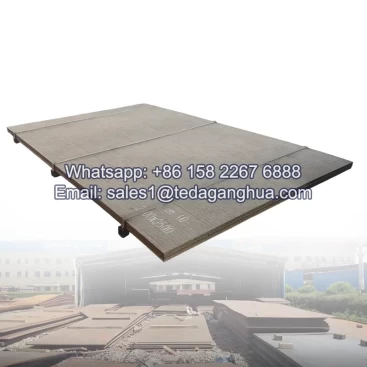
| Sheet Size (Standard) | 1400 × 3000 mm, 1500 × 3000 mm, 1200 × 2400 mm | Can be cut to smaller sizes |
| Hardness (Surface) | 58–65 HRC | Equivalent to 600–750 HV |
| Maximum Plate Size (Customized) | Up to 2000 × 4000 mm | Depends on production line |
| Flatness Tolerance | ±3 mm/m | After welding and quenching |
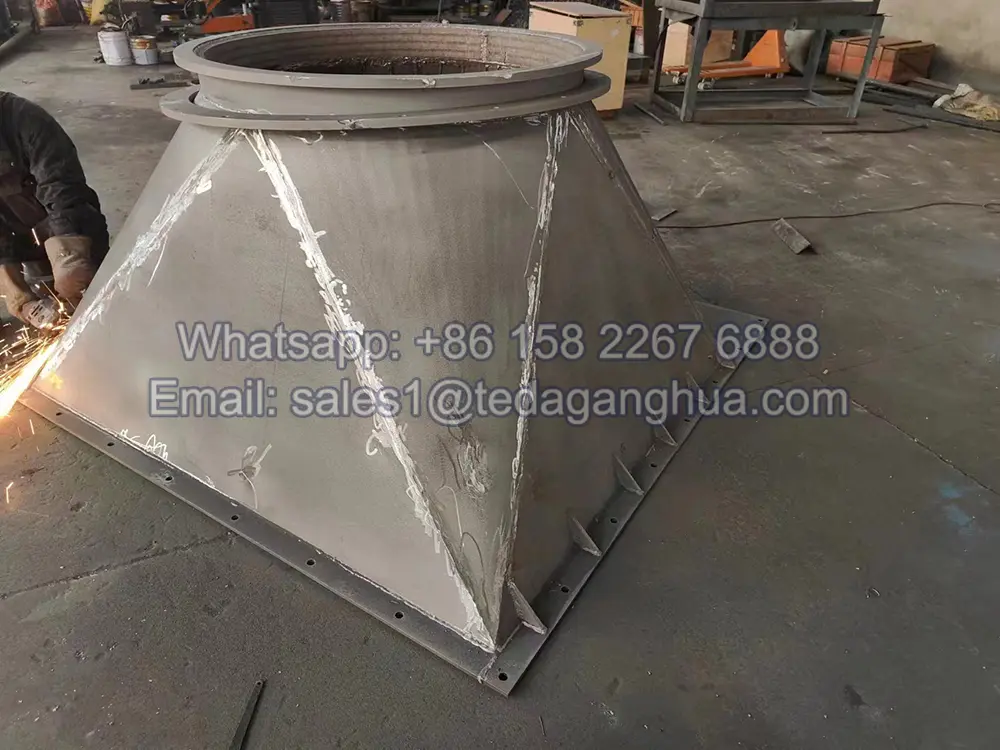
Cutting, bending, drilling, and fabrication can be done with plasma cutting or waterjet processes.
3. Product Grades and Types
Chromium carbide plates can be divided into several grades based on carbon and chromium content or welding process:
| Grade | Description | Application |
|---|---|---|
| C12 (Cr12) | Standard wear plate with ~30% Cr | General abrasion environments |
| C15 (Cr15Mo) | With added Mo for heat resistance | High-temperature zones |
| C20 (Cr20Nb) | With Nb and Mo for impact wear | Heavy impact and sliding |
| C30 (Multi-layer) | Double or triple overlay | Long-term severe abrasion |
4. Main Applications
Chromium carbide plates are designed for medium to severe wear environments and can extend equipment life 3–5 times compared with traditional steel.
Common application fields:
-
Mining and quarrying: chutes, hoppers, crushers, and screens
-
Cement industry: clinker conveyors, separator blades, cyclones
-
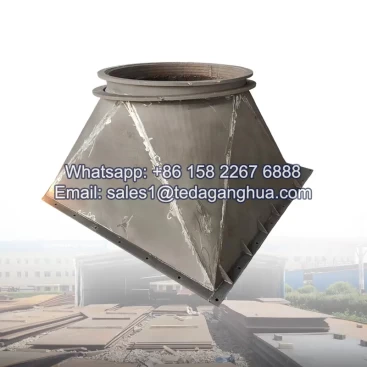
Power plants: coal mills, ash pipelines, fan blades, liners
-
Steel mills: sinter plant liners, transfer chutes, mixing drums
-
Agriculture & construction: bulldozer blades, loader buckets, wear liners
-
Petrochemical & port industries: material handling and transport chutes
5. Advantages of Chromium Carbide Plates
-
High Wear Resistance: Up to 5–10 times longer life than mild steel.
-
Good Heat Resistance: Stable performance up to 800 °C.
-
Excellent Weldability: Base plate can be easily welded or fabricated.
-
Cost-Effective: Reduced downtime and maintenance frequency.
-
Customizable: Plate size, thickness, and surface pattern can be tailored.
6. Typical Surface Patterns
To enhance material flow or reduce sticking, surface layers can be made smooth or patterned:
-
Smooth surface (2+2, 3+3 type): For sliding wear.
-
Ripple surface: For better impact resistance.
-
Cross pattern (hardfacing weave): For heavy wear and slurry applications.
7. Summary
Chromium Carbide Plates offer a durable and economical solution for protecting industrial equipment against abrasive and erosive wear.
| Feature | Description |
|---|---|
| Material | Mild steel base + chromium carbide overlay |
| Hardness | 58–65 HRC |
| Max Temperature | Up to 800 °C |
| Typical Size | 1400×3000 mm / 1500×3000 mm |
| Overlay Thickness | 3–12 mm |
| Lifetime | 3–5× longer than AR steel |
| Applications | Mining, cement, power, steel, construction |