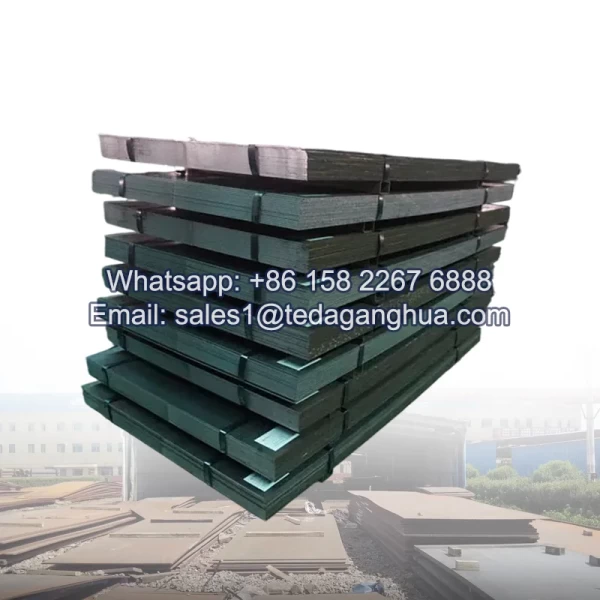
Corten Rust
Corten rust is a stable, protective oxide layer formed on weathering steel through controlled corrosion. Its alloy composition and environmental interaction allow it to develop a dense patina that slows further rusting while creating a distinctive red-brown appearance. Because of its durability and aesthetic value, Corten steel is widely used in architecture, landscape design, and outdoor structural applications.
- Description
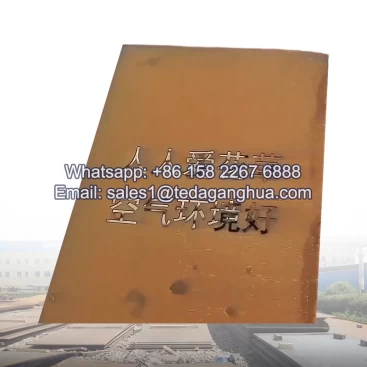
Corten rust refers to the stable, protective rust layer formed on weathering steel (Corten steel). Unlike ordinary rust on carbon steel, this rust is not destructive. Instead, it acts as a protective patina that slows down further corrosion and gives the material its characteristic red-brown appearance.
Corten steel is widely used in architecture, landscape design, and outdoor structures due to its self-protecting corrosion behavior and aesthetic surface finish.
Chemical Composition of Corten Steel
The unique rust behavior of Corten steel comes from its low-alloy composition, which improves atmospheric corrosion resistance.
| Element | Content (%) |
|---|---|
| Carbon (C) | ≤ 0.12 |
| Manganese (Mn) | 0.20–0.50 |
| Silicon (Si) | 0.25–0.75 |
| Phosphorus (P) | 0.07–0.15 |
| Sulfur (S) | ≤ 0.03 |
| Chromium (Cr) | 0.30–1.25 |
| Nickel (Ni) | 0.20–0.65 |
| Copper (Cu) | 0.25–0.55 |
| Iron (Fe) | Balance |
These alloying elements are key to forming a dense and stable rust layer instead of flaky corrosion.
Why Corten Steel Forms Stable Rust
1. Formation of Protective Patina
When exposed to outdoor conditions:
- A thin oxide layer forms on the surface
- Copper and chromium stabilize the rust structure
- The rust becomes dense and tightly bonded
- It transforms into a protective patina
2. Self-Limiting Corrosion
Unlike ordinary steel, corrosion in Corten steel:
- Slows down after initial exposure
- Does not continuously penetrate deeper
- Stabilizes under natural weather cycles
This behavior is called self-protecting corrosion.
3. Wet and Dry Cycle Effect
The rust layer becomes stable due to alternating conditions:
- Rain provides oxidation
- Dry periods allow film stabilization
- Repeated cycles create a compact oxide layer
Main Performance Features
1. Excellent Atmospheric Corrosion Resistance
Corten steel performs well in:
- Urban environments
- Industrial atmospheres
- Outdoor structural applications
2. No Coating Required (in many cases)
The protective rust layer reduces the need for:
- Painting
- Anti-corrosion coatings
- Frequent maintenance
3. Stable Aesthetic Appearance
The rust surface develops a:
- Uniform orange-red color in early stage
- Deep red-brown patina in mature stage
This makes it highly valued in architectural design.
4. Long Service Life
Due to the protective rust layer, Corten steel offers:
- Extended durability in outdoor environments
- Reduced corrosion rate over time
- Lower maintenance cost
Common Applications of Corten Rust Steel
Corten steel is widely used where both durability and aesthetics are required:
- Architectural building facades
- Exterior wall cladding systems
- Landscape design and garden structures
- Outdoor sculptures and art installations
- Bridges and infrastructure elements
- Railway and transportation structures
- Commercial and urban design projects
- Privacy screens and decorative panels
- Outdoor signage systems
Corten Rust vs Ordinary Rust
| Feature | Corten Rust | Ordinary Steel Rust |
|---|---|---|
| Rust Type | Stable protective layer | Loose and destructive |
| Corrosion Behavior | Self-limiting | Continuous corrosion |
| Surface Stability | High | Low |
| Appearance | Uniform red-brown | Flaky and uneven |
| Maintenance | Low | High |