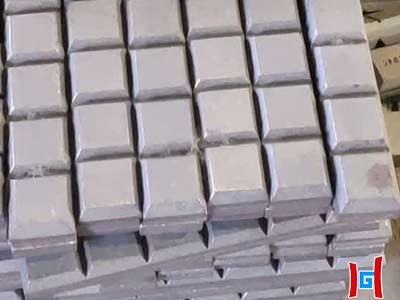
High Chromium Cast Iron Composite
Wear-Resistant Material Overview
High chromium cast iron is a third-generation wear-resistant material. It offers high hardness with some toughness.
However, cracks and breakage have often been seen due to low toughness. To fix this, a new composite method has been used.
Composite Material Innovation
A layer of carbon steel is added under the high chromium cast iron. This steel base is tough and absorbs impact.
As a result, the whole material becomes tougher while keeping its hardness and wear resistance.
✅ Key Features:
-
Bonding strength: Over 300 MPa
-
Surface hardness: Over 63 HRC
-
Impact toughness: Over 140 J/cm²
-
Easy to weld, screw, or cut
Technical Features
🔥 High-Temperature Furnace Compounding
A special furnace process removes chromium oxide from the surface. It bonds the layers tightly and lowers stress by slow cooling.
🔬 Microstructure Adjustment
Heat treatment changes the structure:
-
Top Layer (Cast Iron): Martensite, residual austenite, and fine carbides
-
Base Layer (Steel): Pearlite and ferrite
⚙️ Performance Design
The thickness of each layer can be changed to match different uses. This helps balance wear resistance and structure.
💪 Overall Performance
This material performs better than single-layer materials. It offers:
-
High surface hardness (HRC > 63)
-
Strong layer bonding (> 200 MPa)
-
High impact toughness (> 140 J/cm²)
Technical Principles
📉 Wear Behavior
The wear process follows the PARIS formula:
da/dN = C(ΔK)^n and h = Gb / 4π(1-γ)σf
⚙️ Functional Gradient Design
-
Hard top layer: High chromium cast iron
-
Tough base: Steel
-
Smooth transition: Multi-layer alloy layer (less than 0.5 mm thick)
Product Innovation
💡 Hardness + Toughness Combined
The new material solves the old problem of poor toughness. A strong bond is created using a gradual transition layer.
🏭 Applications
This material is used in:
-
Mining
-
Metallurgy
-
Power plants
-
Cement plants
-
Sugar factories
-
Brick making
-
Roadwork
It helps reduce metal loss from wear.
🛠 Production Advantage
Compared to traditional welding and casting, this method:
-
Removes dilution layers
-
Improves bonding
-
Reaches shear strength up to 300 MPa