Wear-Resistant Composite and Wear-Resistant Steel Plate
Difference and Application of Wear-Resistant Composite Steel Plate and Wear-Resistant Steel Plate
Introduction
Wear-resistant steel plates are crucial in industries requiring durable materials. There are two main types: wear-resistant composite steel plates and heat-treated wear-resistant steel plates. This guide outlines their differences and applications.
Differences Between Wear-Resistant Steel Plates and Wear-Resistant Composite Steel Plates
Composition and Hardness
- Wear-Resistant Composite Steel Plate:
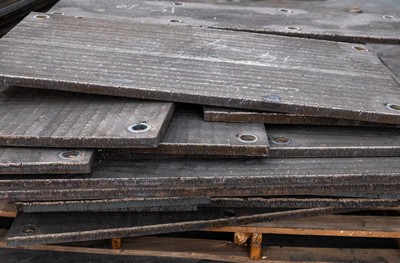
- Consists of a high-alloy wear-resistant layer welded onto an ordinary steel plate.
- Combines the wear resistance of the wear layer (hardness above HRC55) with the strength, deformation capacity, and weldability of the substrate.
- Heat-Treated Steel Plate:
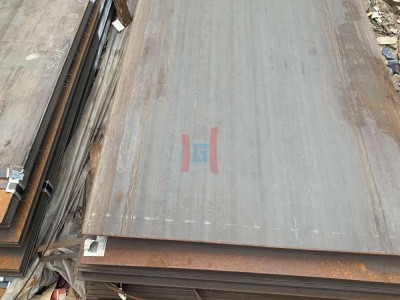
- Made from low-alloy steel quenched and hardened during rolling or post-heat treatment.
- General hardness ranges from HB360-600.
Wear-Resisting Mechanism and Performance
- Wear-Resistant Composite Steel Plate:
- The wear layer contains high-hardness alloy carbides (about HV1600) embedded in the matrix.
- Offers 5 to 6 times higher wear resistance than heat-treated steel.
- Heat-Treated Steel Plate:
- Features a martensitic structure, providing uniform hardness and strength.
- Microhardness and macrohardness are similar, enhancing overall wear resistance.
Temperature Adaptability
- Wear-Resistant Composite Steel Plate:
- Suitable for high-temperature environments up to 650°C.
- Can be adapted for even higher temperatures.
- Heat-Treated Steel Plate:
- Loses hardness above 250°C, reducing wear resistance.
- Cutting and welding can decrease hardness in the heat-affected zone.
Machinability
- Wear-Resistant Composite Steel Plate:
- Generally cut using plasma cutting.
- Limited forming capabilities, but can be processed as needed.
- Heat-Treated Steel Plate:
- Compatible with all cutting methods.
- Good bending and forming performance.
- Can be processed into wear-resistant parts using various techniques like welding, sinking, and bolting.
Applications of Wear-Resistant Composite Steel Plates
Engineering and Machinery
- Construction and Port Machinery:
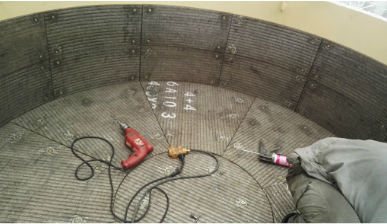
- Paver ironing plates, conveyor components, excavator and loader bucket blades, plastic crushing equipment, bulldozer and grader blades, concrete mixing station linings and blades, hydraulic shears, shield machines, grabs, ship unloading equipment, screw conveyors, hatch covers, garbage trucks, and recycling stations.
- Mining and Cement Machinery:
- Buckets, loaders, hoppers, shearers, boring machines, scraper conveyors, silos, slips, hoists, heavy truck bodies, crushers, ball mills, screen plates, feeders, cement classifier shells and blades, roller presses, fans, and dust collectors.
Metallurgical Industry
- Steel rolling equipment, ore, coke, sintering hoppers, scrap shears, baling machines, blast furnace top hoppers, slips, liners, and conveyors.
Power Plants, Cement Plants, and Ports
- Mill liners, bucket reclaimers, pulverized coal pipes, coal distributors, hoppers, and unloading equipment liners.
Agricultural Machinery
- Spiral blades for corn harvesters.
By understanding the differences and applications of wear-resistant composite steel plates and heat-treated wear-resistant steel plates, industries can choose the best material for their specific needs.
Teda Ganghua Metal -17 years
Steel Sheets/Plates Supplier
Bring detailed specifications to contact me if you need
We have high quality and reasonable prices
Welcome to our website! https://www.tedametal.com/ & https://www.teda-metal.com/ & https://www.teda-aluminum.com/