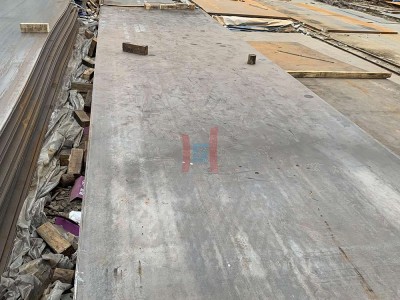
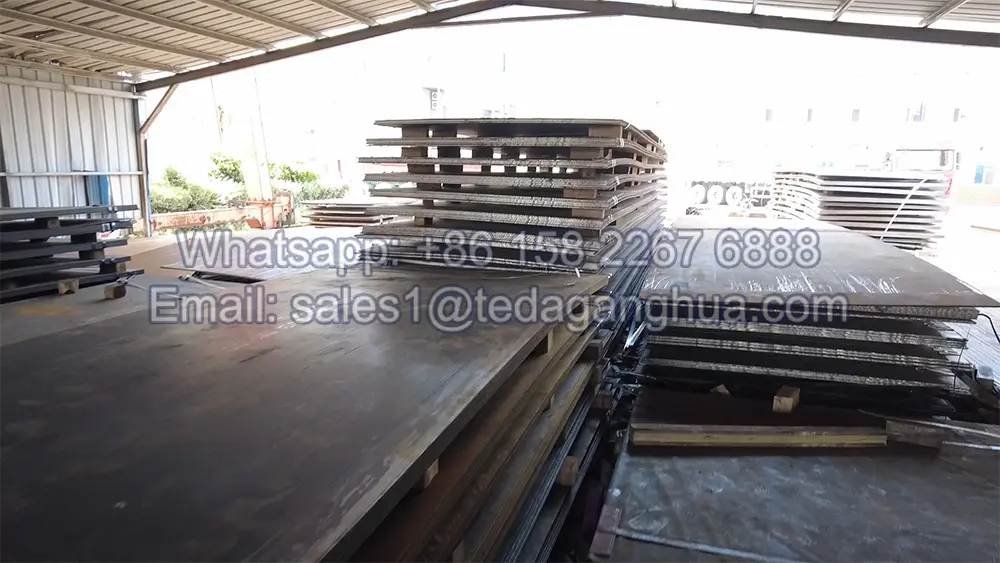
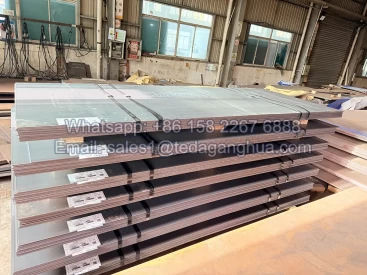
Abrasion Resistant Steel Plate vs NM Series and Other Chinese Grades
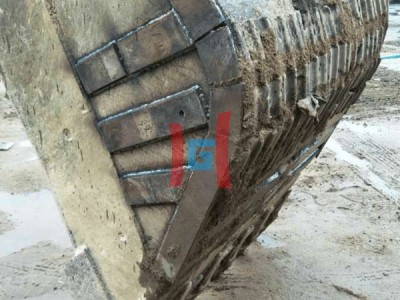
Abrasion resistant (AR) steel plates are specially engineered to resist wear, impact, and friction in industrial applications such as mining, construction, material handling, and heavy machinery. They are used in equipment like crusher liners, loader blades, dump truck beds, hoppers, and chutes.
AR Series vs NM Series
In the context of wear-resistant steels, AR series and NM series are two of the most widely used categories, each with distinct properties:
| Feature | AR Series | NM Series |
|---|---|---|
| Hardness | ~400–500 HB | ~360–500 HB |
| Composition | Through-hardened low-alloy steel | Low-alloy steel with optimized composition for both hardness and toughness |
| Wear Resistance | Good abrasion resistance, especially for general wear | Designed to resist both abrasion and moderate impact |
| Toughness | Moderate | Higher toughness than same-hardness AR grades |
| Applications | Dump truck beds, blades, chutes, general wear | Equipment exposed to combined abrasion and impact such as buckets, hoppers, and high-stress liners |
| Workability | Easy to cut and weld | Similar cutting/welding performance, may require attention to stress relief in thicker plates |
Key Differences:
-
AR series steels are simple through-hardened plates suitable for general abrasion.
-
NM series steels are engineered with a balanced combination of abrasion resistance and impact toughness, making them suitable for more demanding environments.
 Other Chinese Grades and Series of Wear-Resistant Steel
Besides NM and AR series, China produces several other high-performance wear-resistant steel series, commonly used in industrial applications:
-
NM Super Series – Higher grades than standard NM, offering higher hardness (up to NM550) for severe abrasion conditions.
-
Wear-resistant steels with BaoSteel series – Designed with optimized alloying to provide enhanced wear resistance while maintaining toughness. These include grades similar to NM360, NM400, NM450, NM500 but may have proprietary composition adjustments to improve performance.
-
Other Chinese Standards – Some manufacturers follow GB/T 229-2007 or GB/T 24186 specifications, which define different hardness levels and chemical compositions for wear-resistant steel plates.
Common Trends Across Chinese Series:
-
Multiple grades covering low to very high hardness (~360–550 HB)
-
Alloying with manganese, chromium, and carbon to enhance wear properties
-
Designed for a range of applications from moderate abrasion to heavy impact zones
Summary Table of Chinese Wear-Resistant Steel Series
| Series / Grade | Hardness | Wear Environment | Typical Applications | Notes |
|---|---|---|---|---|
| AR Series | 400–500 HB | General abrasion | Loader blades, truck beds, chutes | Economical, widely used |
| NM Series | 360–500 HB | Abrasion + impact | Buckets, hoppers, crushers | Optimized toughness |
| NM Super Series | 450–550 HB | Severe abrasion | High-stress liners, heavy-duty buckets | Higher wear life |
| BaoSteel Series / Other Chinese Grades | 360–550 HB | Moderate to severe abrasion | Equipment with variable impact and wear | Alloy compositions vary, tailored for performance |
| GB/T Standard Grades | 360–550 HB | Moderate to severe | Industrial applications | National standards, controlled chemical composition |
How to Choose Between AR, NM, and Other Chinese Grades
-
AR series: Suitable for general abrasion conditions where toughness is less critical.
-
NM series: Better for areas where both abrasion and impact are significant.
-
NM Super or higher-grade Chinese series: Recommended for severe wear environments with heavy abrasion and impact.
-
National standard GB/T grades: Can provide a cost-effective, standardized solution with defined hardness and toughness.
Conclusion
Chinese wear-resistant steel plates offer a wide range of options beyond the NM series, including AR series, NM super grades, and other domestic series designed for high abrasion and impact. Understanding the differences between AR vs NM, as well as other Chinese grades, allows engineers to select the most suitable steel plate for maximized wear life, equipment protection, and operational efficiency.