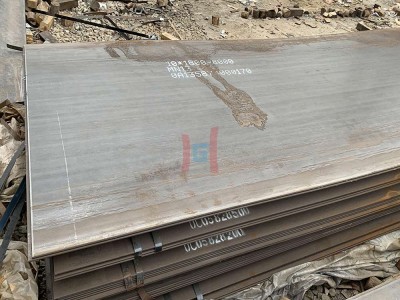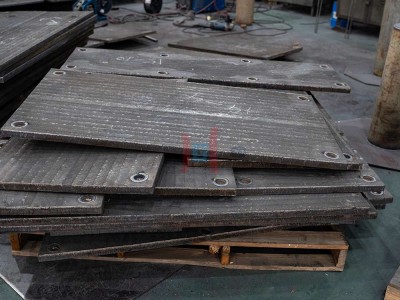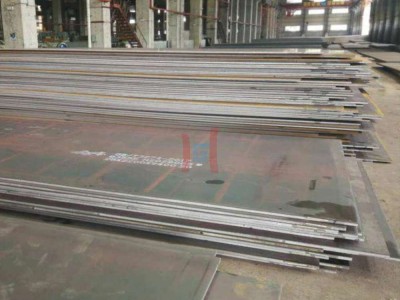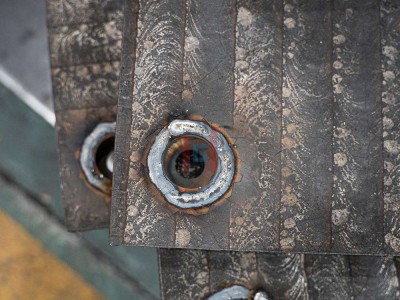
Advantages of High-Strength Wear-Resistant Steel
Introduction
High-strength wear-resistant steel is created by adding alloying elements that enhance the material’s structure through solid solution strengthening, grain boundary strengthening, and second phase strengthening. This steel type includes low-alloy martensitic steel, bainitic steel, and dual-phase steel.
Composition and Properties
Recent advancements use silicon as the main alloying element, leveraging its ability to inhibit carbide precipitation during the bainite transformation. This results in a carbide-free bainitic ferrite and residual austenite dual-phase structure. The absence of carbides improves strength and toughness, making it a leading wear-resistant material globally.
Key Properties
- High Yield Strength: Ensures the material withstands high stress before deforming.
- High Tensile Strength: Provides excellent resistance to being pulled apart.
- Good Ductility: Allows the material to deform without breaking.
- High Fracture Toughness: Prevents the material from cracking under stress.
- High Impact Strength: Offers excellent resistance to sudden impacts.
- Excellent Wear Resistance: Ensures durability and longevity in harsh conditions.
Heat Treatment and Performance
High-strength wear-resistant steel undergoes special heat treatments, resulting in both high strength and toughness. Its wear resistance surpasses that of high manganese and high chromium steels.
Mechanical Properties at Room Temperature
- Tensile Strength: 1950 MPa
- Yield Strength: 1600 MPa
- Elongation: 17%
- Section Shrinkage: 30%
- Impact Toughness: HRC (Hardness Rockwell C): 55
Advanced Properties
Rare earth modification and specific process treatments create a nano-scale bainite/martensite structure. This structure achieves:
- Tensile Strength: 1950 MPa
- Elongation: 17%
- Section Shrinkage: 38%
- HRC: 55
- Aku: 72J (Impact Energy)
Application Areas
High-strength wear-resistant steel is used in various fields due to its exceptional properties:
- Mining and Engineering Machinery: Shovel teeth, bucket teeth, and excavator parts.
- Vehicles and Railway Tracks: Enhances durability and performance.
- Mechanical Equipment: Used in hydraulic and transmission equipment.
- Construction: High-strength bolts, coastal bridge steel bars, and wear-resistant wire mesh.
- Military and Defense: Effective in armor due to its spallation strength and ballistic impact resistance.
Specialized Testing
High strain rate deformation ballistic tests have shown that under extreme conditions:
- Pressure-Induced Martensite Phase Transformation: Achieves strength of about 13 GPa.
- Yield Strength: Ranges between 3.5-10 GPa.
- Spallation Strength: Approximately 2 GPa.
Nano-low-temperature bainitic steel demonstrates tensile strength up to 2.5 GPa and ballistic impact strength as high as 10 GPa.
Conclusion
High-strength wear-resistant steel offers a combination of high strength, toughness, and wear resistance. These properties make it invaluable in demanding applications such as mining, construction, and defense. Its advanced composition and specialized heat treatments ensure superior performance, making it a critical material for modern engineering challenges.
Teda Ganghua Metal -18 years
Steel Sheets/Plates Supplier
Bring detailed specifications to contact me if you need
We have high quality and reasonable prices