

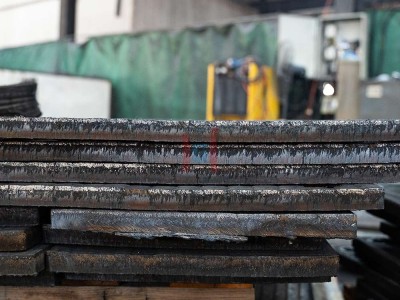
Laser Cutting Machine for Wear-Resistant Steel Plates
Introduction
Laser cutting machines are used more and more in modern manufacturing. These machines are known for their precision, speed, and efficiency. In this article, the basic working method, key advantages, and main uses of laser cutting—especially for wear-resistant composite steel plates—will be explained.
1. How It Works
Laser cutting works by using a strong laser beam. This beam is created by a laser generator and then focused using mirrors and lenses.
The focused beam heats the metal very quickly. In seconds, the metal turns into gas or melts. High-pressure gas then blows the melted part away. As the beam moves, a thin line (cut) is made.
This process allows the metal to be cut with great accuracy.
2. Main Advantages
✔ High Precision
Very thin beams are used. Cuts as accurate as 0.2 mm can be made. This is useful for parts that require exact sizes.
✔ Fast Cutting
Laser energy melts metal quickly. Sheets can be cut at several meters per minute. This saves time and boosts output.
✔ Smooth Edges
The cutting edges are clean and smooth. Little or no polishing is needed. This reduces extra work and cost.
✔ Wide Material Range
Metals (like stainless steel, carbon steel, and aluminum) and non-metals (like wood, plastic, and acrylic) can be cut. This makes the machine useful for many jobs.
✔ Flexible Cutting
No molds are needed. Shapes and sizes can be changed by simply adjusting the computer program. This is perfect for small orders or custom products.
3. Laser Cutting vs. Plasma Cutting
| Feature | Laser Cutting | Plasma Cutting |
|---|---|---|
| Precision | Very high; narrow kerf | Lower; wide kerf |
| Edge Quality | Smooth; few or no burrs | Rough; burrs and slag are common |
| Heat-Affected Zone | Small; less distortion | Large; may cause warping in thin sheets |
| Extra Processing Needed | Often not needed | Often required (grinding, cleaning, etc.) |
4. Use in Cutting Wear-Resistant Steel Plates
Wear-resistant plates have two layers:
-
A hard alloy layer (for wear protection)
-
A tough base layer (for strength)
Traditional cutting often damages these layers. Laser cutting is different. The laser can cut deeply and accurately, without harming the layers. The cut edge stays neat, and the plate keeps its strength and wear resistance.
Share this post

Related Posts
Understanding Wear-Resistant Steel Plates in China
Understanding Wear-Resistant Steel Plates Wear-resistant steel plates are specialized products designed for use in high-wear environments. They are made by applying... read more
The Role and Characteristics of Wear-Resistant Screen Plates
The Role and Characteristics of Wear-Resistant Screen Plates Overview Wear-resistant screen plates, also known as porous plates, are crucial in various mechanical... read more
Bending Guidelines for Wear-Resistant Composite Steel Plates
Bending Guidelines for Wear-Resistant Composite Steel Plates Wear-resistant composite steel plates require specific handling due to their unique material properties. Through... read more
X120MN12 Grade Manganese Plates and Sheets
X120MN12 manganese steel, also known as hard manganese steel, is renowned for its unique properties. It becomes significantly harder and... read more
High-Carbon High-Chromium Cladding Wear-Resistant Plate
Overview A high-carbon high-chromium cladding wear-resistant plate is produced by coating wear-resistant material onto a carbon steel substrate. The cladding layer... read more

Why Do Anchor Miners Use Wear-Resistant Composite Steel Plates?
Introduction to Anchor Miners Anchor miners are specialized machines that integrate cutting, loading, transporting, walking, anchoring, and dust removal. They allow... read more

Colorimeter vs. Spectrophotometer: Understanding the Critical Differences in Color Measurement
Color measurement tools are indispensable in industries ranging from textiles and plastics to food and pharmaceuticals, ensuring consistency, quality, and... read more
Mn13 High-Manganese Wear-Resistant Steel: Features and Processing Guide
Overview Mn13 is a high-manganese steel known for exceptional wear resistance, making it ideal for high-impact and high-pressure applications. Its two... read more
Wear-Resistant Composite Steel Plate: An Advanced Solution
Wear-Resistant Composite Steel Plate: An Advanced Solution Introduction In industrial manufacturing, wear on mechanical parts is a leading cause of equipment failure.... read more

Wear Plate Steel – Comprehensive Guide to Types
Wear plate steel refers to a category of abrasion‑resistant steels engineered to withstand wear, impact, and friction in demanding industrial... read more